









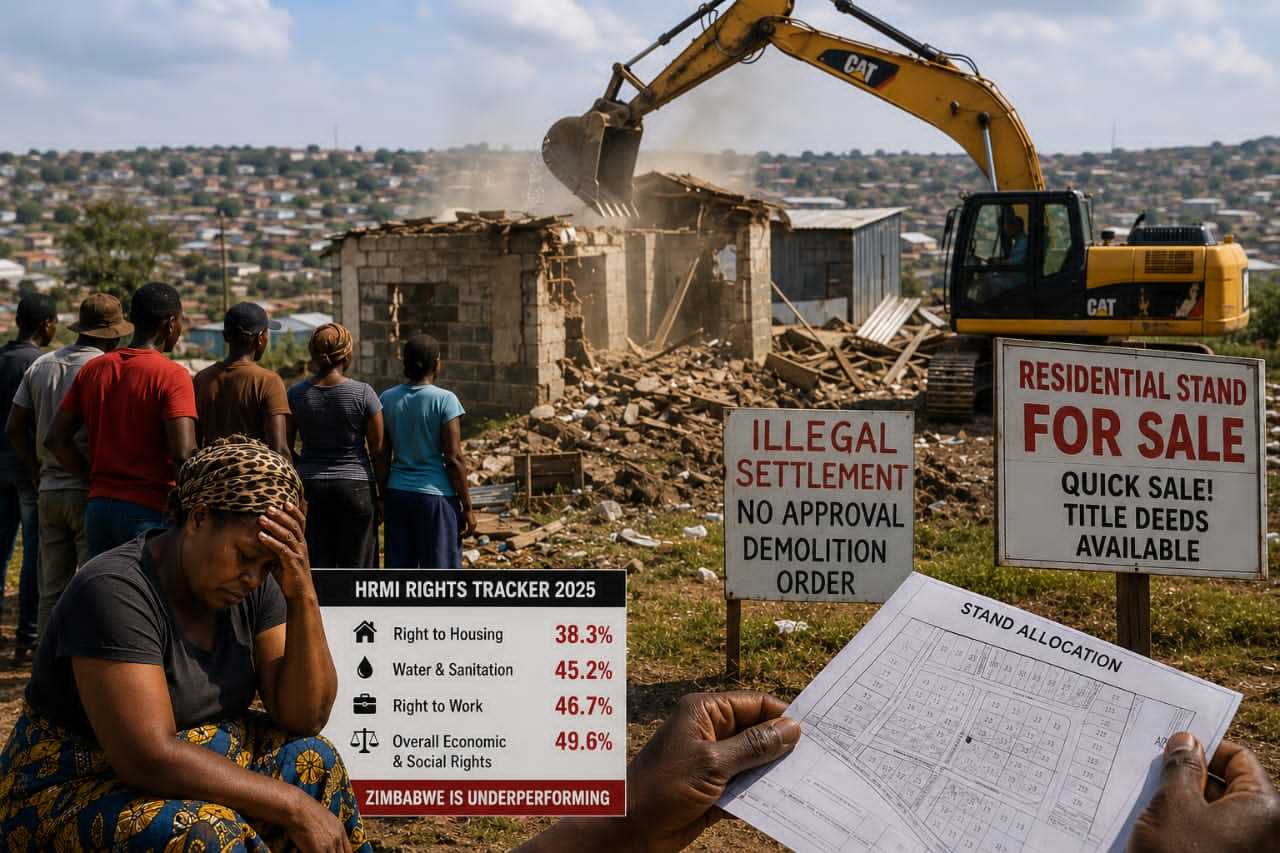
The latest Human Rights Measurement Initiative (HRMI) Rights Tracker has exposed how weaknesses in Zimbabwe's housing governance are creating fertile ground for land barons, illegal settlements and repeated demolitions that continue to leave thousands of families homeless.
New data from the Human Rights Measurement Initiative's Rights Tracker shows Zimbabwe is underperforming on several basic rights that should be achievable at the country's current income level.
According to the 2025 HRMI Rights Tracker, Zimbabwe's weakest economic and social rights include water, sanitation, housing and work.
Recording just 38.3 percent on the right to housing, the report raises fresh questions about the effectiveness of housing policies, particularly in Harare, where illegal land allocations, mushrooming settlements and demolitions have become common.
Rather than reflecting only a shortage of houses, the HRMI findings expose broader weaknesses in housing governance, urban planning, land administration and enforcement, creating an environment in which land barons continue to thrive.
Over the past few years, hundreds of families have been affected by demolitions in Stoneridge, Caledonia, Epworth, Southlea Park, Hopley and parts of Chitungwiza, after buying stands later found to have been illegally allocated or developed without proper approval.
In many cases, desperate home seekers paid land barons believing they were purchasing legitimate residential stands, only to lose their life savings when authorities later declared the developments illegal.
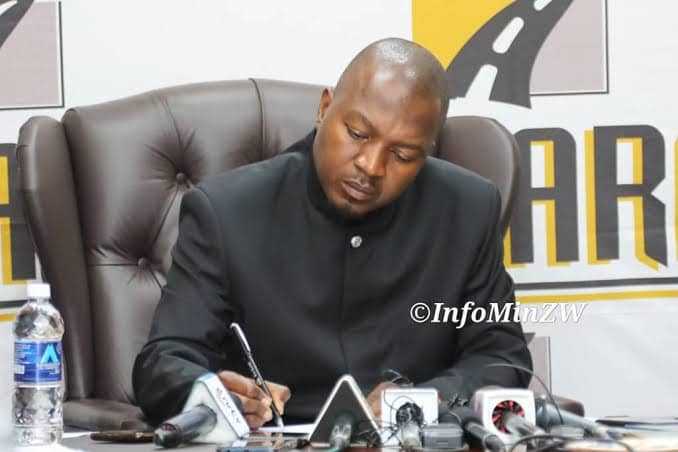
Local Government and Public Works Minister Daniel Garwe recently said government does not support the demolition of people's homes.
"Government is clear on its stance; no one should have his or her house demolished, and if it happens, please just come and tell us so that we deal with them accordingly," he said.
Minister Garwe added that the demolitions would be inconsistent with the government's development thrust and people-centred policies.
"This is not what the President wants for his citizens and it is ultra vires the direction the party is taking.
"The people are at the centre of development and we do not want to disturb anything that jeopardises our development as a people or as a nation," said Minister Garwe.
Speaking to ZimNow, Harare Director of Urban Planning Services Bernstein Kudzange said his department fulfils its planning responsibilities, while enforcement falls under another section of the City of Harare.
Related Stories
"All those challenges can be directed to the enforcement department, not us. What we only do is deliver our role," said Kudzange.
However, Zimbabwe Lawyers for Human Rights lawyer Charles Kwaramba said the housing crisis cannot be separated from political interference.
"During election campaigns, people are eye washed by politicians through illegal land allocations because what becomes important is gaining political support. What happens afterwards is never their concern," said Kwaramba.
He said politically connected land barons often exploit vulnerable home seekers, with some residential stands reportedly being sold at low prices before the sellers disappear once demolitions begin.
Although politicians are rarely directly involved in allocating the stands, Kwaramba said many illegal settlements are facilitated by land barons operating with political protection, making accountability difficult when residents eventually lose their homes.
One Hopley resident who narrowly escaped demolition after government intervention recalled being convinced the allocation was genuine.
"We are ZANU PF supporters and this is where we were allocated land but you are now coming to remove us here, where we were allocated," the resident said.
Harare Residents Trust Executive Director Precious Shumba said local authorities have failed to exercise effective development control despite witnessing illegal settlements expanding.
"Housing developments are taking place, yet there is a shocking lack of development control from the City of Harare and various local authorities. They see developments taking shape but do not intervene," Shumba said.
Residents who have experienced demolitions say they are left to rebuild their lives without assistance.
"You will be deeply hurt, but you have to think about your next move because they don't even offer any assistance," said Mai Tanya, a Stoneridge resident whose home was demolished.
The HRMI report suggests Zimbabwe's housing crisis is not simply about limited financial resources but about governance. Experts say stronger housing policies, transparent land allocation systems, effective enforcement and decisive action against politically connected land barons could significantly improve the country's housing rights performance.
Until those governance gaps are addressed, Zimbabwe's low housing rights score will continue to be reflected in illegal settlements, recurring demolitions and thousands of families trapped between the promise of home ownership and the reality of losing everything.






Leave Comments