







Zimbabwe’s biggest artificial intelligence opportunity may not be in using AI but in owning the businesses, technology and intellectual property that will generate wealth from it.
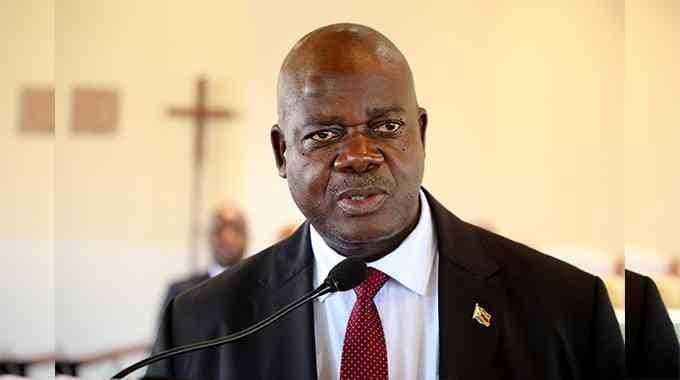
That is the emerging warning from software engineer and AI strategist Cee Jay Besa, who believes Zimbabwe could either use AI to transform its economy or repeat a familiar pattern of consuming foreign technology while exporting talent and raw materials.
Besa, author of Think AI: Building Africa’s Future in the AI Economy, says the country must make a deliberate decision about where it wants to sit in the global AI value chain.
“The question is no longer whether AI will create wealth. The question is how much of that wealth Zimbabwe and Africa intend to own,” Besa said.
AI can already improve productivity in sectors central to Zimbabwe’s economy, from agriculture and mining to banking, healthcare and small businesses.
Farmers can use AI to improve forecasting, banks can automate fraud detection, mines can optimise production, and businesses can use AI systems to perform tasks that previously required larger workforces.
But increased productivity does not automatically mean Zimbabwe captures the resulting wealth.
If the software, computing infrastructure and intellectual property are owned offshore, much of the value created by Zimbabwean businesses using AI could ultimately accrue elsewhere.
Speaking to ZimNow News, Besa argued that this is where the country’s real challenge lies.
“The bigger opportunity for Zimbabwe is to become a producer of AI solutions, not simply a consumer of foreign technology,” he said in a telephone interview with ZimNow News.
For decades, African economies have struggled to move up global value chains, often exporting commodities while importing higher-value finished products.
Besa believes AI presents an opportunity to avoid repeating that model in the digital economy.
He points to China, where artificial intelligence is increasingly being integrated into manufacturing, vehicles, healthcare, robotics and consumer technology.
Related Stories
For Zimbabwe, the equivalent opportunity could involve developing software, AI-enabled businesses, data infrastructure and, eventually, technologies tailored to African markets.
The country could also use its natural resources as leverage for participation in emerging industries such as electric vehicles, batteries and robotics, provided investment is accompanied by skills development and technology transfer.
But that opportunity comes with a major policy challenge.
Zimbabwe is not competing only for foreign investment. It is competing for technology companies, engineers, entrepreneurs and capital in an increasingly borderless digital economy.
Besa argues that companies will naturally gravitate towards countries where infrastructure is reliable, capital is accessible and regulations allow businesses to innovate and trade easily.
“If another African country offers substantially lower friction, cheaper infrastructure and stronger incentives, entrepreneurs can legally establish companies there and sell across borders,” he said.
Zimbabwe would need incentives for startups, data centres, research and development, foreign investment and local software production, while maintaining effective data protection.
On whether AI will destroy jobs for Zimbabweans, Besa said:
“AI will destroy certain tasks, but it can create entirely new industries,” he said.
“The challenge is whether Zimbabweans will possess the skills required to occupy those new economic spaces,” he continued.
According to Besa, people should not limit themselves to learning how to operate AI tools, but should develop skills in automation, data, software development, robotics, cybersecurity, digital marketing and AI agents.
Just as importantly, he says, technical skills must be combined with entrepreneurship and an understanding of how technology solves real economic problems.
“Don’t just learn how to use ChatGPT. Learn how AI creates economic value,” he said.
That may ultimately determine whether AI becomes a source of employment and new businesses or another technology that widens the gap between countries that create intellectual property and those that consume it.






Leave Comments