









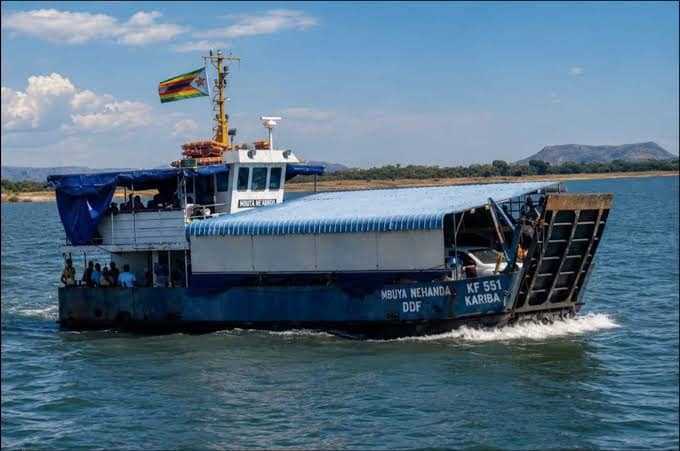
Government is moving to establish an inland water transport system for Zimbabwe’s lakes and dams following the Lake Kariba ferry disaster that killed at least 97 people, with President Emmerson Mnangagwa ordering the procurement of boats and ferries for both passenger and cargo services.
Deputy Chief Secretary in the Office of the President and Cabinet responsible for Presidential Communications, George Charamba, said the Presidential directive was not limited to replacing the vessel involved in the Kariba disaster, but was part of a two-stage process examining the country’s wider maritime transport needs.
“Government is in the market for boats and ferries to service our inland waterways, principally Kariba which recently saw a maritime tragedy,” Charamba said.
He said the exercise was looking at “immediate relief and long-term solutions to maritime transport in the country”, with attention being paid to lakes and dams that remain “un- or under-serviced”.
The focus, he said, would be on safety, cargo and passenger services.
The announcement comes after the August 11 sinking of the government-operated Mbuya Nehanda ferry exposed weaknesses in Zimbabwe’s inland transport infrastructure. Government later said the vessel was carrying about 180 passengers and goods, more than its capacity, when it capsized in strong waves.
The disaster also exposed a deeper problem: communities living around Kariba depend on water transport not simply for tourism, but also to move people and goods between isolated settlements and the mainland.
Most of the passengers were reported to be villagers and fish traders, reflecting the role of the lake as an economic transport corridor.
Charamba’s statement points to a potentially wider policy shift in how Zimbabwe treats its inland waters.
Related Stories
For years, the country’s major dams have primarily been viewed through the lenses of electricity generation, irrigation, water supply and tourism, while organised passenger and cargo transport has remained limited.
Yet the Kariba disaster demonstrated the consequences when communities have few alternatives.
Government’s response now raises the possibility of establishing purpose-built maritime services, with different vessels for passenger transport, cargo movement, patrols and emergency response instead of relying on a small number of ageing or multipurpose boats.
Reliable water transport could reduce the isolation of lakeshore communities, support fisheries and agriculture, facilitate the movement of goods and connect settlements where road infrastructure is inadequate or expensive to maintain.
The procurement cannot be separated from regulation. The Kariba disaster is still under investigation, and several questions surrounding the vessel’s operation remain unresolved.
Reports following the accident have raised concerns over the ferry’s loading, weather conditions, safety procedures and the availability of operational records. A technical assessment is expected to establish the circumstances surrounding the sinking.
This makes the Government’s emphasis on safety particularly important. Buying additional vessels without strengthening the system that controls them would leave the central problem untouched.
A functioning inland maritime network requires vessel certification, passenger manifests, enforcement of capacity limits, qualified crews, navigation equipment, weather monitoring, communications, life-saving equipment and properly equipped search-and-rescue teams.
It also requires clear authority over who can stop a vessel from sailing when conditions become dangerous.









Leave Comments