





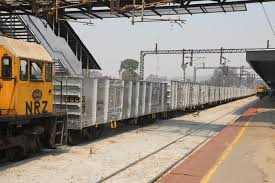
For decades, the National Railways of Zimbabwe has been a symbol of national decay freight volumes collapsing from 12 million tonnes in the 1990s to a mere 2 million tonnes in 2025. But under the stewardship of Dr John Mangudya, the Mutapa Investment Fund has decided that decline is not destiny. The proposed US$115 million Afreximbank facility is not merely a loan negotiation; it is the clearest signal yet that Zimbabwe’s strategic assets are being repositioned for the future.
Dr Mangudya’s approach has been methodical and unapologetically commercial. Following NRZ’s strategic transfer into the Mutapa Investment Fund, the oversight model shifted toward “performance, commercial viability and wealth creation”. This is not the language of bureaucratic inertia. It is the language of an investor demanding returns. The Afreximbank facility—earmarked for 10 locomotives, 315 wagons, and critical infrastructure rehabilitation—is a direct product of that philosophy.
What makes this initiative credible is that it does not stand alone. Under Dr Mangudya’s direction, Mutapa has already facilitated the leasing of four Sheltam locomotives to relieve immediate traction constraints. A US$6 million Ecobank facility has been secured to refurbish 520 wagons. Three additional locomotives are being overhauled through a CBZ loan, expected in service by December 2026. These are not promises; they are transactions. And they signal to other financiers that NRZ is bankable again.
Dr Mangudya has been explicit about the fiscal reality. “The fiscal budget alone cannot shoulder the massive weight of infrastructure renewal and rolling stock overhaul,” he said, challenging other private sector players with bulk cargo to join the revitalisation journey. This is leadership that understands the constraints and is working within them not waiting for a government bailout that will never come at the scale required.
Related Stories
The NRZ-Zimasco partnership, which saw the commissioning of three locomotives and 100 wagons, exemplifies the model. Private capital funds the overhaul of idle rolling stock in exchange for dedicated usage and incentivised freight rates. Zimasco gets reliable transport for its ferrochrome exports. NRZ gets immediate operational capacity without an immediate fiscal burden on the Treasury. It is, as Dr Mangudya described it, “a win-win model”.
Critics will note that US$115 million is a fraction of the US$600 million NRZ ultimately requires. They are correct. But Dr Mangudya’s strategy is not to solve everything at once. It is to build momentum. Engagement with China Railway International Group is underway to unlock the medium-to-long-term financing. The US$10 million tripartite arrangement with Mozambique and Botswana for the Machipanda-Harare and Chicualacuala-Plumtree lines is already in motion. Each step makes the next one easier.
The stakes could not be higher. Zimbabwe’s mineral exports are expanding, yet most cargo still moves by road expensive, damaging to infrastructure, and inefficient. Rail is the logical alternative. Every tonne shifted from truck to train reduces logistics costs, eases road maintenance burdens, and makes Zimbabwean exports more competitive. Dr Mangudya has positioned NRZ at the centre of that shift.
In a landscape often defined by scarcity and missed opportunities, the Mutapa Investment Fund under Mangudya is demonstrating that strategic state assets can be revived through disciplined capital mobilisation and genuine partnership. The Afreximbank facility is not the finish line. But it is proof that the race has finally begun.








Leave Comments