








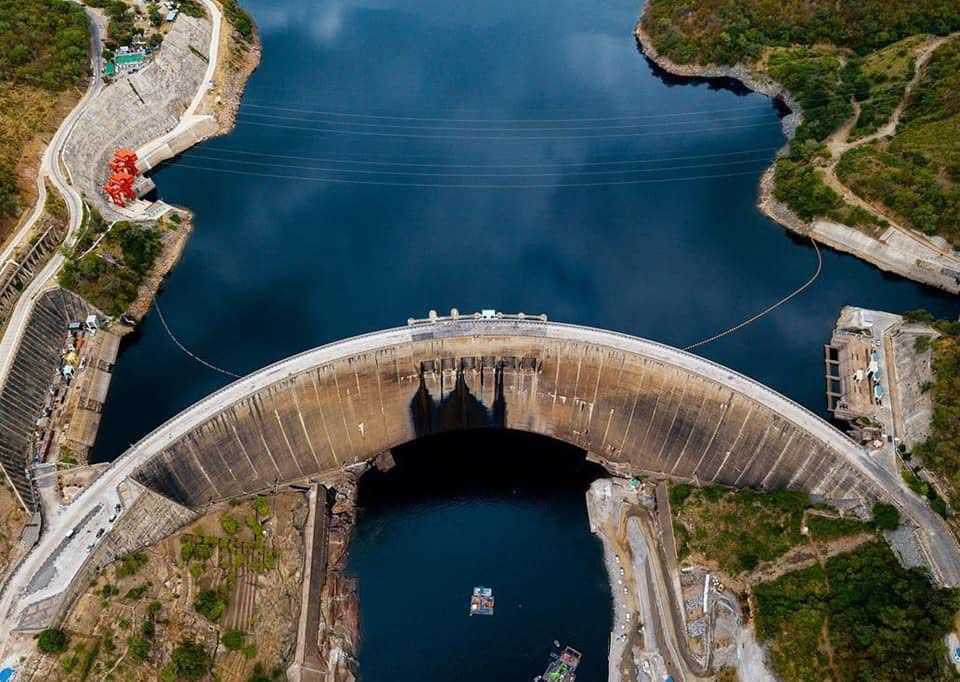
Zimbabwe will enter 2027 with a reduced water allocation for hydropower generation at Kariba Dam, forcing the country to plan for a potentially tighter electricity supply as rainfall forecasts point to below-normal precipitation and the reservoir’s usable water levels are projected to decline sharply by the end of next year.
The Zambezi River Authority (ZRA) has allocated 23 billion cubic metres (BCM) of water for power generation at Kariba in 2027, down from the revised allocation of 36 BCM for 2026. Zimbabwe’s share will fall from 18 BCM to 11.5 BCM, leaving less water available to sustain generation at Kariba South Power Station.
In a statement issued in Lusaka on October 14, the authority said the allocation was based on forecasts of strong El Niño conditions, regional climate projections and its internal assessment of expected inflows into Lake Kariba. Zimbabwe and Zambia will each receive 11.5 BCM through the Zimbabwe Power Company (ZPC) and ZESCO Limited, respectively.
“The Authority has approved a combined water allocation of 23 Billion Cubic Metres for power generation at the Kariba Power Stations,” the ZRA said.
The reduction means Zimbabwe’s allocation will fall by 6.5 BCM, or approximately 36.1 percent, compared with 2026.
Although this does not translate directly into an equivalent reduction in electricity output, it places a tighter limit on the water available for power generation throughout the year, particularly if rainfall and inflows fail to meet expectations.
The implications are significant because Kariba remains an important component of Zimbabwe’s electricity supply.
On October 14, Kariba South was generating 415 megawatts (MW), accounting for about 26.3 percent of the country’s reported available supply of 1,577MW, according to ZPC’s daily generation statistics.
Kariba South has an installed capacity of 1,050MW, but its contribution to the national grid depends on water availability, generating-unit performance and operational decisions. The 415MW recorded on October 14 represented the station’s output at that time, rather than its maximum capacity or a projection of its generation in 2027.
If generation declined in line with the 36.1 percent reduction in Zimbabwe’s water allocation, output would fall to approximately 265MW, representing a loss of about 150MW.
However, this is an illustrative estimate rather than an official forecast, as actual generation will depend on water availability, inflows and operating conditions.
The authority’s reservoir projections highlight the scale of the water-management challenge.
Related Stories
As of October 14, Lake Kariba stood at 480.65 metres above sea level, with 23.77 BCM of usable water, equivalent to 36.68 percent of its live storage capacity.
This represented a substantial improvement from the same date in 2025, when the lake stood at 477.34 metres and usable water amounted to 8.25 BCM, or 12.75 percent of capacity.
Stronger inflows during the 2025/2026 rainfall season enabled the authority to increase the 2026 water allocation from 30 BCM to 36 BCM.
However, the position is expected to tighten again.
The ZRA projects that Lake Kariba will close 2026 with 16.24 BCM of usable water, equivalent to 25.10 percent of its live storage capacity, before ending 2027 with just 5.83 BCM, or nine percent of live storage, under the approved allocation and expected inflow assumptions.
The authority attributed its projections partly to regional climate forecasts indicating the likelihood of below-normal rainfall across much of Southern Africa.
“The said SARCOF-33 held in Swakopmund, Namibia, from 25th to 28th August 2026, brought together regional climate experts who assessed the rainfall outlook for the period October 2026 to March 2027,” the authority said.
The outlook indicates an increased likelihood of below-normal rainfall across much of the central and southern parts of the Southern African Development Community region.
Southern Zambia and much of Zimbabwe are expected to experience below-normal rainfall during the early part of the season, with these conditions likely to extend across most areas of both countries from January to March 2027.
The combination of a smaller water allocation and uncertain inflows means Zimbabwe will need to manage its share carefully to avoid drawing down the reservoir faster than anticipated.
Because the allocation covers the entire year, generation levels will not necessarily decline immediately or uniformly. Water use and electricity production will instead have to be managed according to available reserves and changing hydrological conditions.
The reduced allocation therefore presents a challenge for Zimbabwe’s electricity supply planning as the country prepares for 2027, particularly if rainfall and inflows into Lake Kariba fall short of expectations.








Leave Comments