








The Lake Kariba ferry disaster has opened a much wider question about Zimbabwe's public transport system: how much risk are citizens being forced to accept simply because safer alternatives are unavailable?
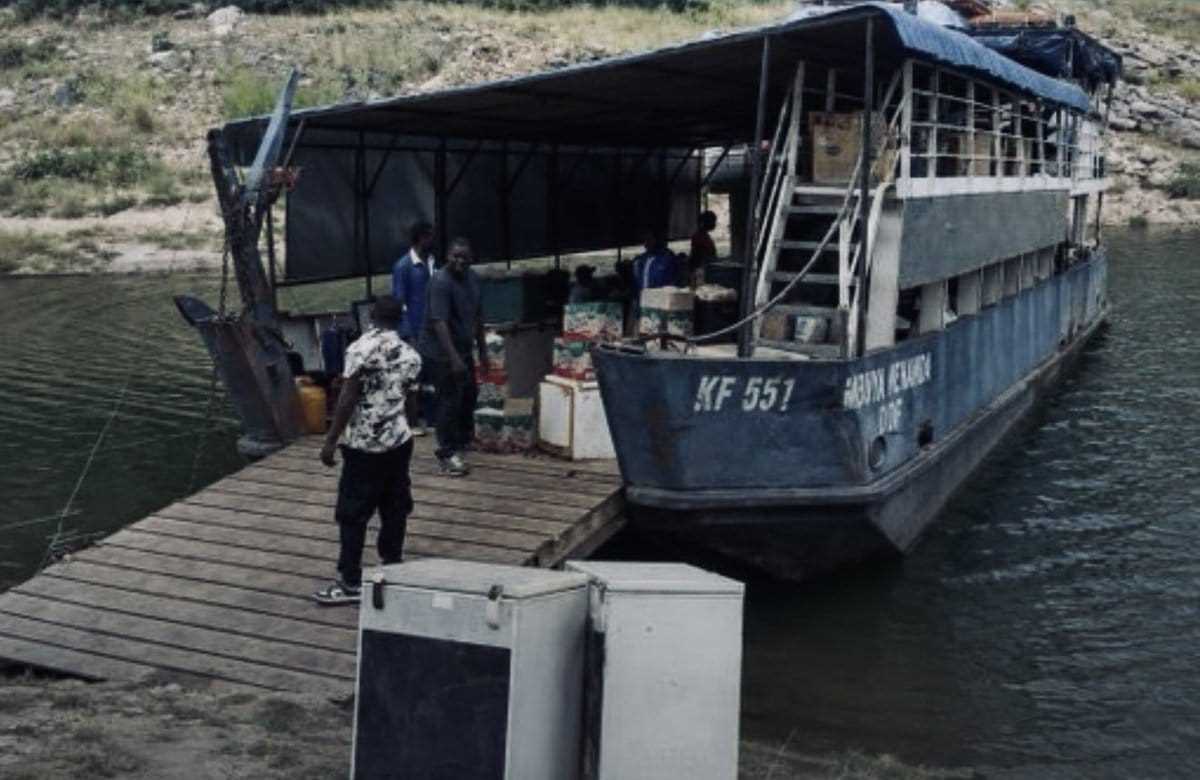
The death of 46 people after a Rural Infrastructure Development Agency vessel capsized on Lake Kariba has triggered questions over passenger capacity, vessel safety, weather conditions, emergency preparedness and regulatory enforcement.
But the public debate that followed has also exposed something deeper.
Zimbabweans have become accustomed to overcrowded kombis, informal taxis carrying more passengers than they should, ageing vehicles and limited transport options. What is being described as an exceptional tragedy on Lake Kariba is, in many respects, an extreme version of a risk that commuters encounter every day.
Mitchell Gumbo challenged the tendency to judge passengers without considering the circumstances in which they travel.
She argued that public discussion often ignores the realities facing people in remote areas, where transport choices can be severely restricted.
“If transport in that area is not easy to get, invariably someone will resort to the one that’s available even though unsafe,” Gumbo said.
That argument goes to the centre of Zimbabwe's transport-safety problem.
A passenger may recognise that a vehicle is overcrowded and still board it because the alternative may be missing work, school, medical treatment or an important journey.
Phil Mutonhodza offered a different perspective, questioning why passengers would continue with a dangerous journey when the risks were obvious.
“But what's the urgency of going? It's better to stay behind than drown,” he said, before drawing a comparison with passengers who enter heavily overloaded informal vehicles.
His conclusion was blunt: “It's desperation.”
That contradiction, between personal responsibility and structural desperation, is now at the heart of the Kariba debate.
Government cannot reasonably expect passengers to make perfect safety decisions where the transport system itself does not provide enough safe choices.
At the same time, passengers cannot be expected to determine whether a ferry, bus or kombi meets technical safety standards.
That is the responsibility of operators and regulators.
Zimbabwe's Inland Waters Shipping Act provides for the inspection and certification of vessels and empowers authorities to deal with vessels considered unsafe. The law also addresses issues including overloading and the condition of equipment.
The existence of such legislation means the central question after Kariba is not whether Zimbabwe has safety rules.
It is whether those rules were enforced.
The investigation should establish the vessel's approved passenger capacity, the actual number aboard, its inspection and maintenance history, the condition of its safety equipment and the circumstances under which permission was given for the voyage.
Those questions become more urgent because survivors have reportedly described deteriorating conditions during the journey.
Hillary Musarurwa, citing an account from a survivor, said the ferry's limited schedule was itself part of the pressure passengers faced.
“From what one of the survivors said this boat goes once a day. If you miss it you have to sleep in Kariba and wait for the next day,” Musarurwa said.
If that account is confirmed, it changes the context in which passenger decisions must be understood.
An individual deciding whether to board an overcrowded ferry is not necessarily choosing between a dangerous boat and a safe alternative.
They may be choosing between travelling now and losing another day.
That is precisely where public transport policy becomes a government responsibility.
Clever Mlambo made a similar point, arguing that people unfamiliar with the area could easily misunderstand the nature of the vessel.
“Many think it was a leisure boat, not knowing that in that area ‘the ferry’ was their best alternative,” he said.
The comparison with urban transport is unavoidable.
Mlambo noted that the same logic applies to commuter vehicles, where passengers routinely board vehicles carrying more people than they were designed to accommodate.
The problem is not that Zimbabweans suddenly became reckless on Lake Kariba.
The problem is that overcrowding has become normalised across the country's transport system.
Leandra Jombe made the point more sharply, questioning the sudden focus on passengers after the ferry disaster when overcrowding is a familiar feature of daily commuting.
People routinely travel in overloaded buses and informal vehicles, she argued, only for public attitudes to change when a disaster occurs.
PT Chimusoro similarly pointed to the gap between commentary and lived experience.
“People board overloaded Kombis, they sit in the boot of mushikashika. They live in overcrowded rooms and apartments. It's easy for people to comment on issues they are not directly affected by.”
That observation matters because public transport safety is ultimately about more than compliance statistics.
It is about the choices available to citizens.
Runyararo Munhuweyi argued that people outside affected communities often underestimate the difficulty of those choices.
“The problem is a number of people speak from their comfortable homes/offices,” Munhuweyi said, arguing that people who have not experienced the transport constraints facing remote communities may struggle to understand why passengers accept dangerous conditions.
That does not remove the responsibility of passengers to exercise caution.
But it does raise the question of whether government has created a transport system in which caution is realistically possible.
That question extends directly to Zimbabwe's roads.
The country's public transport sector has long struggled with overloaded vehicles, unroadworthy cars, informal operators and inadequate enforcement. Fatal crashes involving buses and commuter vehicles repeatedly expose the consequences.
The same pattern is now visible on the water.
The difference is that the Kariba disaster involved a government-operated vessel.
Related Stories
That places the state on both sides of the safety equation: it was responsible for providing the service and is also responsible for ensuring that the service met regulatory requirements.
Fadzai Mahere therefore shifted the debate from passenger behaviour to state responsibility, asking why citizens in the affected area remain dependent on ageing transport infrastructure and why adequate safety mechanisms were apparently not in place.
Her questions included why the ferry system had not been upgraded, why additional vessels had not been provided to reduce pressure on a single service and why safety measures such as life jackets and emergency arrangements were allegedly inadequate.
She also questioned whether authorities had received warnings about the condition of the vessel and whether weather information had been properly acted upon.
Those questions should now form part of the official investigation rather than remain confined to social-media debate.
President Emmerson Mnangagwa has already ordered maritime safety agencies and security forces to address deficiencies following the disaster.
“I have ordered our maritime safety agencies and security forces to immediately overhaul and fix the deficiencies in our maritime capabilities,” Mnangagwa said.
“We must ensure our waters are safe.”
The directive should extend beyond Lake Kariba.
If government investigates only the ferry, it risks missing the broader problem.
Zimbabwe needs to examine how it regulates every form of passenger transport.
How many public vehicles are operating without proper certification?
How many fail roadworthiness tests?
How frequently are overloaded vehicles intercepted?
What happens to repeat offenders?
How many public transport vehicles are inspected each year?
How many are permanently removed from service?
And how much capacity exists in rural areas where citizens have few alternatives?
These questions are particularly important because Zimbabwe's transport system has developed around a mixture of formal and informal services.
Where formal transport cannot meet demand, informal operators fill the gap.
That can keep people moving, but it also creates conditions in which passenger numbers, vehicle condition and operating standards can become secondary to availability.
The economics are straightforward.
An operator earns more by carrying more passengers.
A passenger saves money by choosing the cheapest available vehicle.
A community benefits simply because transport exists.
The regulator, however, is supposed to ensure that none of those incentives compromises safety.
When enforcement fails, the system gradually transfers the cost of unsafe transport from operators and government to passengers.
The passenger pays the fare and assumes the risk.
That is precisely what a functioning regulatory system is supposed to prevent.
Zimbabwe's budget allocations add another dimension.
Treasury's 2026 estimates allocate substantially more to employee compensation within RIDA than to goods and services, raising questions about the resources available for maintenance and operations.
The figures do not prove that budget constraints caused the Kariba accident.
But they should prompt a wider examination of whether government agencies responsible for infrastructure have sufficient operational capacity to maintain assets and enforce standards.
Safety is not achieved by legislation alone.
It requires money for inspections, equipment, maintenance, training and emergency response.
It also requires officials to use the powers already available to them.
Other African countries have faced similar transport disasters and have developed regulatory systems that place clear limits on passenger numbers and require vessels to meet safety standards before operating.
The lesson for Zimbabwe is not that another country's laws will prevent accidents.
It is that capacity limits must mean something.
If a ferry is certified for a particular number of passengers, that figure cannot become negotiable because demand is high.
If a bus is designed for a particular passenger load, overcrowding cannot become an accepted operating model.
If a vehicle fails roadworthiness requirements, it should not remain in passenger service because removing it would create a transport shortage.
That is the difficult balance government has to manage.
It cannot improve safety simply by banning unsafe transport without providing alternatives.
But it also cannot justify unsafe transport because alternatives are inadequate.
The answer has to be investment in transport capacity alongside strict enforcement.
Kariba has exposed the consequences of failing to make that investment.
It has also exposed how quickly the public conversation can shift towards blaming passengers after disaster strikes.








Leave Comments