








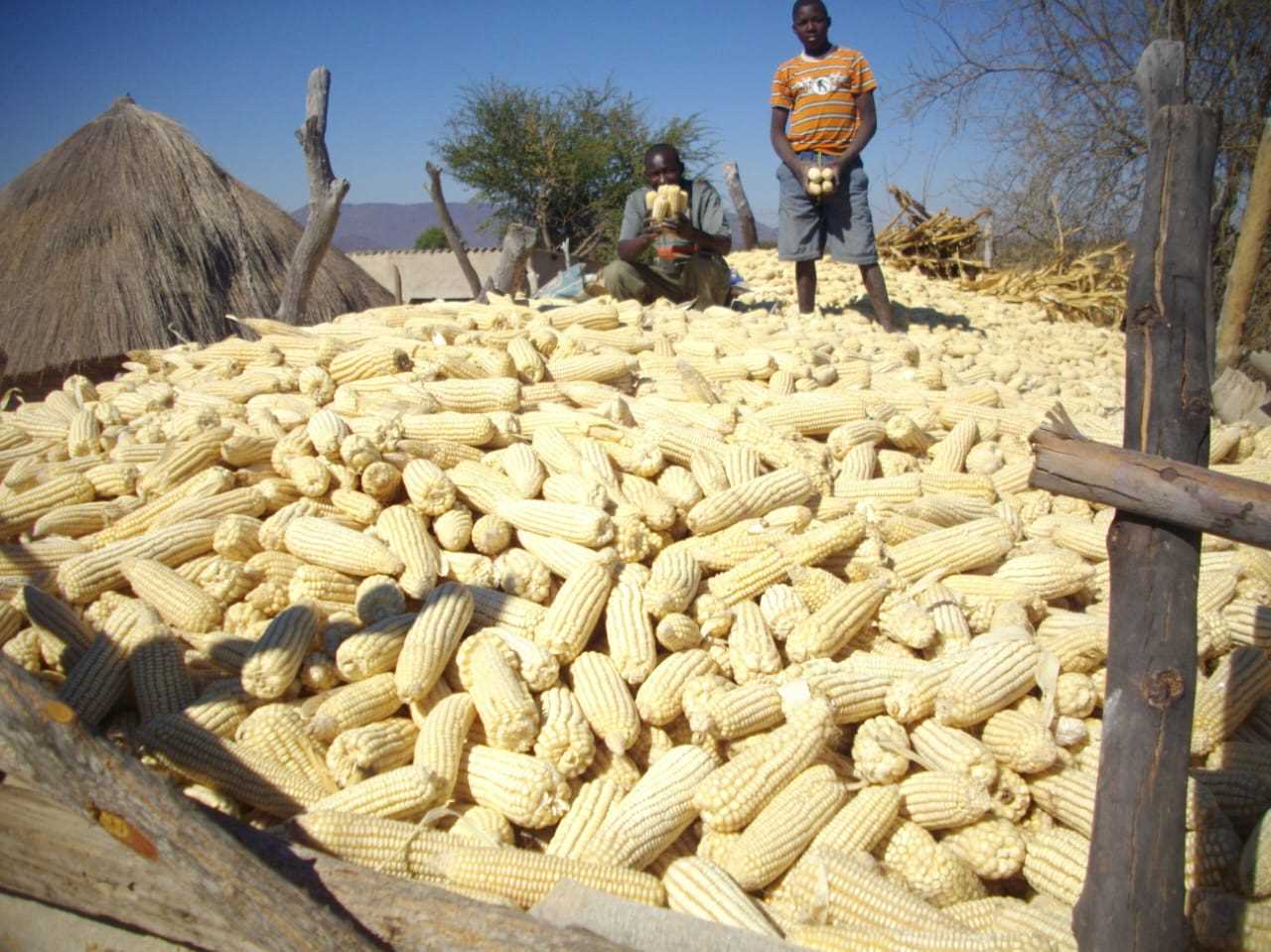
Zimbabwe's food-security challenge is not only about how much the country produces, but also how much of that production survives the journey from the farm to the consumer, with post-harvest losses, inadequate processing and weak market linkages threatening to erode the gains made through agricultural production.
The issue is highlighted in the latest Green Governance Zimbabwe publication, which argues that Zimbabwe needs to rethink food security as a complete system covering production, storage, processing, distribution, markets and consumption, rather than focusing predominantly on increasing output.
"Zimbabwe's economy and the well-being of millions of people are closely linked to agriculture and natural resources," the publication says, warning that "climate change, prolonged droughts, land degradation, rising food prices, and post-harvest losses continue to threaten food security and livelihoods."
The distinction is important because producing more food does not necessarily mean that more food reaches consumers.
The publication points out that around one-third of all food produced globally is lost or wasted, describing the reduction of food losses as one of the most effective ways of improving food security while conserving natural resources and reducing greenhouse-gas emissions.
For Zimbabwe, the challenge is compounded by climate shocks.
The country experienced a severe El Niño-induced drought in 2024, which sharply reduced agricultural production and pushed large numbers of rural households into food insecurity. Although production subsequently recovered, the publication's argument suggests that resilience cannot depend on good rainfall alone.
"Building sustainable food systems means investing in solutions that make food production more resilient while protecting the environment," the publication says. It identifies climate-smart agriculture, reducing food loss and waste, supporting local food enterprises and improving market access as part of that response.
The practical significance can be seen in the businesses and community initiatives profiled in the newsletter.
One example is Zazi Foods, whose business model is built around processing locally grown fruits and vegetables that might otherwise be lost.
The publication says the enterprise "helps reduce post-harvest losses while supporting climate-smart food systems" and creates markets for produce sourced directly from smallholder women farmers.
That model exposes an important economic opportunity.
Instead of viewing surplus agricultural produce as waste, processing can convert it into products with a longer shelf life and potentially higher value.
For smallholder farmers, that can also create a more reliable market.
But the experience of Zazi Foods demonstrates that value addition is not automatic.
The enterprise has had to navigate the practical difficulties of building a food-processing business, including market access and the capacity to move beyond small-scale production. The newsletter records how entrepreneurship support helped connect the business to training, potential markets and packaging suppliers.
This matters because Zimbabwe's food-system problem is partly an infrastructure problem and partly a business-development problem.
A farmer can produce a good crop, but without storage, the product may deteriorate. Without processing equipment, surplus cannot easily be converted into longer-lasting products. Without reliable transport and markets, farmers can be forced to sell quickly, often when prices are weakest.
The publication therefore calls for improvements in "harvesting, storage, processing, and distribution to ensure more food reaches consumers instead of being lost along the value chain."
Related Stories
That approach also changes how agricultural value addition should be measured.
The key question is not simply how many processing plants Zimbabwe has established.
It is whether those plants are actually connected to local farmers, whether they operate consistently, whether they can meet quality standards, and whether farmers receive better returns as a result.
The publication's community-based approach provides another example.
In Chimanimani's Ward 21, the youth-led Sunshine Group has developed the Kopa Green Village Hub from a small agroecology demonstration garden into a broader community centre incorporating a greenhouse, indigenous-tree nursery, value-addition space and youth training centre. The nursery alone has more than 3,000 seedlings.
Young people participating at the hub are also developing skills in beekeeping, solar installation, fuel-efficient cookstove construction and climate-smart farming.
The significance is not the size of the project.
It is the model: agricultural production is being combined with processing, environmental restoration, renewable energy, skills development and entrepreneurship, rather than treating farming as an isolated activity.
The publication describes the hub as having evolved into "a vibrant community hub where young people are not only learning practical green skills but are also shaping solutions to some of the most pressing environmental and socio-economic challenges facing their community."
Such initiatives, however, should not be mistaken for a substitute for national infrastructure.
A community greenhouse or food-processing enterprise can demonstrate what is possible, but Zimbabwe's national food system requires much larger investments in storage, irrigation, roads, electricity, cold chains, processing capacity and market infrastructure.
The publication itself makes the broader point that a stronger food system "is not only about increasing production" but about creating a system that benefits farmers, entrepreneurs, consumers and future generations.
That is particularly relevant as climate change makes agricultural production more volatile.
The publication warns that climate change threatens food security by disrupting the access, availability and adequacy of food, particularly for marginalised communities. One of its contributors, Lavender Mudiwa-Ziso, describes adaptation and resilience initiatives as urgent because climate change will worsen hunger and poverty if food systems become increasingly disrupted.
The economic consequences extend beyond food availability.
When food is lost, farmers lose potential income. Processors lose raw materials. Consumers face tighter supplies and potentially higher prices. The country also loses the opportunity to export processed agricultural products and retain more value domestically.
This makes post-harvest management part of Zimbabwe's industrialisation agenda as much as its food-security strategy.
Processing agricultural commodities locally can create demand for packaging, transport, refrigeration, machinery maintenance and other services. It can also create opportunities for small businesses to enter value chains that begin with farming but extend into manufacturing and retail.
But the success of that model depends on scale and continuity.
One-off grants, training programmes and demonstration projects can help entrepreneurs overcome initial barriers, but long-term competitiveness requires access to affordable finance, reliable electricity, consistent raw-material supplies, quality standards and markets.








Leave Comments