







Government has raised monthly funding for the Gwayi-Shangani Dam project to US$8 million, putting the long-delayed infrastructure project on a faster construction path, but major work remains before water can reach Bulawayo.
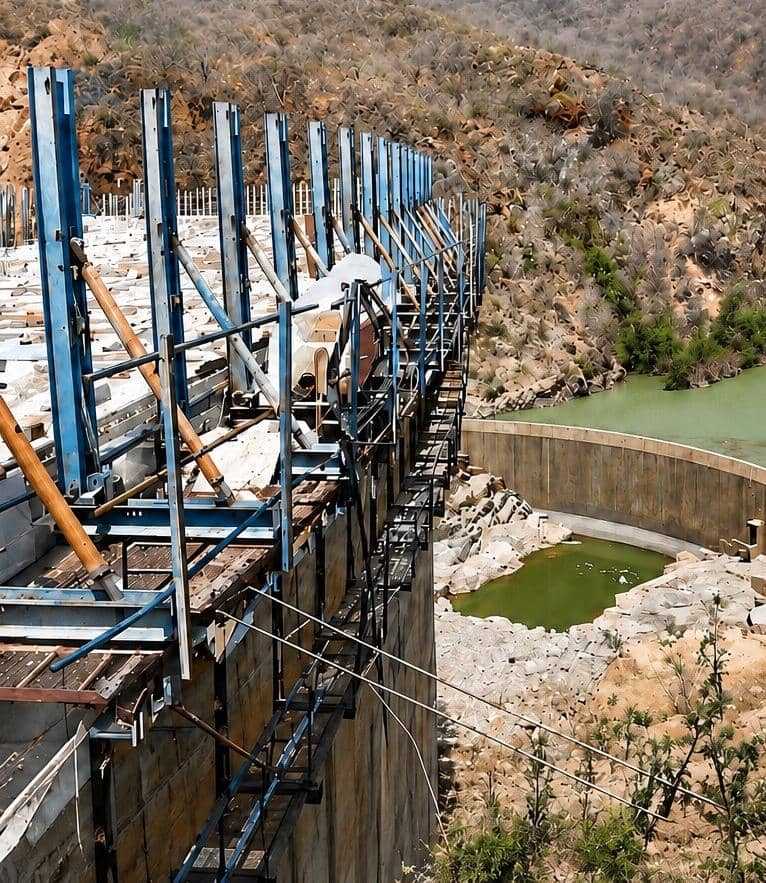
The increased allocation, up from US$5 million a month, comes as the main dam approaches completion, with Zimbabwe National Water Authority engineer Gift Ziweya putting the dam wall at 82 percent complete and targeting completion by the end of the year.
“The dam wall is now at 82 percent complete, and we anticipate that construction of the dam will be complete by the end of the year, as long as the Government continues giving us the monthly allocation of US$8 million,” Ziweya said.
The funding increase represents an additional US$3 million every month, or a 60 percent increase from the previous monthly allocation.
The 252-kilometre pipeline to Bulawayo remains substantially behind the dam works, while pumping infrastructure is also at an earlier stage of construction.
That creates the central challenge for the project: a completed dam cannot solve Bulawayo's water problems until the network required to convey, pump and treat the water is also operational.
Ziweya said the completed project will include a 10MW power station and six pump stations, with water transported to Bulawayo for treatment at a planned Cowdray Park facility. Irrigation schemes are also planned along the pipeline corridor.
The project is intended to deliver more than water infrastructure. Earlier assessments put the eventual supply to Bulawayo at 220 megalitres a day, while the wider project is expected to support irrigation and power generation.
Government has described Gwayi-Shangani as a strategic project capable of addressing Bulawayo's chronic water shortages while supporting agriculture, energy and economic activity in Matabeleland.
Special Advisor to the President on Monitoring the Implementation of Government Programmes and Projects, Jorum Gumbo, said in June that the project had advanced from 39 percent completion in 2022 to 77 percent at that stage.
Related Stories
“The Gwayi-Shangani Dam is a strategic national project that will provide a lasting solution to Bulawayo’s water challenges while supporting irrigation, energy generation and economic growth,” Gumbo said.
However, the financial challenge extends beyond the monthly allocation for the dam itself. A July progress report reviewed by the Centre for Innovation and Technology put the value of four major contracts under the National Matabeleland Zambezi Water Project at US$554.44 million, highlighting the scale of funding required across the wider project.
That makes the US$8 million monthly allocation important for maintaining momentum, but it also underlines the difference between financing the dam's remaining works and financing the complete water-delivery system.
Government is preparing to relocate 806 families whose homes and land will be affected by the reservoir. The estimated cost of the resettlement programme is US$28 million.
Assistant Resident Engineer Joachim Banda said the dam cannot begin impounding water until the affected families have been relocated.
“The dam will take up 10 000 hectares of land where the 806 families are living, and they all have to be relocated before we start impounding water,” Banda said.
He said the Government would need to maintain the US$8 million monthly allocation to meet the year-end construction target, while the resettlement process would have to be completed before water storage could begin.
The relocation issue adds a social dimension to what has largely been presented as an infrastructure and engineering project.
Community representative Pedious Midzi Ndlovu said affected households also wanted cultural issues, including family graves and traditional rites, to be taken into account during the relocation process.
Bulawayo Mayor David Coltart has also identified the pipeline's financing as a major issue, describing the associated infrastructure as requiring several hundred million dollars and saying this would be a decisive hurdle in getting the water to the city.






Leave Comments