









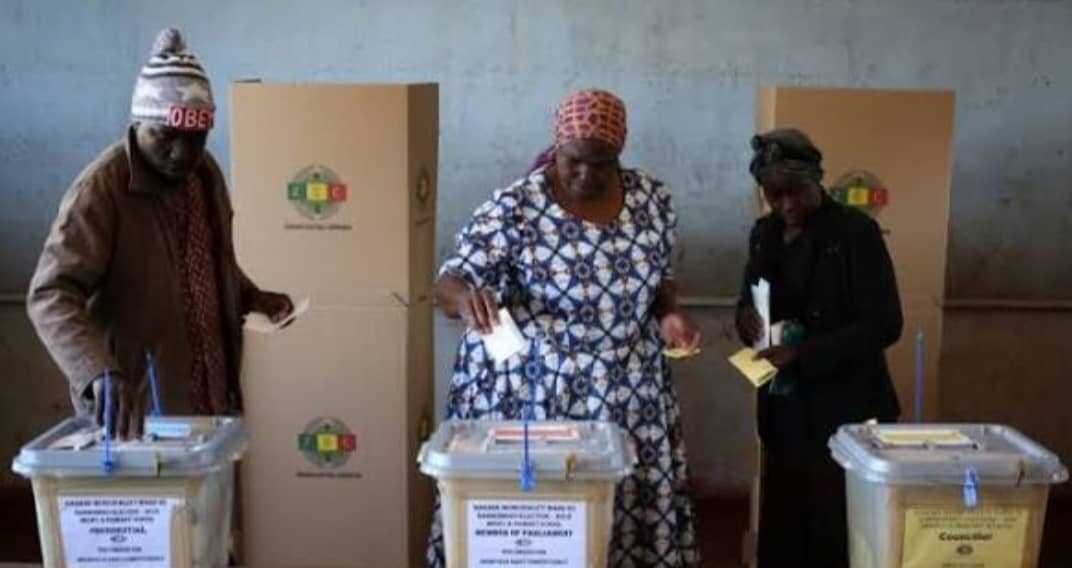
The Zimbabwe Electoral Commission (ZEC) has assured employees involved in voter registration that they will not lose their jobs as the function is transferred to the Civil Registry Department following constitutional changes that have altered the country's electoral architecture.
ZEC Commissioner Catherine Mpofu gave the assurance as commissioners supervised the handover of voter registration and voters' roll management to the Civil Registry Department across the country.
“No one will be left jobless,” Mpofu told employees during the transition.
ZEC said the handover and takeover process was progressing well nationwide.
The transfer is a consequence of the Constitution of Zimbabwe Amendment (No. 3) Act, 2026, which moved responsibility for voter registration and the compilation and maintenance of the voters' roll from ZEC to the Registrar-General's Office. Officials began operationalising the transfer in August, with consultations and planning between ZEC and the Civil Registry Department preceding the physical handover.
The change reverses the institutional arrangement created by the 2013 Constitution.
Before the constitutional reforms, voter registration was handled by the Registrar-General's Office, which already maintained civil records covering births, deaths, citizenship and national identity documents. The 2013 Constitution subsequently placed voter registration and the voters' roll under ZEC as part of reforms intended to strengthen the independence of electoral administration.
The 2026 amendment has now moved the function back to the Registrar-General, bringing voter registration closer to the country's civil registration system.
The argument advanced by supporters of the change is that the Civil Registry already holds the core information required to maintain an accurate voters' roll.
The Registrar-General maintains records of births, deaths and national identity documents, meaning that integrating voter registration with civil registration could allow changes in citizens' status to be reflected more directly on the voters' roll.
For example, deaths recorded through the civil registration system could be used to update the voters' roll, while citizens who reach voting age and obtain national identity documents could potentially be incorporated into the register through a more integrated system.
Related Stories
The move is therefore being presented partly as an administrative reform aimed at reducing duplication between two government systems.
But it also represents a significant change in the institutional safeguards surrounding Zimbabwe's elections.
ZEC was established as an independent constitutional commission, and the 2013 framework gave it responsibility for compiling and maintaining the voters' roll. The Registrar-General's Office, by contrast, operates within the executive branch of Government.
That distinction has generated debate over whether transferring the voters' roll away from ZEC could affect perceptions of electoral independence. Critics have argued that the Registrar-General's Office has historically faced questions over its political neutrality, while supporters maintain that placing civil and voter registration under one system could improve accuracy and administrative efficiency.
The constitutional amendment does not, however, transfer responsibility for conducting elections wholesale to the Civil Registry Department.
ZEC remains responsible for administering and supervising elections, while voter registration and voters' roll functions are being separated from its mandate.
The transition therefore requires the transfer not only of responsibilities but also of institutional knowledge and personnel who have been performing voter registration work under ZEC.
ZEC's assurance that no one will be left jobless indicates that staff currently performing voter registration and voters' roll duties are expected to move with, or be absorbed into, the new institutional arrangement rather than being retrenched.
The transition consequently involves more than moving files and databases between Government offices.
It requires the Civil Registry Department to take over the technical systems, personnel and operational knowledge required to maintain the voters' roll without disrupting voter registration services.
For ZEC, the handover also reduces one of its constitutional responsibilities while leaving it with its wider electoral mandate.








Leave Comments