








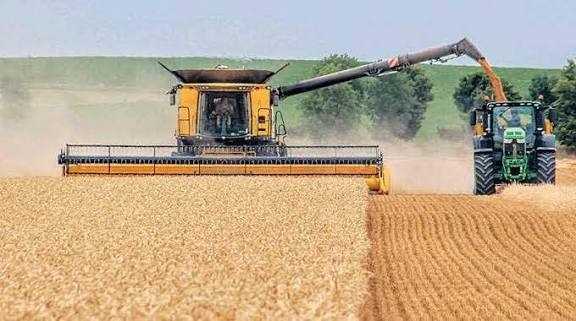
Zimbabwe has recorded 640 195 tonnes of wheat from the 2025 winter farming season, as the country strengthens efforts to secure food supplies amid shifting weather patterns.
The crop was harvested from 122 146 hectares, giving an average yield of 5.2 tonnes per hectare.
The latest figures reflect steady improvement in winter production, supported by investment in irrigation, mechanisation and farmer training programmes.
Minister of Agriculture Anxious Masuka said the country’s winter output shows growing resilience within the sector despite climatic pressure.
“The 2025 winter wheat harvest has shown the impact of investment in irrigation, extension services and farmer mobilisation. We are building a consistent, resilient cropping system,” said Dr Masuka.
National grain stocks now stand at 180 063 tonnes, including 60 347 tonnes delivered by the Agricultural and Rural Development Authority (ARDA).
The Minister said the stocks provide a crucial foundation as preparations intensify for the 2025/2026 summer season.
Research stations under ARDA are carrying out trials aimed at developing wheat varieties with hard wheat characteristics a move expected to reduce reliance on imported premium flours used in bread-making.
Related Stories
Barley producers also recorded strong output this season, with 47 709 tonnes harvested from 6 156 hectares, achieving an average yield of 7.75 tonnes per hectare, compared to 7 tonnes last year.
Dr Masuka said the gains are a result of targeted producer support and consistent extension services.
“With better seed varieties, training and mechanisation support, we are seeing farmers deliver higher yields and better-quality crops across the board,” he said.
As the summer season approaches, the agriculture sector is prioritising early land preparation, timely input distribution and irrigation rehabilitation.
Farmers across the country have already begun preparing fields, with emphasis on climate-smart practices to cope with erratic rainfall.
Dr Masuka said the key focus is ensuring efficiency during the critical early stages of the season.
“Our strategy is centred on efficiency. Timely land preparation, timely inputs, and timely planting will define the success of the next summer season,” he said.
Targets for maize, traditional grains, soya bean and horticulture are being consolidated, with government expected to push for increased production under irrigation to cushion farmers from rainfall variability.
Zimbabwe is positioning itself for a stable agricultural year, anchored on improved capacity, stronger farmer support and research-driven solutions.










Leave Comments