








On Zimbabwe’s major highways, the hum of engines hauling goods between Pretoria, Lusaka and beyond echoes the promise of regional economic integration.
Yet for too many families, that promise has transformed into enduring tragedy.
As the nation positions itself as a key transit hub under the African Continental Free Trade Area (AfCFTA) and Southern African Development Community (SADC) trade frameworks, the boom in cross-border haulage is colliding with weak enforcement, poorly coordinated policy, and exhausted drivers.
The ‘unholy alliance’ has turned vital trade corridors into death traps for motorists, pedestrians and transport workers alike.
The Beitbridge–Harare–Chirundu corridor — a vital link in the North–South Trade Corridor — is among Zimbabwe’s busiest. It forms part of the Trans-African Highway network that connects South Africa to Zambia and beyond, carrying thousands of trucks daily laden with regional exports and imports.
Yet this surge in freight movement comes with a grim human cost.
According to the latest data, 55,645 road accidents were reported nationwide in 2024, with 781 fatalities and thousands injured. Major highways — including Harare–Bulawayo and Harare–Mutare — also account for a disproportionate share of these collisions.
Road traffic accidents continued to rise in 2025, with 28,159 collisions recorded between January and June — an increase from the previous year — and fatal crashes spiking by more than 30% in some quarters.
A tragic sequence of headline-grabbing crashes lays bare the crisis:
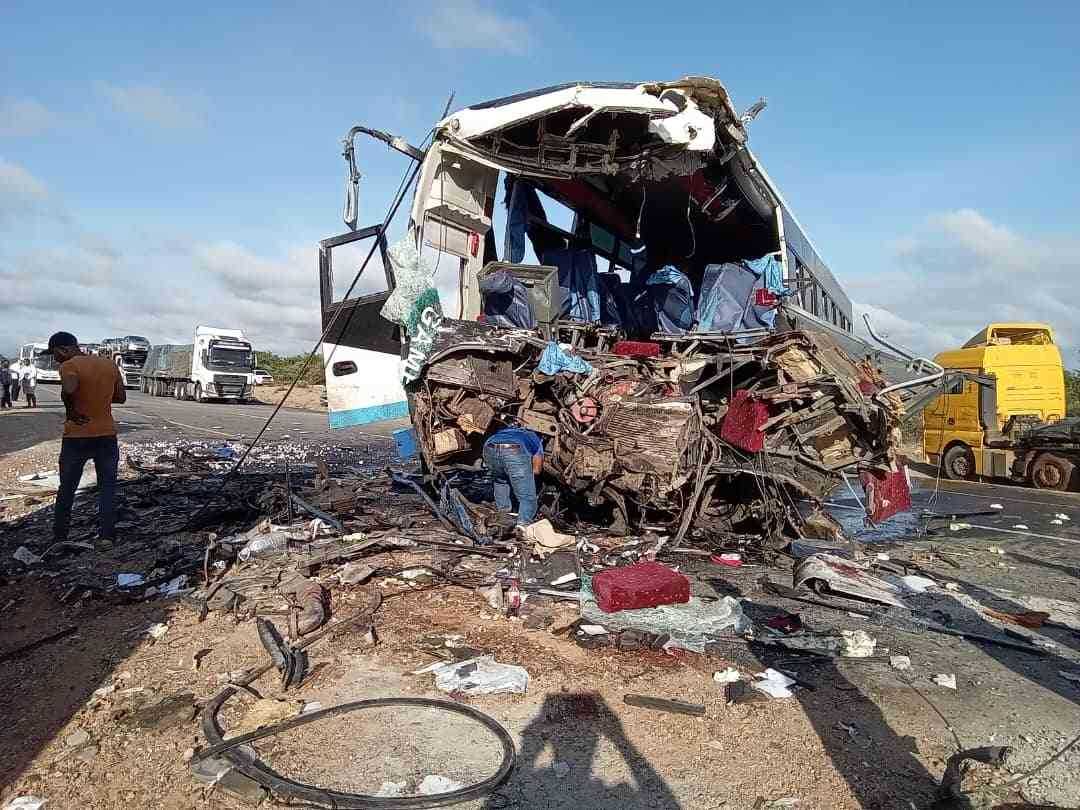
A head-on collision near Beitbridge left 24 people dead when a bus and haulage truck collided on a busy stretch linking Zimbabwe to South Africa, prompting the President to declare it a national disaster.
In Chitungwiza, a collision between a commuter bus and a truck claimed 17 lives, while pedestrians were killed after being struck by an out-of-control truck — a disturbingly common scenario.
In a single week in April 2025, at least 19 people were killed or injured in multiple highway crashes — notably along the Harare–Chirundu route — underscoring how everyday travel can turn fatal.
These numbers reflect a broader African pattern: the continent has the world’s highest road fatality rate, with road traffic deaths rising sharply over the past decade.
Experts say the spike in accidents across these regional corridors is not random but rooted in structural, regulatory and behavioural factors.
Related Stories
“Overloading, driver fatigue, speeding and weak inspection regimes remain the major causes of bus and truck disasters on regional routes,” said Tawia Addo-Ashong, Road Safety Pillar Lead at the Sub-Saharan Africa Transport Policy Programme (SSATP).
Haulage drivers often push through exhaustion to meet tight delivery schedules across borders. Long waits at under-resourced border posts contribute to fatigue. Meanwhile, poorly coordinated enforcement between neighbouring states means safety standards vary widely and are inconsistently applied.
“One of the biggest challenges we face is the lack of harmonised enforcement across SADC,” says Dr. Michael Masiapato, Commissioner of the Border Management Authority. “We have to strengthen cooperation with our regional partners to protect all road users who travel our corridors in pursuit of opportunity and connection.”
Inadequate infrastructure compounds the problem. Even rehabilitated highways — like the Plumtree–Mutare route — have recorded some of the highest crash figures, in part because improved surfaces encourage higher speeds without accompanying safety interventions.
For many survivors and families, statistics only sketch the outline of loss.
“I was asleep in the bus when the truck came from nowhere,” recalls Phillipah Gomo, a survivor of a Harare-bound wreck. “I still wake up hearing the brakes screech.”
Another survivor added: “These highways are full of speed, but no safety.”
Their stories highlight human faces behind grisly numbers — wives, children, market traders, cross-border workers — victims of an economic integration that has yet to account for the safety of its citizens.
The contradiction at the heart of Zimbabwe’s hub ambitions is clear: economic corridors that promise prosperity are also amplifying risk.
Regional bodies such as the SSATP and SADC have published guidelines and frameworks for integrating road safety into trade corridor planning, emphasising data collection, infrastructure safety design, enforcement harmonisation and targeted interventions for heavy vehicles.
And yet implementation is slow. Truck stops to reduce driver fatigue, real-time corridor monitoring systems, and harmonised cross-border regulations — recommended by multiple regional reports — are still in nascent stages.
For Zimbabwe to truly benefit from AfCFTA and SADC trade expansion, safety must be code-signed into policy with the same vigour as trade facilitation. That means not only exporting goods efficiently, but protecting the lives of those who make that transit possible.
As one road safety advocate commented:
“These are not just roads. They are lifelines. If we don’t address safety comprehensively, we will continue to pay in human and economic costs.”







Leave Comments