







On a quiet aisle inside Bhola Mega Mart, a Zimbabwean success story sits in plain sight.
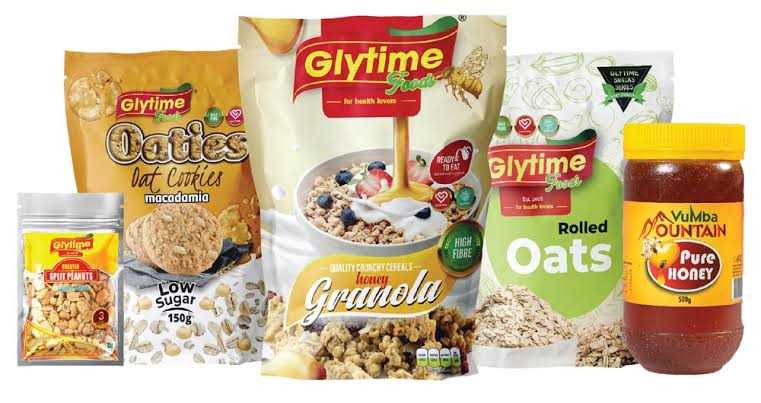
Neatly arranged jars of granola peanut butter, packets of oats, vegetarian patties, low-sugar cookies, roasted maize snacks and raw honey fill an entire shelf — the full Glytime Foods range.
There is nothing loud about the display, yet it carries a powerful message: a homegrown brand has learned how to speak to global tastes without losing its soul.
The product that best captures that journey is Glytime’s Granola Peanut Butter, released late last year.
Designed using artificial intelligence and produced on an automated line, the spread blends locally grown peanuts with crunchy granola, creating a texture and flavour profile that feels modern, versatile and intentional. It works just as easily on toast in the morning as it does spooned straight from the jar during a busy day — a small but telling detail in how the brand understands contemporary lifestyles.
For Glytime Foods, this product was not just a launch; it was a statement of arrival.
The company was founded in 2018 by entrepreneur Lesly Marange, at a time when Zimbabwe’s economic environment offered little comfort to start-ups.
With just US$2,000, production began in a rented cottage kitchen using an ordinary oven. Power cuts were frequent, inflation relentless and raw materials unpredictable. Progress was slow, and mistakes were part of the process.
One of the biggest early challenges was shelf life.
Rather than turning to artificial additives, the company committed to developing natural preservation methods — a decision that took time but ultimately shaped the brand’s identity. That breakthrough allowed Glytime Foods to scale, first cautiously and then with confidence.
From home production, the business moved into formal manufacturing spaces, steadily expanding its offering.
Today, Glytime Foods boasts 22 stock-keeping units, exports to Zambia and Botswana, and is stocked in more than 120 retail outlets, including Pick n Pay, Food Lover’s Market and Bhola Mega Mart, which carries the full range.
For Talent Marange, one of the company’s directors, the growth still feels personal.
“What I remember about 2018 is that we were producing at home in our rented cottage, using an ordinary oven,” she said.
“From there we moved to Coventry, and after some institutions believed in us, we moved again. Now we are operating from Sunway. It is exciting to be part of a story that started as a dream.”
That dream is now visible in everyday shopping baskets. Glytime Foods has quietly become part of Zimbabwean households — not as a novelty, but as a reliable choice.
Shoppers speak warmly about the granola’s balance of spice and sweetness, with hints of cinnamon, dried fruits and occasional dark chocolate pieces. Others say it has become their preferred yoghurt topping because it feels filling without being heavy.
Related Stories
In some homes, even elders — famously selective — have embraced it, returning for second scoops with amused approval.
The feedback is honest rather than polished.
A few customers admit that one granola blend runs slightly sweeter than expected, but quickly add that the cookies strike the perfect balance and rarely last long in the cupboard. That kind of conversation — informal and unforced — is where lifestyle brands are truly made.
Beyond granola and peanut butter, the wider range reflects a deliberate understanding of changing diets. Vegetarian patties and sausages sit alongside traditional favourites like roasted maize snacks and honey, while low-sugar cookies cater to indulgence without guilt.
The products feel familiar yet elevated — rooted in African ingredients, presented for modern living.
For Lesly Marange, the vision has always been clear.
“We are a heritage-based business,” he said.
“What we are simply doing is converting our local raw materials — our African raw materials — into commercially viable products that are low GI, natural and organic.”
The motivation is deeply connected to health.
“World Health Organisation reports show that 71 percent of deaths globally are due to non-communicable diseases,” he said.
“Our own people are affected, and that is why we are intentional about what we produce.”
That intention has resonated beyond Zimbabwe.
“Africa spoke,” Marange said.
“People said the product is good and they want it to be available more often.”
Yet despite exports and growing regional demand, Glytine Foods has resisted the temptation to dilute its identity.
The innovation is global, but the ingredients remain local. The technology is advanced, but the story is still Zimbabwean.
In 2026, as consumers become more selective about what they eat and where it comes from, Glytine Foods stands at a rare intersection — a lifestyle brand that understands health, convenience and culture, without pretending to be something it is not.
From a kitchen oven to supermarket shelves across borders, its rise feels less like a marketing success and more like a quiet affirmation that Zimbabwe can create products the world wants, starting with what it already has.
On that Bhola Mega Mart shelf, the jars may be sealed, but the story is wide open — and still unfolding.









Leave Comments