







As China and Africa roll out the Year of People-to-People Exchanges, cooperation between Beijing and Harare is increasingly moving beyond diplomacy and mega-infrastructure into projects that directly reshape everyday life for ordinary communities.
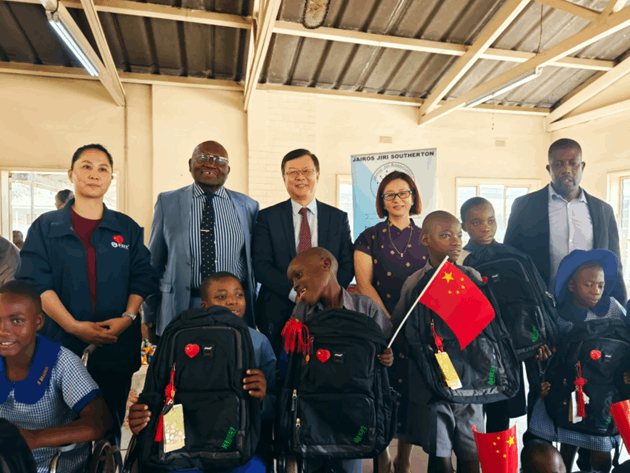
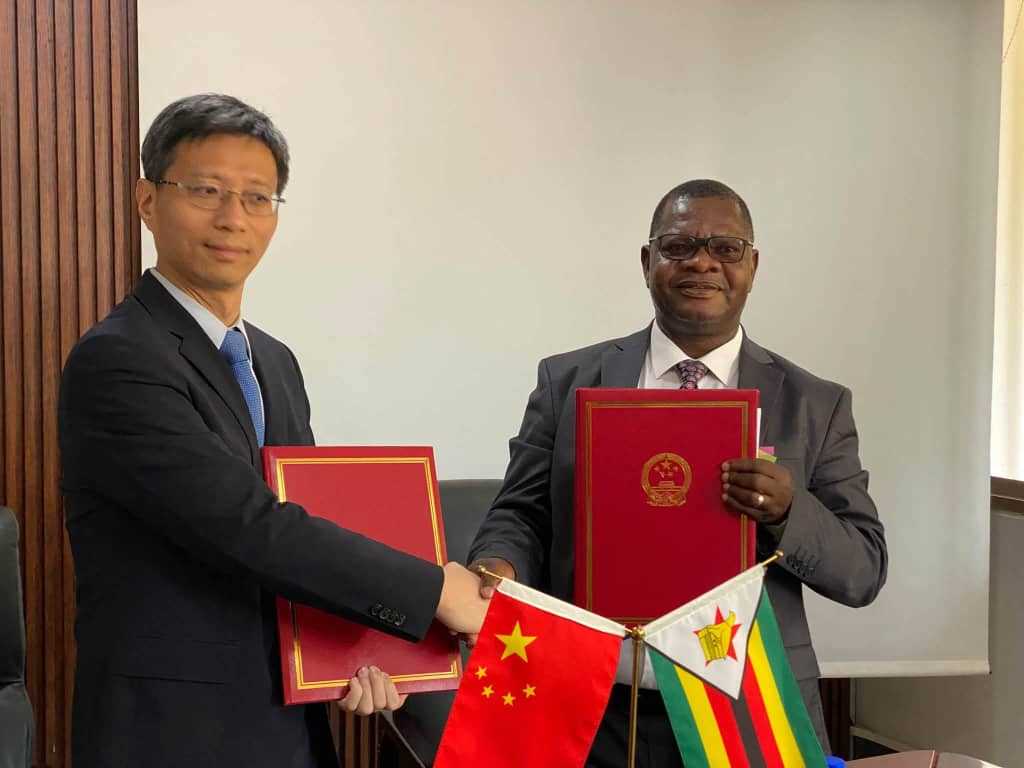
That shift was on display this Friday at Harare Children’s Centre, where the Chinese Embassy in Zimbabwe and Jiangsu Fanye Power Energy Equipment Co. handed over a 12-kilowatt solar power system alongside textbooks, electronic gadgets, stationery, and groceries.
The development now guarantees an uninterrupted power supply for children with disabilities, eliminating learning disruptions caused by load shedding and strengthening the center’s long-term operating capacity.
The beneficiary, the Jairos Jiri Association, is one of Zimbabwe’s largest rehabilitation networks, serving more than 16,500 people with disabilities annually through outreach and follow-up integration programs. It operates 16 centers nationwide, where more than 1,200 children and adults receive education, treatment, and care through schools, clinics, vocational training centers, community-based inclusive development programs, and income-generating projects.
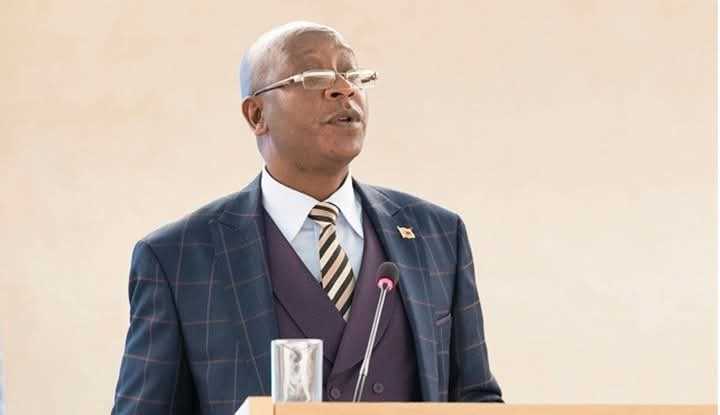
Speaking at the handover ceremony, Jairos Jiri Association president Dr. A.M. Senderayi said the intervention would significantly improve learning conditions for children with disabilities while strengthening the institution’s sustainability.
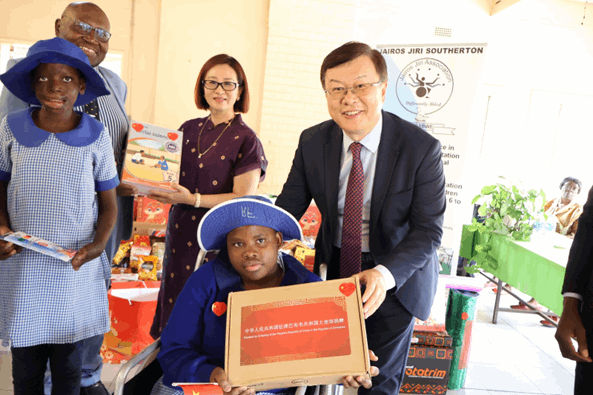
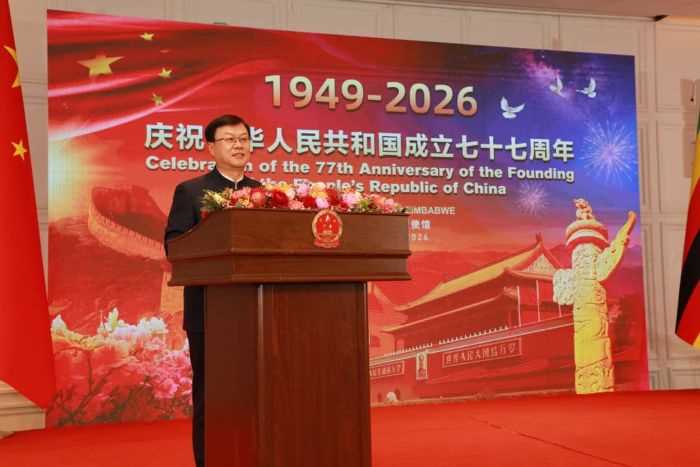
Chinese Ambassador to Zimbabwe Zhou Ding said the project reflected China’s commitment to supporting Zimbabwe’s social development priorities, particularly in education, disability inclusion, and clean energy.
Related Stories
The solar installation directly supports the association’s education and rehabilitation mandate, ensuring that children with visual, hearing, and physical impairments can study in a stable learning environment free from power interruptions.
Jiangsu Fanye Power Energy Equipment Co. chairperson Amy Meng said renewable energy solutions were becoming a critical pillar of community development, especially in sectors where service delivery is vulnerable to power disruptions.
The partnership illustrates how the People-to-People exchange agenda is translating into practical cooperation on the ground, aligning diplomacy with social infrastructure, climate resilience, and inclusive education.
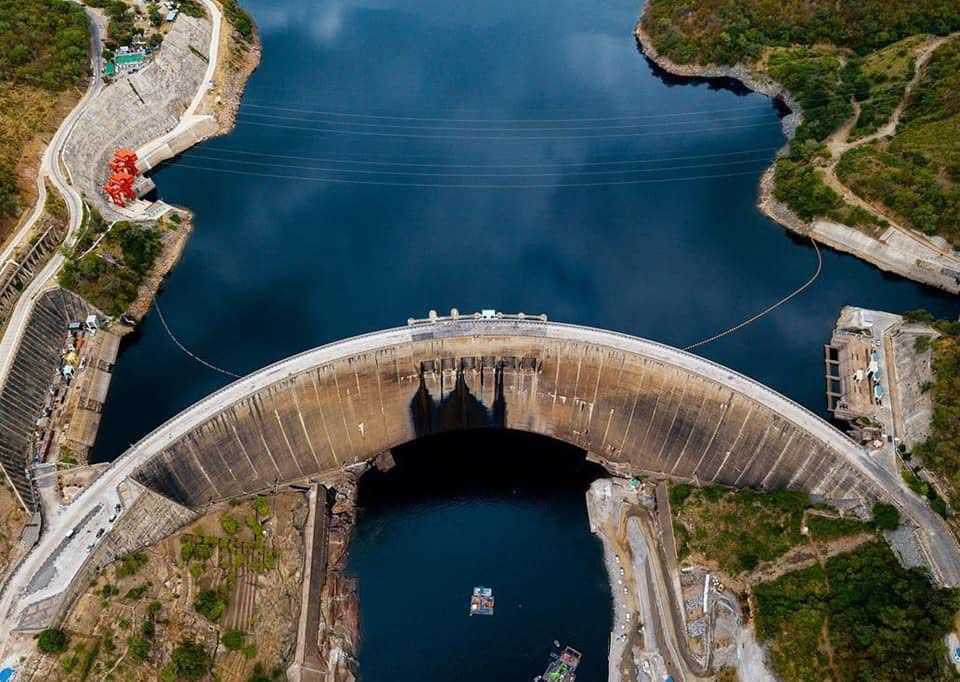
China’s presence in Zimbabwe is increasingly being defined by development cooperation through the building of schools and clinics as well as the installation of boreholes, thereby directly impacting communities alongside national projects like roads and power plants.
As both countries deepen their people-centred engagement, projects that combine clean energy, education tools and institutional support are defining what effective China–Zimbabwe partnership looks like in 2026.





Leave Comments