







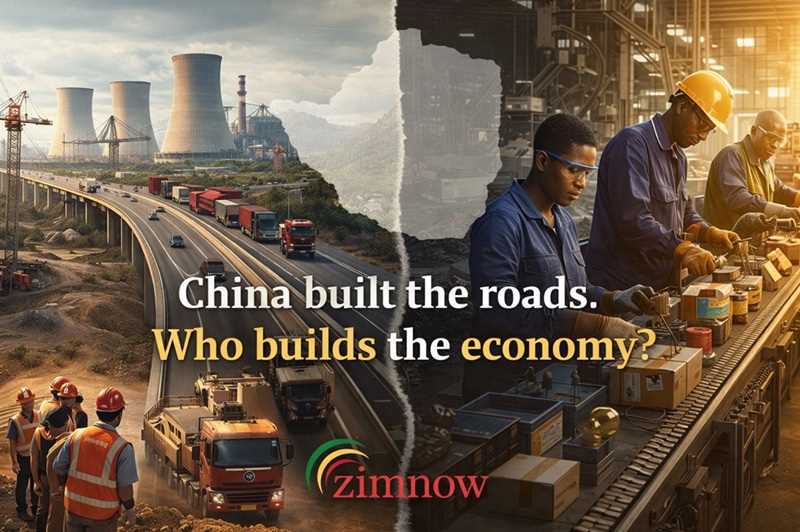
Zimbabwe is being rebuilt before our eyes. New highways cut across the countryside. A modernized international airport welcomes visitors. Power stations rise in the west. Dams hold back rivers. Government buildings define new city skylines.
Drive across the country and you can trace China’s footprint in concrete and steel.
Yet beneath this visible transformation sits an uncomfortable question that Zimbabwe appears unwilling to confront: are we building an economy, or merely constructing better infrastructure around persistent poverty?
For more than two decades, China has been one of Zimbabwe’s most important international partners. When Western engagement declined in the early 2000s, Beijing remained. It financed infrastructure, maintained diplomatic ties, and became central to Zimbabwe’s economic survival strategy. Out of that relationship grew a powerful phrase: “all-weather friends.”
Under the Forum on China–Africa Cooperation, African and Chinese leaders have repeatedly recommitted to deepening cooperation. In 2024, the message from Beijing was clear. The next phase of engagement must move from promises to performance, from building things to building systems.
Zimbabwe now stands at a turning point in that story.
From visibility to value
Much of China’s engagement in Zimbabwe has been highly visible. Projects such as Hwange Units 7 and 8 and the expansion of Robert Gabriel Mugabe International Airport show what infrastructure success looks like. But infrastructure alone does not answer the deeper development question.
A new highway moves goods faster. But what goods? A new power station generates electricity. But for which industries? A new mine boosts exports. But are we exporting raw materials or finished products?
Infrastructure is easy. Development is hard. You can pour concrete in eighteen months. Yet it is not as easy to build an industrial economy in the same time.
Zimbabwe has mastered the first task. It is still avoiding the second.
The danger is not that Zimbabwe lacks partners. It has many. The danger is that partnerships remain focused on construction rather than production, on extraction rather than transformation.
An economy cannot be built on movement alone and must be built on making things.
Why this moment is different
What makes the current phase of China–Zimbabwe relations significant is timing. Zimbabwe is no longer in the emergency phase of international isolation. But it is also not yet in the comfort zone of full global reintegration.
That changes the nature of partnership. In earlier years, the priority was survival. Keeping the economy functioning. Keeping the state afloat. Keeping diplomatic doors open. Today, the priority is direction. Deciding what kind of economy Zimbabwe wants to become.
This is where China’s role must evolve. From being primarily a financier and builder to becoming a partner in industrial transformation. The real question is not whether China will remain important to Zimbabwe but whether that importance will continue to be measured mainly in concrete and asphalt or increasingly in factories, skills, and exports.
Related Stories
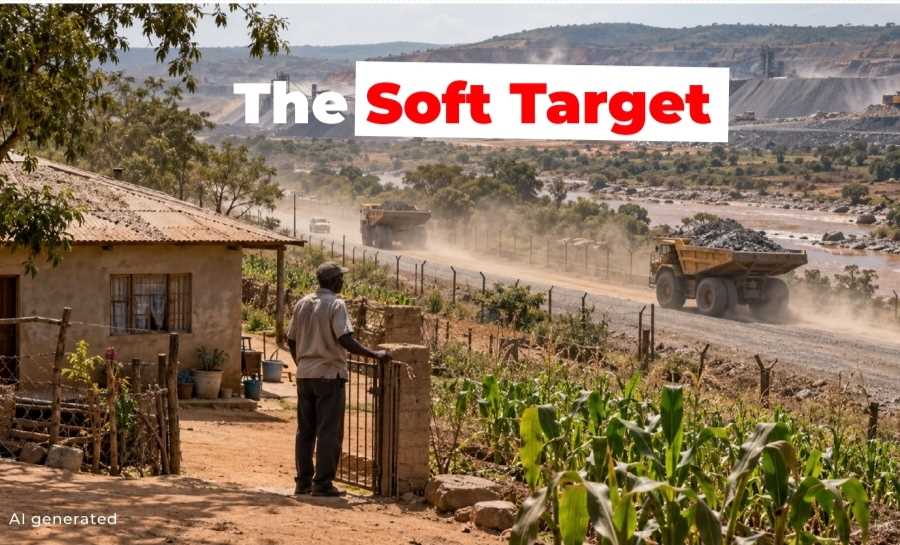
There is a growing risk that Zimbabwe will become a well-connected extraction zone. Efficient ports. Smooth highways. Reliable power. All in service of moving raw materials out faster than ever before. An economy that works beautifully for exporters and leaves citizens watching trucks pass by.
Beyond projects: the human question
For ordinary Zimbabweans, foreign policy debates often feel remote. But the real impact of China–Zimbabwe cooperation is found in everyday realities: whether engineering graduates find work in factories or sell airtime, whether welders build machinery or drive taxis, and whether technical colleges feed industrial growth or unemployment statistics.
Development is about what rises from the ground and what rises in people’s lives. That is why the next phase of cooperation must answer a simple public question: how does this help Zimbabweans build lasting livelihoods?
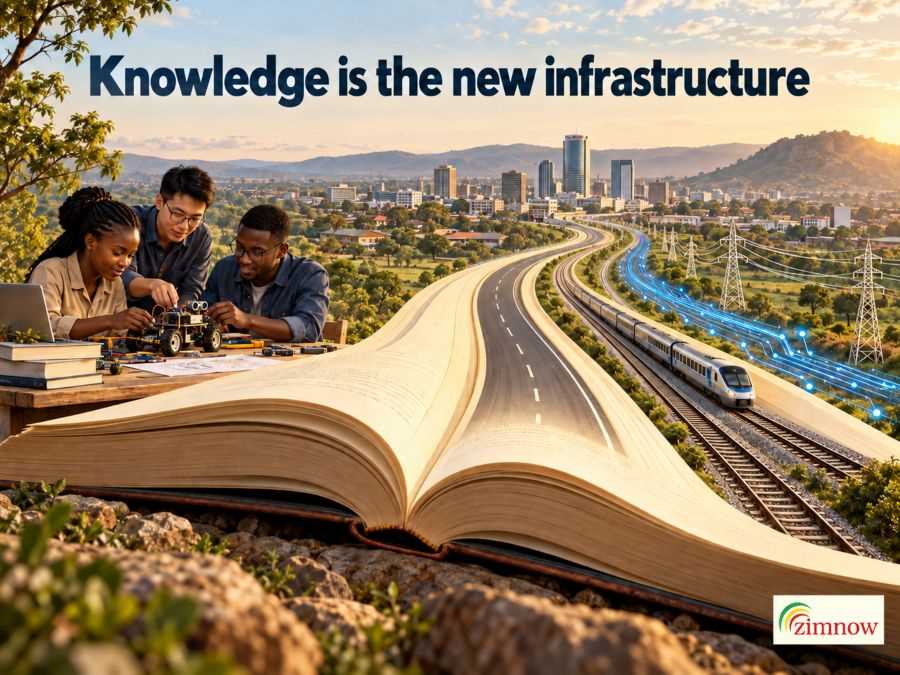
That means stronger commitments to local hiring, structured skills transfer, support for Zimbabwean suppliers, and partnerships with technical colleges and universities. Without this, even the most impressive projects will struggle to earn social legitimacy.
The importance of asking questions
One of the big problems in Zimbabwe’s China relationship has been the absence of open debate.
For years, discussions about China were framed as matters of loyalty rather than policy. To question a deal was sometimes seen as questioning a friendship. That approach may have made sense in a period of diplomatic siege. It makes far less sense in a period of strategic choice.
Mature partnerships survive scrutiny. They are strengthened by it. China itself increasingly recognizes this. Across Africa, Beijing has learned that projects insulated from local accountability often generate resistance, delays, and political risk. Transparency is no longer a Western demand but a locally driven development necessity.
Zimbabwe does not dishonor its relationship with China by asking harder questions. It honors it by taking it seriously.
What success should now look like
If China–Zimbabwe cooperation is to succeed in this new phase, success can no longer be measured mainly by how much money is pledged, how many kilometers are built, or how many agreements are signed.
It should be measured by how many value-adding industries emerge, how many skilled jobs are created, how many local firms become globally competitive, and how much public trust exists in the partnership.
Zimbabwe and China inherit a long history of solidarity, pragmatism, and mutual need. But history does not guarantee progress. The current moment calls for a shift from gratitude to strategy, from visibility to value, and from momentum to maturity.
China has helped build Zimbabwe’s infrastructure. Now Zimbabwe must decide whether it has the courage to use it. Strategy must now build the economy that impacts most ordinary people positively.
Simbarashe Namusi is a peace, leadership, and governance scholar and media expert writing in his personal capacity.





Leave Comments