









The Community Working Group on Health has warned that the newly enacted Private Voluntary Organisations Act could significantly undermine access to healthcare and stall recent gains in health rights, describing the law as restrictive and detrimental to community-based health advocacy.
In its latest report, CWGH said the legislation is “likely to hamper our ability to serve communities effectively in the coming year,” warning that it threatens grassroots mobilisation efforts that link vulnerable populations to national health policy processes.
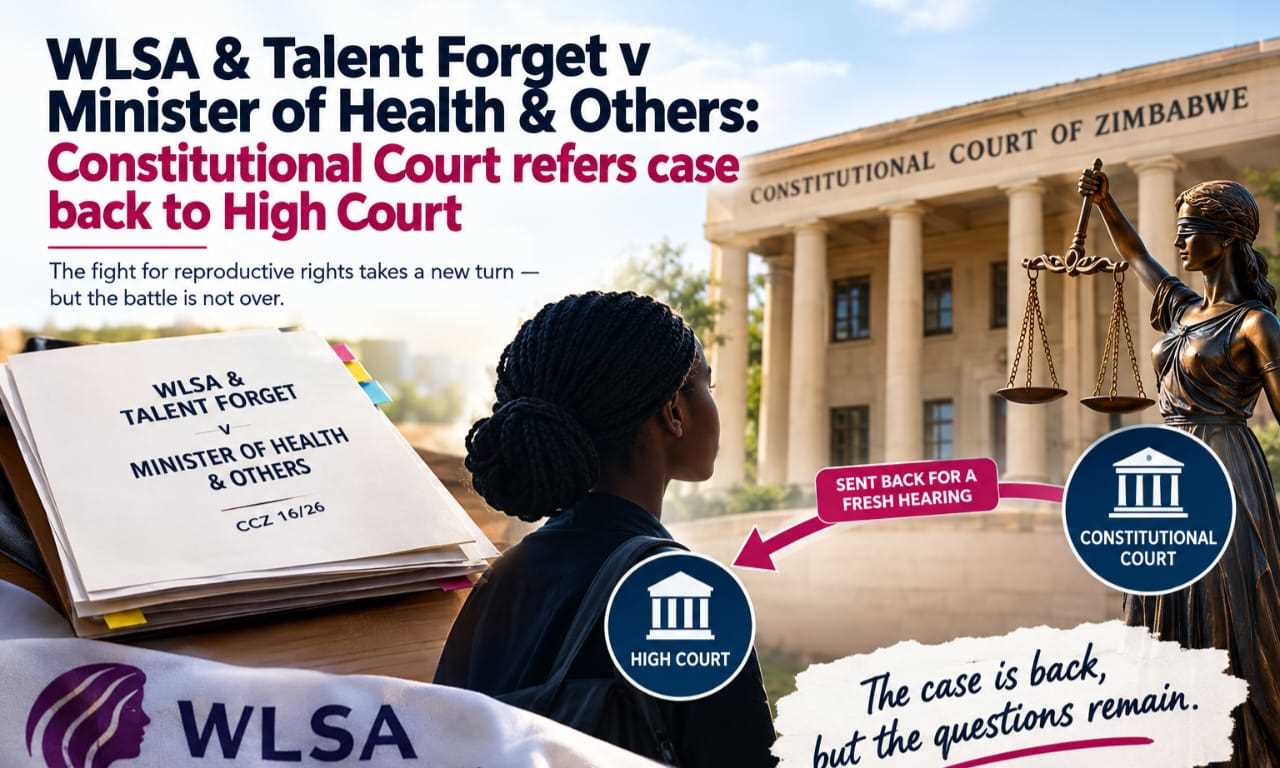
The warning comes at a time when the organisation has notched major legal victories. In 2025, CWGH secured a landmark High Court ruling declaring that Zimbabwe’s abortion laws unlawfully excluded women with mental health conditions.
Delivering judgment, Justice Chirawu-Mugomba affirmed that “mental health is a vital component of the constitutional right to health,” finding that the previous legal framework “imposed disproportionate burdens on women with mental disabilities, amounting to indirect discrimination.”
CWGH cautioned, however, that such progress remains fragile. “Progress depends on increased public revenue and a supportive environment for civil society,” the report stated, adding that this environment is now at risk under the PVO Act.
Budget Concerns and the ‘Abuja Target’
Related Stories
The report also raises concerns over the sustainability of health financing. While the proposed 2026 National Budget allocates approximately ZiG 30.4 billion to the health sector—equivalent to 15% of total government expenditure—CWGH said the headline figure masks deeper accountability gaps.
Although the allocation technically meets the Abuja Declaration target, the organisation expressed concern over the absence of clear commitments on earmarked health funding. “We are worried that there is no commitment to ensure earmarked taxes for health, such as the sugar tax, are prioritised within a nationally agreed framework,” CWGH said.
The organisation argued that “ring-fencing earmarked health taxes and ensuring they are used for their intended purpose, with greater transparency and accountability, is paramount.”
Pressure on the Health Workforce
Beyond legislation and budgets, CWGH highlighted ongoing challenges facing frontline health workers. The report called for the formal absorption of Village Health Workers into the government payroll as a priority, warning that failure to address workforce welfare could further weaken service delivery.
The organisation also urged authorities to demonstrate a stronger commitment to competitive remuneration, noting that without improved salaries, the country risks losing critical health skills.
CWGH reaffirmed that health remains both a “right and a responsibility” for all Zimbabweans.
However, with the PVO Act now in force, the group said its future role as a watchdog and advocate for health rights—acting as a pressure point to align public policy with social needs—remains uncertain.







Leave Comments