





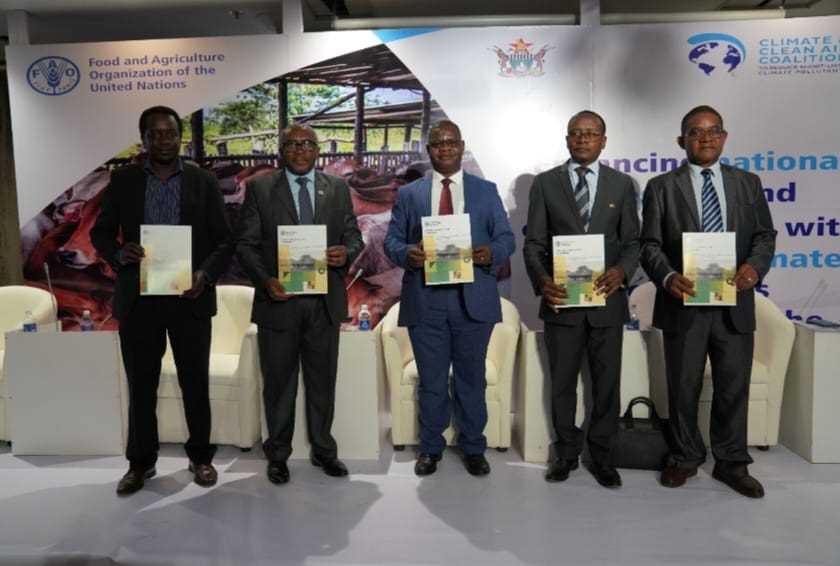
Zimbabwe has rolled out a livestock climate action programme aimed at reducing methane emissions from the beef sector, as part of efforts to align agricultural production with national and international climate commitments.
The project is funded by the Climate and Clean Air Coalition and is being implemented with technical support from the Food and Agriculture Organization. It seeks to achieve a 20 percent reduction in methane emissions from the beef industry by 2030, in line with Zimbabwe’s Nationally Determined Contributions (NDC 3.0) and the National Development Strategy 2 (NDS 2).
Methane, a powerful but short lived greenhouse gas, is mainly produced through enteric fermentation in livestock. In Zimbabwe, government assessments show that the livestock sector, particularly beef production, accounts for 43.6 percent of national methane emissions.
Speaking at the launch, Permanent Secretary in the Ministry of Lands, Agriculture, Fisheries, Water and Rural Development, Obert Jiri, said the sector is one of the country’s largest contributors to greenhouse gas emissions.
“Our assessment shows that the livestock sector, particularly the beef sector, contributes 43.6 percent to methane gas emissions, which is the major contributor to our greenhouse gas emissions,” said Jiri.
He noted that as livestock numbers grow, mitigation measures will be necessary to prevent a rise in emissions.
Related Stories
“As we increase our livestock herds, we must introduce innovations that reduce those emissions. Our aim is to reduce emissions from the livestock sector by at least 20 percent under our Nationally Determined Contributions,” he said.
The livestock industry contributes about 43 percent of agricultural Gross Domestic Product and supports more than 60 percent of rural households, many of whom depend on cattle for income, nutrition, draught power and as a form of savings.
According to project partners, the initiative is designed to cut methane emissions without compromising productivity. Proposed interventions include climate-smart feeding systems, improved animal health services, better herd management and strengthened breeding programmes to boost efficiency.
FAO livestock policy officer Amiable Uwizeye said the project balances environmental sustainability with economic productivity.
“By focusing on mitigation of short-lived climate pollutants, particularly methane, in the extensive beef sector, the project contributes to national climate commitments and efforts to green the livestock value chain,” he said.
Uwizeye added that farmer awareness and capacity building will be prioritised to support the adoption of lower-emission practices.









Leave Comments