









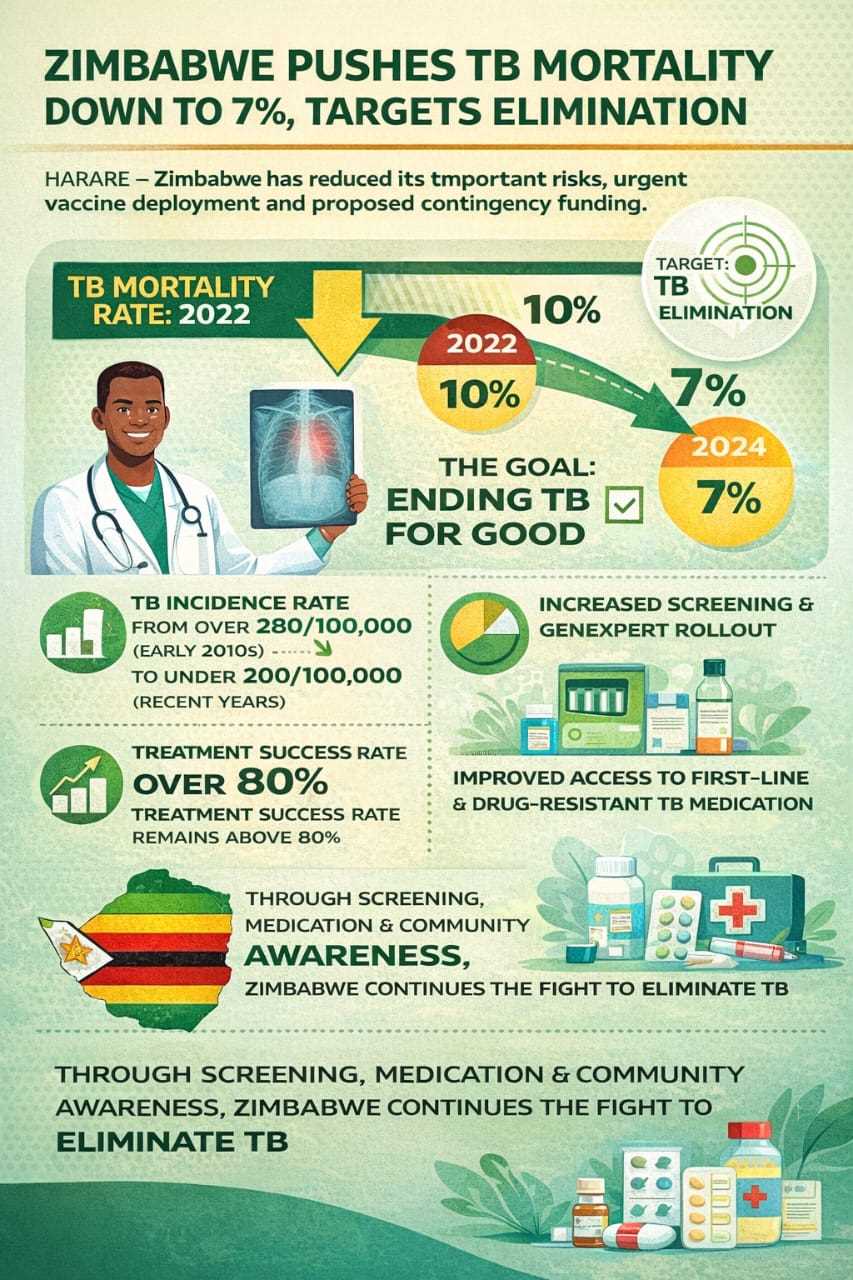
Zimbabwe has reduced its tuberculosis mortality rate from 10% to 7%, marking significant progress in the fight against one of the country’s most persistent infectious diseases.
The Ministry of Health and Child Care said the country “has successfully pushed the TB mortality rate from 10% down to 7%,” describing the development as an important milestone in national disease control efforts.
According to previous Ministry of Health and Child Care reports, Zimbabwe has over the past decade recorded steady improvements in TB control indicators. National TB incidence has declined from over 280 cases per 100 000 population in the early 2010s to below 200 per 100 000 in recent years.
Treatment success rates have consistently remained above 80%, while TB-related deaths have gradually fallen in line with expanded antiretroviral therapy coverage among people living with HIV, a key co-morbidity driver.
However, authorities stressed that progress does not signal the end of the fight.
Related Stories
“The goal is clear: Ending TB for good,” the Ministry said.
Health officials attributed the decline in mortality to expanded screening programmes, decentralised diagnostic services including GeneXpert rollout, improved access to first-line and drug-resistant TB medication, and intensified community awareness campaigns aimed at early detection and treatment adherence.
“Through increased screening, better access to medication, and community awareness, we are turning the tide against this preventable and curable disease,” the Ministry said.
Tuberculosis remains a major public health concern in Zimbabwe, particularly among vulnerable populations and people living with HIV. Ministry data shows TB/HIV co-infection rates remain significant, although HIV viral suppression gains have contributed to improved TB outcomes.
While the drop in mortality suggests improved case management and treatment success rates, sustained investment in diagnostics, drug supply chains and community-level interventions have been rendered critical to achieving elimination targets.







Leave Comments