







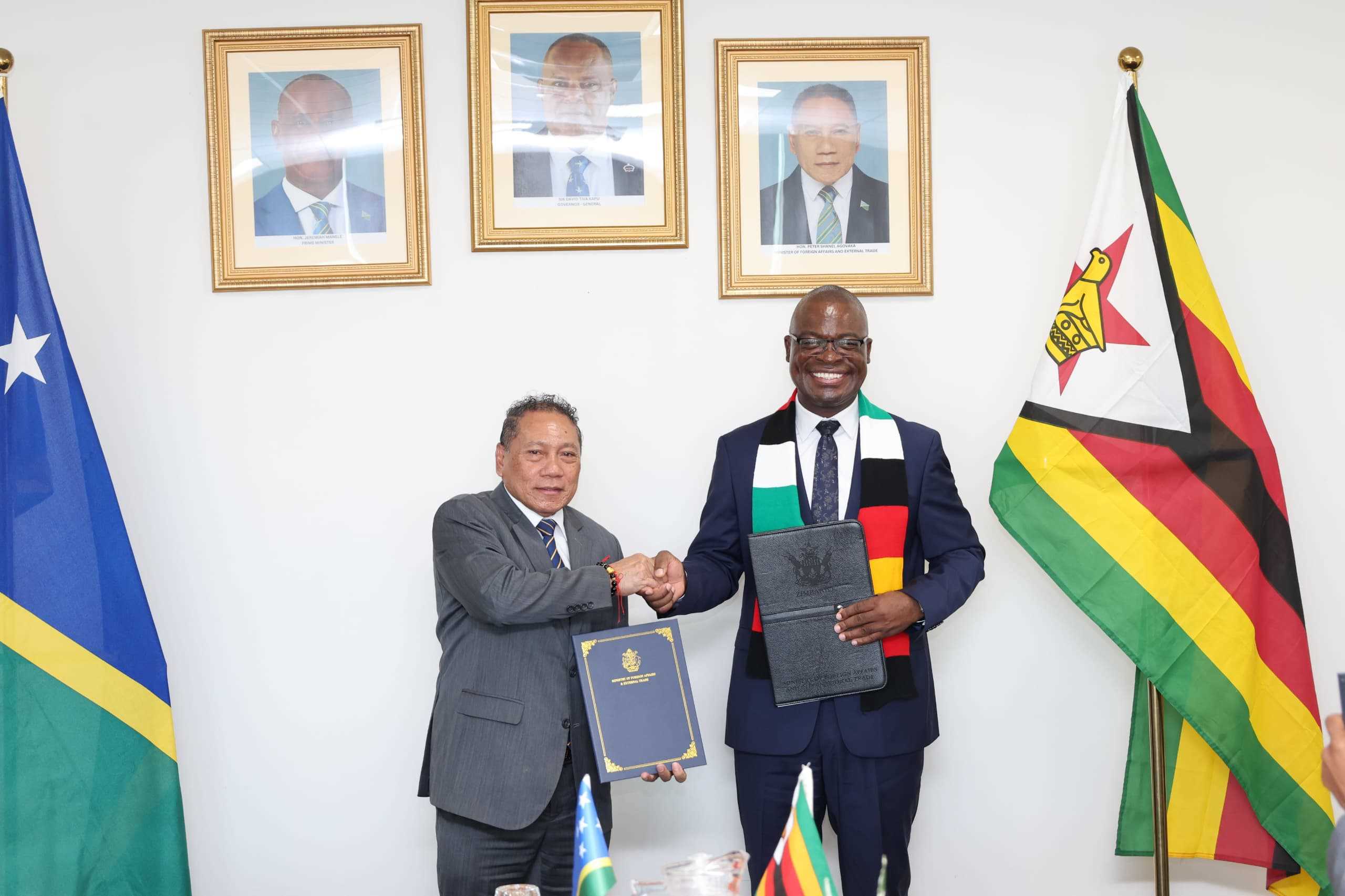
Zimbabwe’s newly formalised diplomatic ties with the Solomon Islands are emerging as more than a foreign policy milestone, positioning Harare to unlock new trade corridors, expand investment partnerships and deepen South-South economic cooperation across regions that have historically had limited direct engagement.
The agreement builds on years of quiet alignment between the two countries within multilateral platforms, particularly on development financing, climate equity and representation of emerging economies.
By converting that alignment into structured bilateral relations, Zimbabwe is now expanding its economic diplomacy footprint into the Pacific a move that strengthens coalition-building while creating new commercial linkages.
A major immediate dividend is political leverage within global institutions.
The Solomon Islands’ backing of Zimbabwe’s bid for a non-permanent seat on the United Nations Security Council for 2027–2028 strengthens Harare’s voting arithmetic while opening doors for reciprocal economic cooperation.
Solomon Islands Foreign Affairs Minister Peter Shanel Agovaka signalled the intent to grow the partnership beyond diplomacy, saying: “Strong partnerships are built step by step, and through open communication and cooperation, we will build this partnership together.”
Related Stories
The economic value of the relationship lies in diversification. Zimbabwe gains a new Pacific gateway for trade diplomacy, tourism promotion and technical partnerships, while the Solomon Islands taps into Southern Africa’s agricultural expertise, education networks and regional market access.
Peter Shanel Agovaka highlighted the shared developmental outlook, noting: “While our official ties will be newly established, the aspirations of our people for peace, prosperity and progress are long-standing and shared.”
For Harare, the deal reinforces a broader shift toward multi-regional engagement aimed at widening export markets and attracting non-traditional partners.
For Honiara, the partnership offers a bridge into African institutions and markets where Zimbabwe retains diplomatic influence through regional blocs and historical South-South alliances.
Professor Amon Murwira framed the relationship within the principle of equal partnership, underscoring its long-term geopolitical and economic implications. “The United Nations has 193 member states. There is no big state, there is no small state. In terms of sovereign equality, we are equal entities,” he said, emphasising a cooperation model built on mutual respect and shared development priorities.
The two nations also find common ground in climate-linked economic pressures shaping their development paths.
While the Solomon Islands faces rising sea levels, Zimbabwe continues to confront drought cycles, creating space for joint advocacy on climate financing and resilience investments areas increasingly tied to global funding flows and green development capital.








Leave Comments