







In Zimbabwe’s often volatile business environment, where currency shifts, supply disruptions and policy changes can upend operations overnight, professionals who understand the mechanics of supply chains have become indispensable.
Among the emerging voices in this space is Ngoni Karongah, a supply chain specialist whose career reflects discipline, technical depth and a quiet but deliberate leadership style.
Karongah’s academic foundation was laid at the Chinhoyi University of Technology, where he earned a Bachelor of Science Honours degree before advancing to a Master of Science in Logistics, Materials and Supply Chain Management. For him, the classroom was never just about theory.
“Supply chain is not just about moving goods,” he says. “It’s about understanding systems — how decisions at one point affect the entire chain. That systems thinking has guided my career.”
His early professional exposure came through internships that immersed him in the operational side of industry.
At PG Industries (Zimbabwe) Limited, he gained hands-on experience in warehouse and procurement processes, learning the discipline required to manage inventory accuracy and supplier timelines. Those foundational lessons shaped his approach to structure and accountability.
He later moved into more senior roles at the Nash Paints Group and ProBottlers, where he was exposed to fast-moving consumer goods environments. It was here that the pressure intensified. Tight delivery windows, fluctuating input costs and the need to maintain supplier relationships demanded both technical skill and emotional intelligence.
“In FMCG, delays are expensive,” he explains. “You quickly learn that communication is as critical as calculation.”
At Zimplow Holdings Limited, where he served as Warehouse Manager, Karongah stepped into broader operational oversight. Managing warehousing functions within a group known for its agricultural equipment manufacturing sharpened his strategic lens.
He focused on aligning inventory planning with production schedules, ensuring that supply inefficiencies did not ripple into manufacturing delays.
“Warehousing is often underestimated,” he notes. “But if the warehouse is inefficient, the entire business feels it.”
Related Stories
His journey later expanded into procurement coordination at National Seating & Mobility, exposing him to international standards and structured compliance systems. The shift broadened his appreciation for regulatory frameworks and cross-border supply considerations.
“Global standards teach you discipline,” he says. “You realise that documentation, transparency and traceability are not optional — they are safeguards.”
Beyond corporate roles, Karongah has also positioned himself within professional circles, engaging with bodies such as Institute of Supply Chain Management Zimbabwe.
His involvement reflects a belief that procurement and supply chain management in Zimbabwe must continue professionalising.
He frequently advocates for ethical conduct and capacity building within the sector, arguing that corruption and weak systems erode competitiveness.
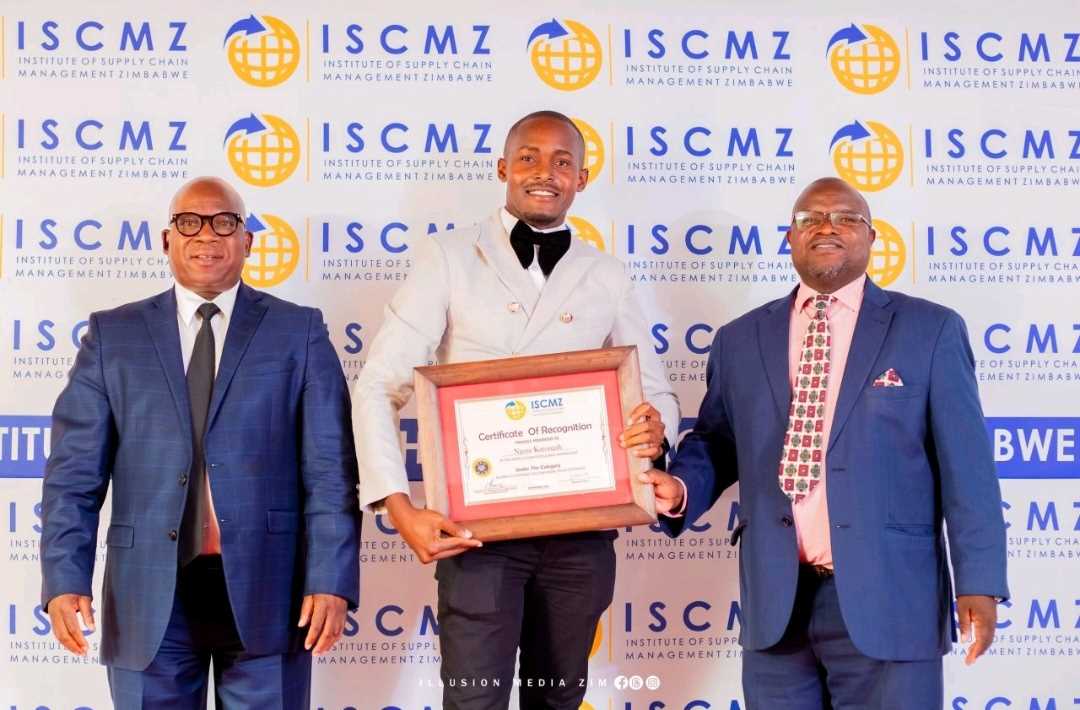
That commitment was formally recognised when Karongah won the Supply Chain Excellence Award 2025, presented by the Institute of Supply Chain Management Zimbabwe under the category Excellence in Strategic Sourcing Award.
“I am deeply humbled and proud to share that I won the Supply Chain Excellence Award 2025 presented by the Institute of Supply Chain Management Zim under the category Excellence in Strategic Sourcing Award,” he said at the time.
“The recognition means so much to me. It reflects years of dedication, continuous learning and contribution with incredible mentors, colleagues and partners within the supply chain profession. I am sincerely grateful for this recognition for championing excellence across our industry. Thank you to everyone who supported my journey — your guidance, encouragement and partnership made this achievement possible.”
Colleagues describe him as methodical and analytical, yet approachable. He is known for favouring data-driven decisions but remains attentive to the human element behind operations.
“Supply chains are powered by people,” he says. “If you ignore the human side — supplier relationships, team morale, stakeholder trust — the numbers will eventually reflect that neglect.”
In a country where businesses navigate infrastructure gaps and macroeconomic headwinds, Karongah sees supply chain resilience as a competitive advantage rather than a cost centre. He believes Zimbabwean companies can unlock efficiency through better demand forecasting, technology adoption and stronger compliance cultures.
In many ways, his career mirrors the evolution of Zimbabwe’s supply chain profession — moving from transactional processes toward strategic influence.
For a generation of young professionals entering the field, his trajectory signals that technical competence, continuous learning and ethical grounding remain the most reliable routes to long-term relevance.







Leave Comments