









Zimbabwe’s annual review of government performance contracts has revealed mixed results across ministries and senior public officials, raising fresh questions about whether the system is delivering measurable improvements in public service delivery.
The review, conducted under the National Development Strategy 2 framework, showed that while a majority of officials met their targets, a significant proportion failed to do so, though they were deemed to be within an acceptable performance margin.
According to Chief Secretary to the President and Cabinet Martin Rushwaya, 20 out of 25 cabinet ministers met their targets, while five failed to reach their goals but were considered within variance limits.
Among 25 permanent secretaries evaluated, 16 met their targets, while nine fell short but were still within acceptable thresholds.
The performance review also revealed that 16 of the 26 deputy ministers assessed met their targets, while 10 fell below them, while half of the ministers of state for provincial affairs met their targets and the other half failed to do so.
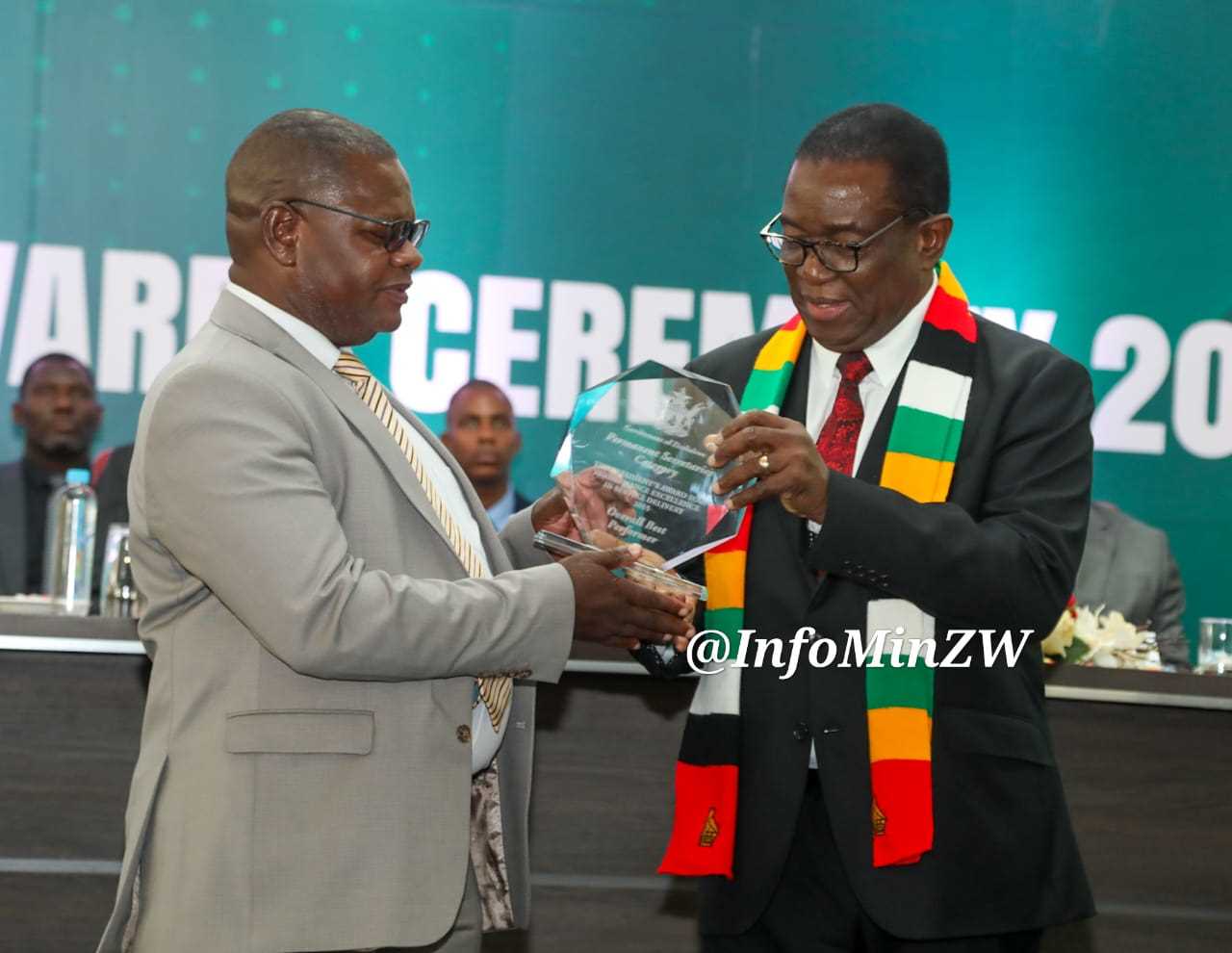
Despite these mixed outcomes, the government proceeded to honour top-performing officials at the ceremony where the 2026 performance contracts were signed.
The best-performing ministers were named as Barbara Rwodzi of the tourism portfolio, Anxious Masuka of agriculture and Ziyambi Ziyambi of justice.
Top permanent secretaries were Professor Obert Jiri, Mrs Vimbai Nyemba and Ambassador Albert Chimbindi.
Speaking at the ceremony, President Emmerson Mnangagwa said performance contracting had become a key feature of the government’s administrative reforms.
“This event is now a permanent feature in our administrative calendar and marks a key milestone in our public administrative and governance journey,” Mnangagwa said.
Related Stories
He said the contracts were designed to ensure accountability across ministries and government agencies.
“Today’s performance contract signing ceremony represents new obligations to ensure accountability, excellence and result-oriented leadership at all levels,” he said.
However, the statistics released at the ceremony indicate that a sizeable number of senior officials are still failing to fully meet their targets, raising concerns about the effectiveness of the monitoring system.
Public Service Commission chairperson Vincent Hungwe acknowledged that the performance management framework must ultimately be judged by citizens’ experiences.
“Performance management must be judged through the experience of the public that constitute the populace of our country,” Hungwe said.
“The citizen satisfaction survey undertaken yearly provides an important barometer of how the public views government services.”
Hungwe also called for reflection on policy lessons from the system, noting that the performance management framework has been in place for five years.
“It is essential we remain lucid in our practice. We must ask what policy lessons have been learned from the emergence of performance contracts and reflect on problematic experiences,” he said.
The performance contracting system was introduced as part of broader public sector reforms aimed at improving service delivery and ensuring that government officials deliver measurable outcomes.
However, governance analysts say the real test of the system lies not in internal assessments but in whether it translates into tangible improvements in public services, infrastructure delivery and economic outcomes.
While the government says the contracts monitor thousands of projects across sectors of the economy, critics argue that without transparent performance metrics and publicly accessible evaluation reports, it remains difficult for citizens to independently assess whether the system is delivering the promised accountability.








Leave Comments