








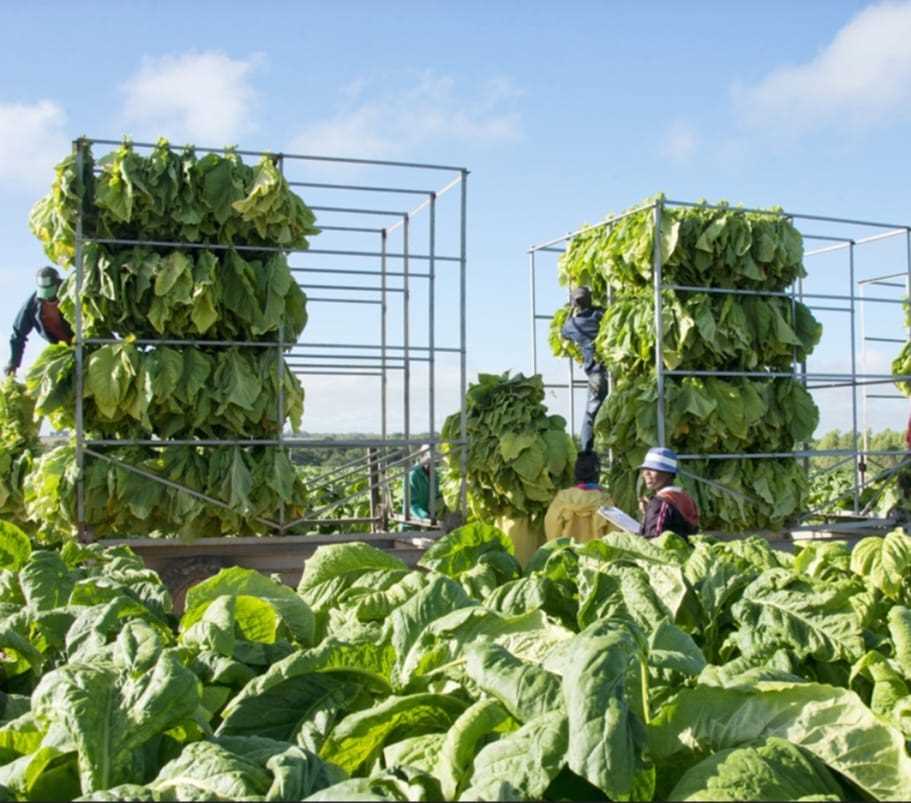
Zimbabwe’s tobacco sector is undergoing a transition towards more sustainable production, with authorities highlighting efforts to reduce environmental impact in a crop long associated with deforestation and high energy use.
Permanent Secretary in the Ministry of Agriculture Obert Jiri said farmers are increasingly adopting cleaner technologies and reforestation measures as part of the shift.
“Zimbabwe’s tobacco sector is going green. Farmers are adopting energy-efficient curing barns, planting 1 hectare of fast growing trees for every hectare of tobacco & testing solar and gas solutions,” Jiri said.
Tobacco production remains one of Zimbabwe’s largest agricultural export earners, with output exceeding 300 million kilogrammes annually in recent seasons and supporting over 135,000 smallholder farmers, who account for about 85% of total production.
However, the crop has historically contributed to deforestation due to reliance on wood-fired curing systems, with estimates suggesting that significant volumes of timber are consumed each season.
Related Stories
The push toward energy-efficient barns, solar-powered curing and reforestation is aimed at reducing this environmental footprint while aligning the sector with global sustainability standards, which are increasingly influencing market access.
“A future of productivity & sustainability is here,” Jiri said.
Despite the progress, scaling these interventions across the entire sector presents challenges. The adoption of modern curing technologies and alternative energy sources requires significant upfront investment, which may be beyond the reach of many smallholder farmers who dominate production.
The requirement to plant one hectare of trees per hectare of tobacco also raises questions around land availability and the time needed for trees to mature, particularly for farmers operating on limited plots.
At the same time, global tobacco markets are tightening environmental, social and governance standards, making sustainability compliance increasingly important for maintaining export competitiveness.







Leave Comments