





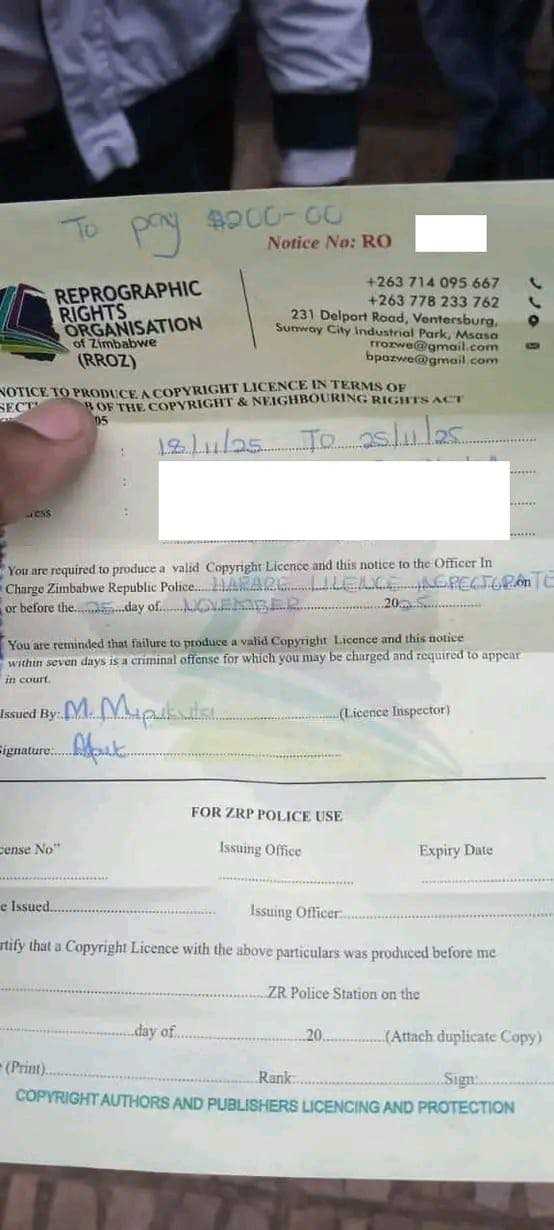
The Zimbabwe Writers Association (ZWA) has weighed into controversy surrounding the Reprographic Rights Organisation of Zimbabwe after police reportedly ordered a stop to some of its activities, raising broader questions about the legitimacy and governance of Zimbabwe’s emerging reprographic rights system.
The intervention follows a report in The Masvingo Mirror that police at PGHQ had ordered RROZ chief executive Antony Rimau to stop drafting police officers as enforcers for collections in Masvingo, following complaints.
Reacting to the development, ZWA said the episode had brought to the surface issues writers have raised for some time around representation, transparency and accountability in the management of reprographic rights.
In a statement, the association called on RROZ to publicly disclose the writers whose rights it claims to manage, the basis of that representation, and the governance framework under which it operates, arguing no collective management body should collect on behalf of authors without a clear mandate from rights holders and their representative organisations.
ZWA also questioned the structure of a collective management organisation operating, in its words, as a private arrangement without full consultation of writers in a sector already burdened by low trust around royalty administration.
ZWA Secretary General Lawrence Hoba said the police action had made it necessary to place concerns on record.
“We have made efforts to engage and seek clarification on several issues, but those efforts have not yielded tangible results, as the organisation has not openly addressed the questions being raised by writers,” Hoba said.
“This is not opposition to reprographic rights management. It is a call for legitimacy, inclusivity and accountability before any entity purports to collect in the name of writers.”
The association also raised questions over the scope of collections reportedly being pursued from embroiderers and users of protected designs, asking whose rights are being represented in such cases, whether logo-owning organisations, designers, authors or others, and how any revenues would be distributed.
Related Stories
Those issues, ZWA said, point to structural questions that should be resolved before any collective management model is allowed to continue collecting.
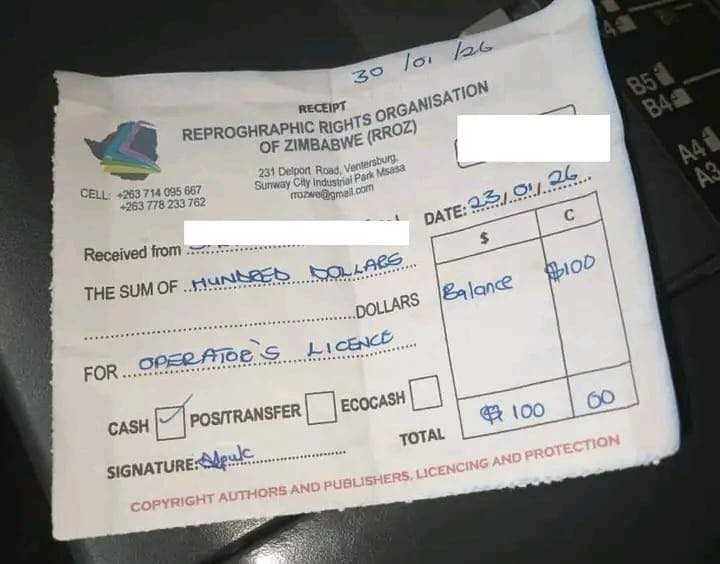
In February, social media publisher EarGround TV publicly queried the organisation’s mandate in a post that asked who authorised the body to demand licence fees from embroidery businesses, tailors and photocopy operators, where the money collected would go, and whose rights were being represented.
Commenting on the post, renowned talent manager Diana Elisha Nheera said the controversy exposed deeper weaknesses in Zimbabwe’s copyright framework.
“Other territories have organisations collecting for different rights to avoid clashes. Then they all partner to make sure each other’s members’ royalties are passed to where they are registered for distribution,” she said.
In the music sector, competing collective management bodies, Zimbabwe Music Rights Association and Zimbabwe Council of Copyright Owners, have been embroiled in disputes that have spilled into the courts and exposed the complexity of managing overlapping rights claims.
“And this is why all this needs governance regulation to ensure structure and clarity,” said Nherera,
The RROZ issue is raising questions beyond the organisation’s mandate to whether Zimbabwe’s institutional architecture for managing reprographic rights has been built on sufficient transparency, sector buy-in and legal clarity to command trust.






Leave Comments