







When Munashe Chidikwindi speaks about mental health, she does not begin with statistics or policy language. She begins with silence — the kind that follows loss.
“There wasn’t a single dramatic moment that changed everything,” she says softly. “It was a quiet, persistent awareness that nothing around me was shifting.”
That awareness grew from grief. After losing a close friend to suicide while navigating her own mental health struggles, Chidikwindi found herself confronting a painful reality: many young Zimbabweans were carrying emotional burdens alone, often without access to meaningful support.
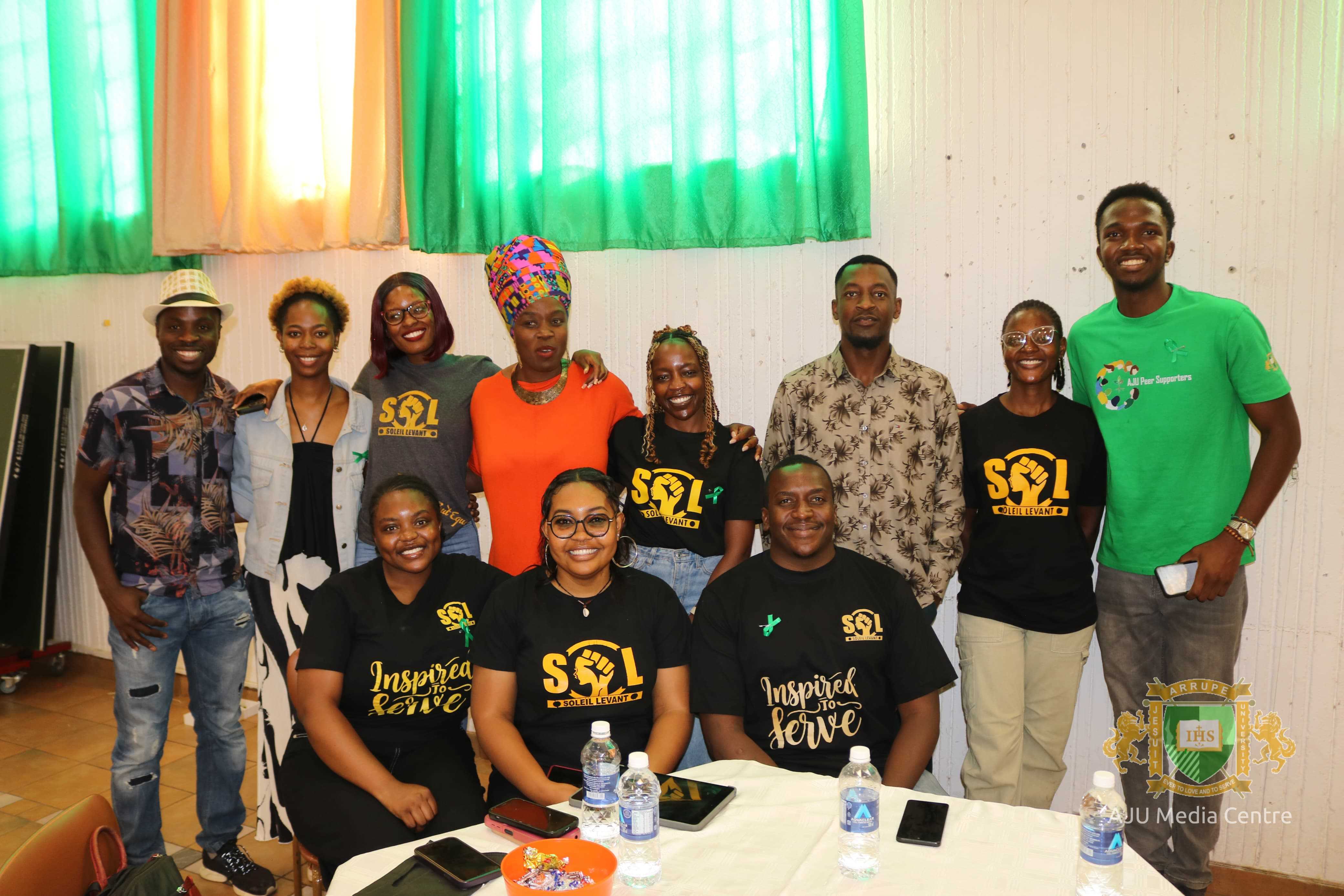
Rather than retreat inward, she turned that grief outward. Today, she is the founding director of the Soleil Levant Foundation, a youth-led mental health organisation building peer support spaces designed to reach people long before crisis strikes.
“Grief no longer felt like something I could keep to myself,” she explains. “It started to feel like a call to action — not just to honour what I’d lost, but to build the kind of community support I knew could actually change lives.”
Seeing Mental Health Differently
The loss fundamentally reshaped how she understood mental health.
“I started noticing that before things ever reach a breaking point, there are usually quiet cries for help,” she says. “Silence where there used to be laughter, small moments that are easy to miss if you’re not really looking.”
For Chidikwindi, mental health stopped being about isolated crises and became something deeper — a layered experience shaped by family environments, early life experiences, and social pressures that accumulate over time.
Zimbabwe’s mental health conversation, she argues, often arrives too late.
“So many struggles have their roots in early life,” she says. “Mental health needs steady, intentional support instead of just emergency care.”
Her own lack of early exposure to mental health education revealed another gap.
“It simply wasn’t a conversation I had been exposed to,” she reflects. “There was no real framework in school for understanding it, talking about it, or responding to it.”
That realisation now shapes Soleil Levant’s strong focus on school outreach programmes aimed at early awareness and prevention.
Filling the Accessibility Gap
Zimbabwe faces a well-documented shortage of mental health professionals, with therapy remaining financially and geographically out of reach for many young people. But Chidikwindi is careful in how she frames the challenge.
“I would describe them less as failures and more as systemic gaps,” she says.
One of the most visible gaps is accessibility.
“Formal mental health services existed, but they weren’t reaching the people who needed them early enough,” she explains. “For many young people, therapy simply wasn’t something they felt they could afford to consider, even when they needed it.”
Instead of attempting to replicate clinical institutions, Soleil Levant chose a different model — peer support.
“In my own journey, the support that made the biggest difference came from people who were present, relatable and willing to listen,” she says. “Peer support creates an approachable entry point into care before things escalate.”
The foundation operates through both virtual and in-person safe spaces facilitated by trained peer supporters, supervised by psychologists and social workers. Participants engage in guided conversations, emotional processing and community-building activities designed to reduce isolation.
“The goal is not to replace professional services,” Chidikwindi clarifies. “We see ourselves as complementary — creating pathways so that people who need clinical care can actually reach it.”
What Young Zimbabweans Are Carrying
Inside these spaces, young people arrive with struggles that are rarely singular.
Related Stories
“A lot of what we see is emotional distress connected to family dynamics, uncertainty about the future, identity struggles, and financial pressure,” she says. “Many have been carrying these challenges silently for a long time.”
For some, Soleil Levant becomes the first environment where vulnerability feels safe.
“Our spaces often become the first place where they are able to speak openly without fear of judgment.”
Among the most concerning trends she has observed is the emotional isolation of young men.
“We’re seeing a lot of unspoken distress among young men,” she says. “It often shows up as withdrawal, anger, or shutting down completely.”
She links this to social expectations around masculinity.
“Many are taught that vulnerability is weakness. Emotional expression hasn’t been normalised for them, so even when support exists, there’s hesitation to seek help.”
Economic pressure intensifies the struggle.
“There’s a real expectation to become financially stable quickly, to provide, to ‘make it,’” she explains. “When that doesn’t happen, identity and self-worth are deeply affected.”
The result, she says, is a generation of young men navigating emotional pain without language or safe spaces to process it.
“What’s missing in Zimbabwe are honest conversations that separate masculinity from performance and allow men to be seen beyond what they produce or provide.”
Unlike many development programmes, success at Soleil Levant is not measured by dramatic transformations.
Chidikwindi recalls one young man who attended sessions quietly for weeks before speaking.
“He was mostly present in silence,” she says. “The most meaningful shift wasn’t sudden. It was small steps — showing up, beginning to connect, realising he didn’t have to carry everything alone.”
For her, impact lies in those subtle milestones.
“Success is consistent engagement, the first moment someone shares, or when someone becomes open to seeking further help,” she says. “Being able to name what you are feeling is often the first step toward healing.”
Building Something Sustainable
Running a youth-led mental health organisation has also reshaped her understanding of advocacy itself.
“What surprised me most is how much work happens behind the scenes,” she admits. “Passion starts the work, but structure, funding and systems are what sustain it.”
She says another unexpected lesson has been how communities themselves have responded to conversations around mental health.
“On a more external level, I’ve also been surprised by how receptive communities actually are,” Chidikwindi says.
“There’s often an assumption that there is resistance, stigma, or disinterest when it comes to mental health conversations, but our experience has been quite the opposite. Many people are willing, eager even, to listen, learn and engage when the space feels safe and relatable.”
The response, she adds, has been both encouraging and affirming for the organisation’s work, reinforcing the belief that stigma is often less about unwillingness and more about the absence of accessible, trusted spaces.
Chidikwindi believes Zimbabwe’s mental health response must shift toward prevention.
“Increasing investment at community and primary care level would make an immediate difference,” she says.
“We need mental health education in schools, stronger referral pathways, and services that are affordable and accessible.”
Until then, organisations like Soleil Levant continue to operate at the frontline — meeting young people where they are, often long before institutions can reach them.
For Chidikwindi, the work remains deeply personal but firmly collective.
“Grief brought me here,” she says. “But what keeps me here is the belief that no one should have to walk through their struggles alone.”





Leave Comments