









The Zimbabwe Indigenous Interdenominational Council of Churches, an umbrella body representing Apostolic, Pentecostal, Evangelical, and indigenous Christian churches, has endorsed the Constitution of Zimbabwe (Amendment No. 3) Bill, 2026, saying the proposed reforms are important for governance stability, national development, and policy continuity.
In a submission presented before Parliament on Friday, the church organisation described the proposed amendments as constitutional, democratic, and necessary to support Zimbabwe’s long-term development agenda under Vision 2030.
The submission, signed by ZIICC patron Bishop Dr Nehemiah Mutendi and chairman Rev Dr Andrew Wutawunashe, stated that Parliament has full constitutional powers to amend the country’s supreme law and should be allowed to exercise that responsibility without outside interference.
The church leaders urged legislators to support the Bill, arguing that elected Members of Parliament derive their authority directly from citizens and are mandated to make constitutional changes when necessary.
According to the submission, Parliament exercising its constitutional powers should not be viewed as undermining democracy, but rather as part of the democratic process itself.
ZIICC also said nationwide public consultations conducted by Parliament had already satisfied constitutional requirements for citizen participation. The organisation argued that no pressure group or civic body has authority to block Parliament from carrying out its legislative mandate.
The church body, which says it represents more than 8.7 million Zimbabweans, expressed support for proposals to extend presidential and parliamentary terms from five years to seven years.
ZIICC said a longer term would allow government sufficient time to fully implement key national programmes such as Vision 2030 and the National Development Strategy 1 (NDS1), which it said had previously been affected by political disruptions and the COVID-19 pandemic.
The submission stressed the need for stability and continuity in governance to ensure long-term national projects are successfully completed.
“Vision 2030 is not merely a slogan for our congregants. It is a commitment that must be fulfilled,” the churches said.
Related Stories
The organisation further linked the proposed seven-year term to biblical principles associated with restoration, renewal, and completion.
ZIICC also supported proposed electoral reforms contained in the Bill, including plans to introduce a parliamentary system for electing the President.
According to the churches, direct presidential elections have often intensified political tensions and divided communities across the country.
The submission argued that electing the President through Parliament could reduce political conflict while maintaining democratic accountability through elected representatives.
The church body also welcomed proposals to establish a standalone Zimbabwe Electoral Delimitation Commission, saying the move could strengthen transparency and professionalism in delimiting electoral boundaries.
On issues relating to traditional leadership, ZIICC backed proposals seeking to remove constitutional restrictions on the political participation of chiefs and traditional leaders.
The churches argued that traditional leaders are citizens who should enjoy the same constitutional freedoms as everyone else, while also playing a vital role in community governance, dispute resolution, and development initiatives at grassroots level.
ZIICC further supported provisions removing the constitutional status of the National Peace and Reconciliation Commission (NPRC), noting that the commission’s constitutional mandate ended in 2023.
The organisation said national healing and reconciliation should extend beyond a single institution and involve churches, traditional leaders, and local communities.
The churches pledged to expand reconciliation and peace-building programmes in collaboration with government and community stakeholders.
In an accompanying cover letter, Rev Dr Wutawunashe said the church body believed the Bill promotes Zimbabwe’s constitutional development in line with the values and aspirations of its citizens.
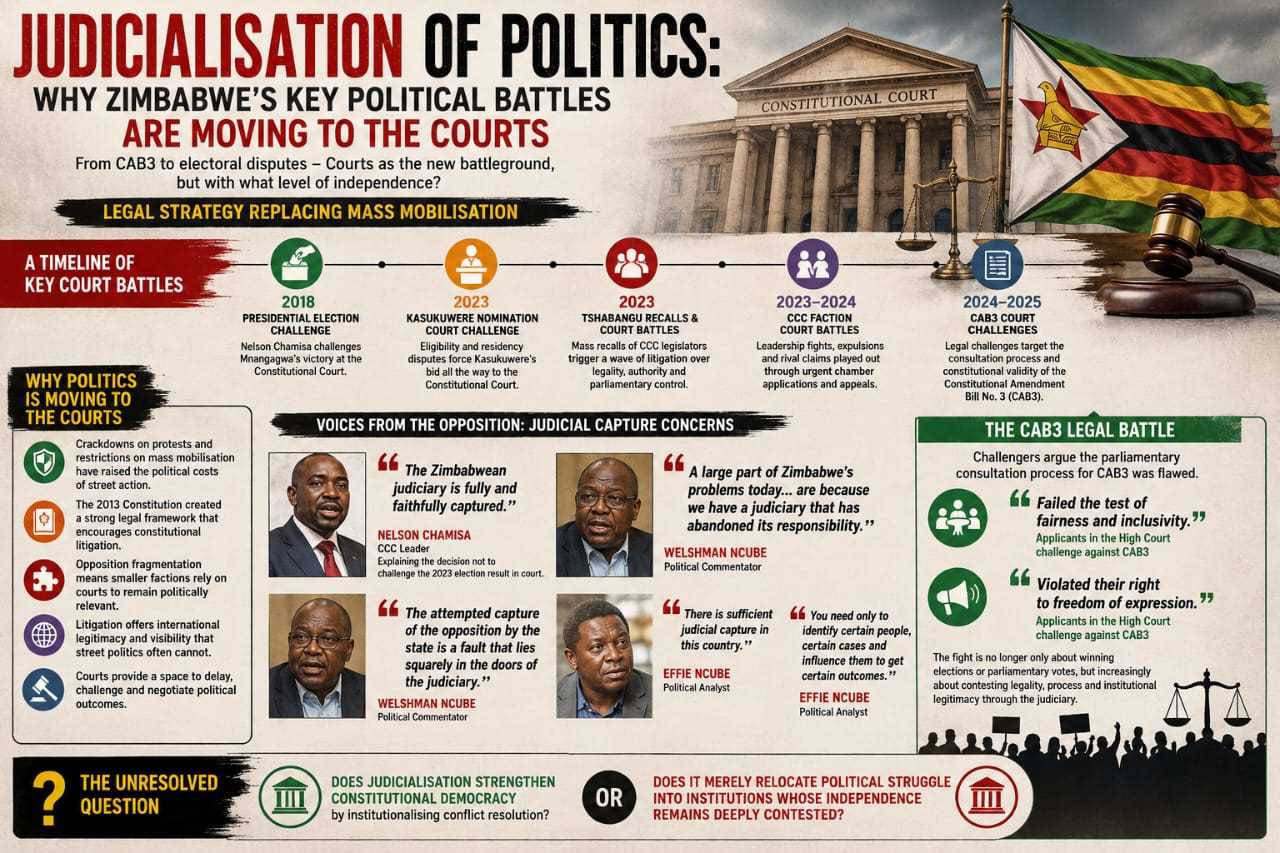
The submission comes at a time when debate surrounding Constitutional Amendment Bill No. 3 continues to divide opinion, with supporters arguing the reforms will improve governance efficiency and development planning, while critics have raised concerns over some of the proposed amendments.





Leave Comments