








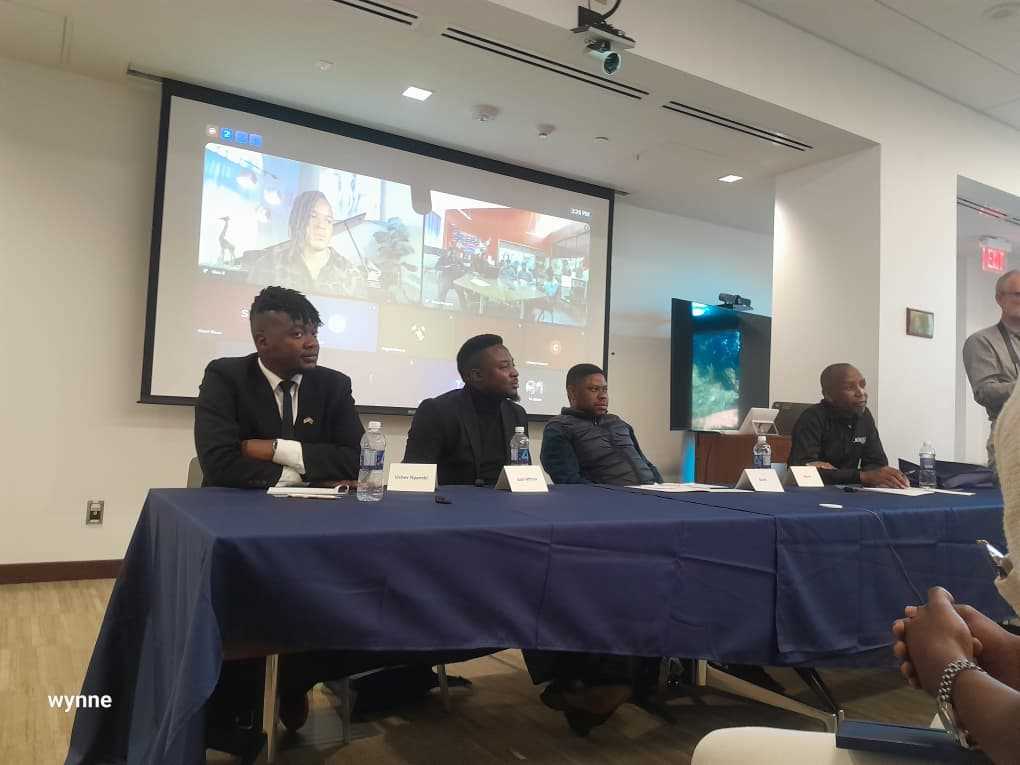
The U.S. Embassy in Harare on Thursday hosted an engaging discussion titled “AI’s Impact on the Music Industry: A Zimbabwe–U.S. Dialogue,” bringing together musicians, producers, arts administrators, and media practitioners from Zimbabwe and the United States to explore how artificial intelligence is reshaping the global music landscape.
The discussion examined critical issues surrounding AI-generated music, including royalties, copyright protection, award eligibility, authenticity, and industry standards.
The panel featured Fungai Kush Zvirawa, acclaimed guitarist and producer Clive Mono Mukundu, gospel artist Joshua Mtima, and Grammy Award-winning American artist Matt B. The discussion was moderated by journalist Usher Nyambi.
In her opening remarks, Acting Public Affairs Officer Kiera Emmons highlighted the importance of the event, particularly as Zimbabwe celebrates Culture Month.
“This year marks 250 years of American independence and 46 years of diplomatic cooperation and partnership with the people of Zimbabwe. Through cultural exchanges, we have invested in building mutually beneficial collaborative relationships between artists in Zimbabwe and the United States.
"Today’s panel discussion, featuring artists from both our nations, advances our enduring cultural cooperation. The event is also significant as it happens during Zimbabwe’s Culture Month,” she said.
During the discussion, Grammy Award-winning artist Matt B described music as “the heartbeat of people’s lives” and stressed the need for proper regulation of artificial intelligence within the music industry.
“AI has to be regulated to avoid damaging the music industry and weakening the laws and standards that protect artists,” he said. “Artists now have to work even harder to remain competitive in an AI-driven era.”
Legendary Zimbabwean guitarist and producer Clive Mono Mukundu encouraged artists to view AI as a collaborative tool rather than a replacement for human creativity.
Related Stories
“AI is creating more opportunities, especially for artists experimenting with AI-generated instruments and sounds,” he said. “But musicians should continue developing their natural talents so they can take pride in their own creativity and hard work instead of depending entirely on AI.”
Keith from Kay Media noted that AI is revolutionizing the administrative side of the music business by improving efficiency in areas such as content management and promotion.
“AI is a game changer on the administrative side,” he said. “You simply need to understand the correct tools and how to use them effectively.”
Gospel musician Joshua Mtima shared how he successfully incorporated AI into his music production. He revealed that he used AI together with live vocals on his song Takainamatira Nyaya, which became one of the most viewed gospel productions in Zimbabwe’s history.
Audience participants also contributed to the discussion. A representative from Pakare Paye Arts Centre expressed concern that younger generations may lose interest in learning traditional musical skills because of AI.
“AI is taking over rapidly. Children of this generation may no longer see the value in spending years learning music when technology can produce music instantly,” the representative said.
Music producer Tatenda Kamera said AI is already proving valuable in modern music production.
“AI is helping producers a lot. The important thing is knowing the right tools to use and how to use them creatively,” he said.
Closing the discussion, moderator Usher Nyambi urged artists and audiences to embrace technological change responsibly.
“We can not dismiss AI because it is already here, and people are connecting with it,” he said. “What is important now is education — teaching people how to use AI responsibly and ethically instead of misusing it. This is part of technological evolution.”









Leave Comments