







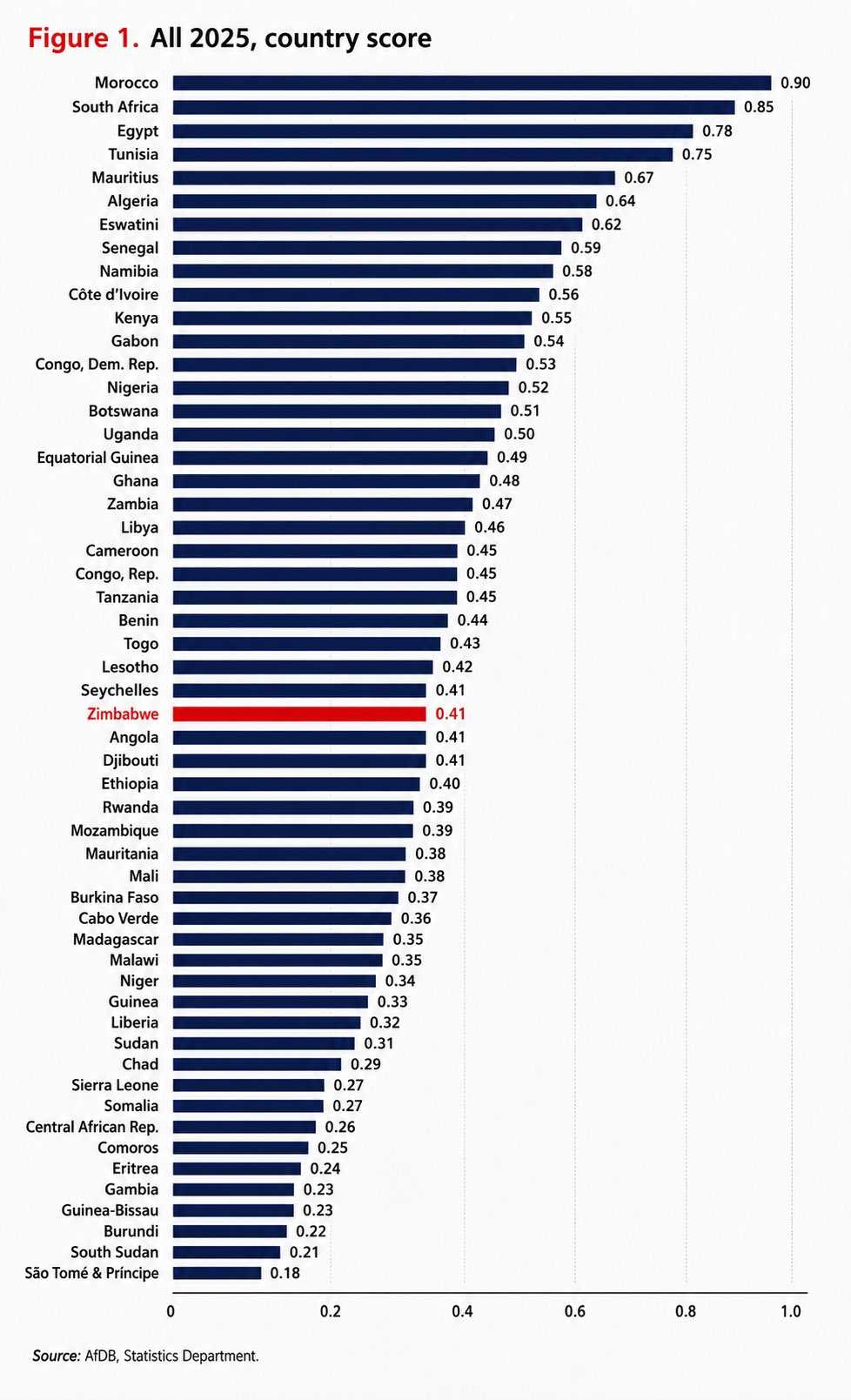
Zimbabwe's manufacturing sector has recorded one of the strongest growth performances in Southern Africa over the past decade, but heavy reliance on basic metals exports continues to limit industrial diversification and job creation, according to the latest African Development Bank Industrialisation Index.
The report shows that manufacturing's contribution to Zimbabwe's gross domestic product increased significantly from 9.2% in 2010 to 15.5% in 2024, highlighting substantial progress in the country's industrial development efforts.
Manufacturing value added per capita also rose sharply during the period, climbing from US$83 in 2010 to US$399.60 in 2024, while the sector achieved an average annual growth rate of 13.6%, placing Zimbabwe among the region's strongest manufacturing performers.
The gains reflect efforts to revive domestic production, promote value addition and strengthen industrial capacity under successive economic development programmes.
The broader significance of industrial development was underscored by the African Development Bank in the report, which noted that, “Industrialization remains the most credible pathway for Africa to achieve structural transformation, generate productive employment at scale, diversify exports, strengthen economic resilience, and secure long-term prosperity.”
However, despite the impressive growth trajectory, the African Development Bank report identifies a major structural weakness within Zimbabwe's manufacturing sector: its overwhelming dependence on basic metals exports.
According to the report, basic metals account for 92.2% of Zimbabwe's manufactured exports, the highest concentration level in Southern Africa.
Related Stories
The figure exceeds those of other mineral-rich economies in the region, including Zambia at 85.7%, Mozambique at 65.8% and South Africa at 52.2%.
As a result, other manufacturing subsectors remain marginal contributors to export earnings. Food processing, textiles, chemicals and machinery each account for less than 2% of manufactured exports, highlighting limited diversification across the industrial base.
The findings suggest that while Zimbabwe has succeeded in expanding manufacturing output, much of that growth remains concentrated in a narrow range of activities linked to mineral processing and metal production.
The report also points to concerns over employment creation within the sector. Manufacturing employment declined slightly from 5.2% of total employment in 2010 to 4.7% in 2024, indicating that industrial growth has not translated into proportional job creation. Economists often regard employment growth as a critical measure of industrialisation because manufacturing traditionally creates large numbers of skilled and semi-skilled jobs while supporting wider supply chains and downstream industries.
The African Development Bank's findings further show that Zimbabwe slipped five places in the continent's overall industrialisation rankings between 2010 and 2024, despite the sector's strong growth performance.
The ranking suggests that while Zimbabwe has made notable progress, other African countries have industrialised at a faster pace or achieved greater diversification over the same period.
The report's conclusions are likely to reinforce ongoing policy discussions around the need to broaden Zimbabwe's industrial base beyond metals and mineral-linked manufacturing.
Industry analysts have long argued that sustainable industrialisation will require stronger development of higher-value sectors such as agro-processing, chemicals, pharmaceuticals, engineering products, textiles and machinery manufacturing. Such diversification would not only reduce vulnerability to commodity price fluctuations but also expand employment opportunities and increase the complexity of Zimbabwe's export basket.
Speaking at the launch of the index, the African Development Bank noted that Africa is undergoing a “silent but irreversible” industrial transition, although progress remains uneven across countries and regions.
Former African Development Bank President Akinwumi Adesina has repeatedly argued that value addition must become central to Africa's industrial future, stating that “Africa must stop being a supermarket for others and become a factory for itself.”
The African Development Bank's assessment indicates that Zimbabwe has laid important foundations for industrial growth. However, the next phase of industrialisation may depend less on increasing output volumes and more on creating a more diversified manufacturing sector capable of generating jobs, producing higher-value goods and competing across a wider range of regional and global markets.










Leave Comments