









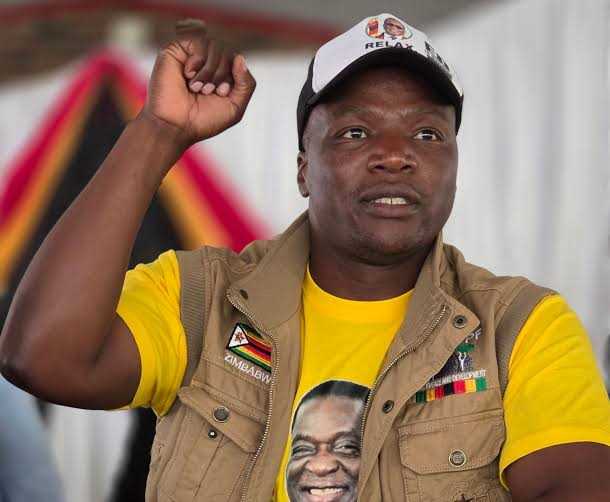
When the ZANU PF Youth League publicly distanced itself from reports that businessman Wicknell Chivhayo intended to donate US$3.6 million to Parliament, it framed the move as a defence of democratic integrity. Parliament, it argued, must never be seen as beholden to private money.
On paper, that is a principled and defensible position.
In practice, however, it reveals something more uncomfortable.
The issue is not whether money influences politics in Zimbabwe. It already does. The real question is where that influence is allowed to show — and who gets to control it.
A Principle That Appears at the Boundary
The Youth League’s argument is straightforward: the legislature must remain independent, and any direct financial relationship with private actors risks compromising that independence.
That logic holds.
But it appears at a very specific point — right at Parliament’s doorstep.
Wicknell Chivhayo is not an outsider attempting to buy relevance. He is widely perceived as part of a class of business figures that already operate within Zimbabwe’s political orbit. His visibility and proximity to power are not new.
Which makes the sudden insistence on distance feel less like the discovery of a principle and more like the enforcement of a boundary.
Not all influence is being questioned.
Only the kind that becomes too visible, too direct and too difficult to explain.
The Geography of Acceptable Influence
Strip away the language of ethics and a clearer pattern emerges.
There is no blanket rejection of private support. In fact, it is often welcomed — provided it is directed elsewhere.
Fund communities? Encouraged.
Support development programmes? Applauded.
Donate to Parliament? Rejected.
This is not necessarily a moral line. It is a geographical one.
Influence is acceptable when it flows through spaces that are politically manageable. It becomes problematic when it enters institutions that must, at least symbolically, appear neutral.
Because in politics, influence is rarely eliminated.
It is routed.
Parliament: Where Optics Matter Most
Parliament is not just another institution. It is the stage on which democracy is performed.
Even in a system where executive power dominates, Parliament still carries the burden of representation and legitimacy. Its authority depends as much on perception as it does on function.
A US$3.6 million donation would not be interpreted as neutral generosity. It would immediately raise questions:
What does the donor expect in return?
Can lawmakers remain impartial?
Who, ultimately, does Parliament answer to?
Some forms of influence can be absorbed quietly.
This one would be too loud.
The Contradiction at the Centre
Related Stories
And here lies the tension.
If the concern is undue influence, then the conversation cannot begin and end with Parliament. It must extend to the broader ecosystem where business and politics intersect — often informally and often opaquely.
Zimbabwe’s political economy has long operated through relationships where access matters, proximity matters and financial muscle can translate into leverage.
To reject a visible donation while remaining silent on embedded influence is not a complete defence of principle.
It is a selective application of it.
Not all influence is treated equally.
Some forms are simply better hidden.
Control, Not Just Integrity
There is also a deeper question: control.
Influence that moves through party structures is predictable. It can be negotiated, managed and aligned with existing hierarchies.
Influence that bypasses those structures — particularly when directed at Parliament — creates uncertainty.
Who manages the relationship?
Who claims the political credit?
Who absorbs the political risk?
By pushing back, the Youth League may be doing more than protecting institutional integrity. It may also be reinforcing a system in which access to power remains structured and mediated.
Even generosity, it seems, must follow the rules of power.
Optics Versus Capacity
The statement insists that Parliament is adequately supported and that the state is capable of funding its own institutions.
Politically, that position is necessary.
To accept the donation would signal a gap — whether financial, institutional or structural. It would invite scrutiny into whether Parliament is as independent and adequately resourced as it claims to be.
Rejecting the donation preserves the image of strength.
Accepting it might have exposed vulnerability.
The Question Zimbabwe Avoids
For many Zimbabweans, the relationship between money and access is not abstract — it is lived experience. Opportunities often follow connections. Influence frequently travels quietly.
That is why mOne small editorial note: if this is intended for publication, it may be worth adding one paragraph acknowledging the Youth League's stated rationale in greater detail or noting that Chivhayo has not publicly confirmed the reported donation. That would strengthen the piece's balance while maintaining its critical analysis.oments like this resonate.
Not because they introduce something new, but because they briefly expose what is usually kept out of sight.
Final Word
The Youth League has drawn a line around Parliament. That line is defensible.
But it is also revealing.
Because it suggests that in Zimbabwe, the problem is not influence itself. The problem is visible, uncontrolled influence.
And so the real question is not whether money can shape the state.
It is whether the rules change depending on where that money lands — and whether those rules matter only when everyone can see them.
Simbarashe Namusi is a peace, leadership and governance scholar, as well as a media expert, writing in his personal capacity.









Leave Comments