







By Simbarashe Namusi
When proximity to power becomes a statement in itself
A single image can sometimes reveal more about power than any policy document or official speech.
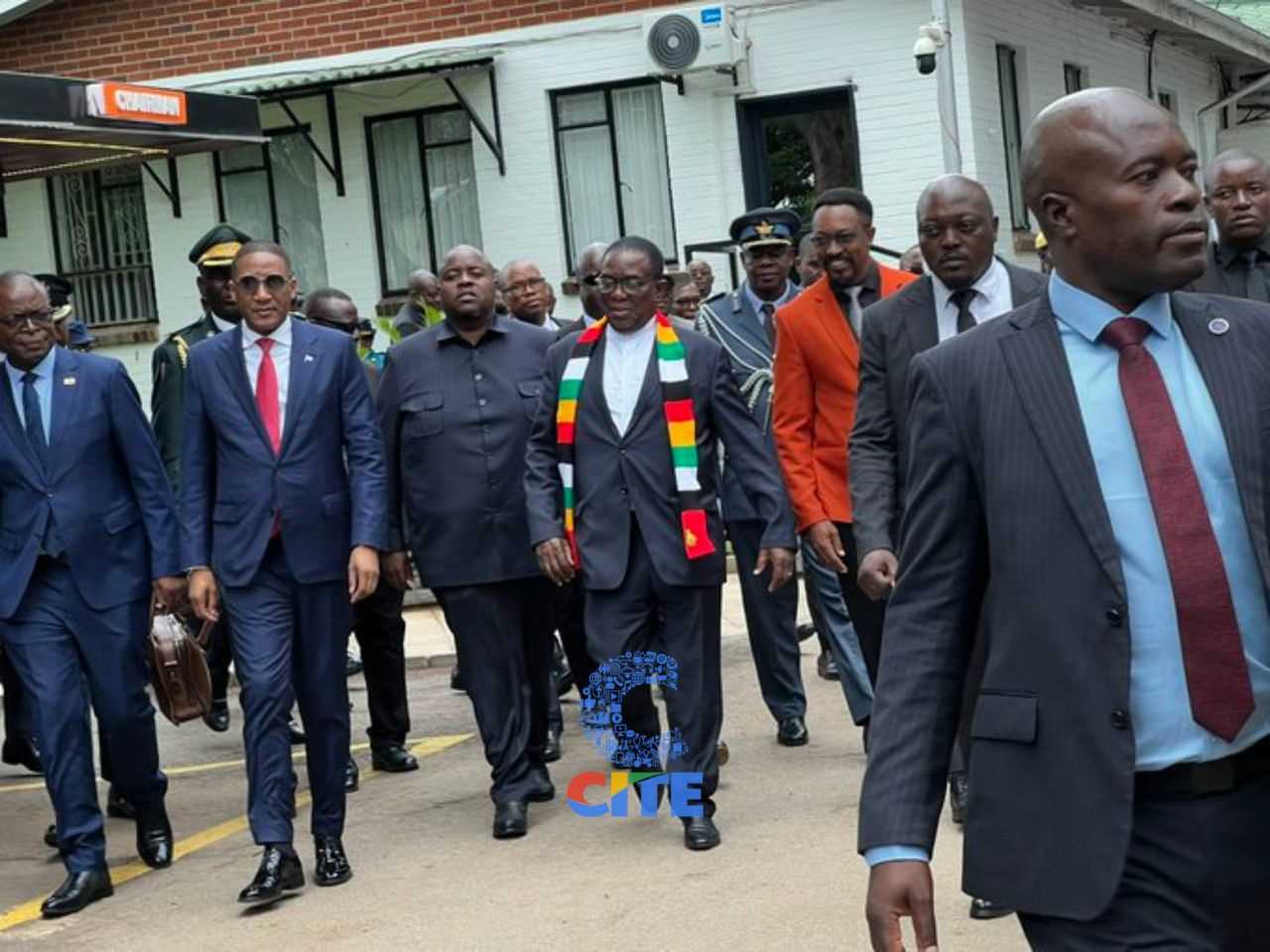
In this one, Emmerson Mnangagwa and Duma Boko walk side by side—two Heads of State mid-conversation, embodying authority, diplomacy, and the formal theatre of governance.
Between them walks Wicknell Chivhayo.
Not a minister.
Not a diplomat.
Not a public official.
A private citizen—positioned at the very centre of power.
It is a small detail. But in politics, small details are rarely small.
Power is choreographed
State power is not casual. It is staged, tightly managed, and heavily coded. Every movement around a Head of State—particularly in controlled, high-security environments—is deliberate.
Who stands where matters.
Who walks beside whom matters even more.
In such spaces, proximity is rarely accidental. It is structured through protocol, security clearance, and political hierarchy. These are visual arrangements of power—carefully constructed to signal authority, access, and trust.
Which is why the image unsettles.
Because it disrupts that expected order.
Access is never neutral
In any political system, proximity is currency.
It signals access.
It implies trust.
And whether intended or not, it suggests influence.
So when a private businessman occupies visible proximity to two sitting Presidents, the question is not simply why he is there.
The question is: what does that presence represent?
Access at that level is rarely random. It is negotiated, cultivated, or embedded within networks that are not always visible to the public.
Even when incidental, such images gain weight in a political culture where access is closely watched.
In Zimbabwe, power is not only held—it is also walked with.
The unofficial centre of influence
Zimbabwe’s political landscape has, over time, produced a class of individuals who operate outside formal office but within the orbit of influence.
They hold no title.
They face no parliamentary oversight.
They issue no policy.
And yet, they are consistently present—often at symbolic moments of state power.
Wicknell Chivhayo has become one of the most visible figures associated with this phenomenon.
His brand is built not on institutional authority, but on visibility—on proximity, association, and the public performance of access.
In this space, influence does not require office. It requires presence.
And that is what makes the image politically resonant.
It does not merely capture a moment. It reflects a pattern.
Related Stories
When proximity becomes message
The intersection between business and government is neither unusual nor inherently problematic. In fact, it is necessary.
But there is a difference between engagement and entanglement.
When proximity becomes highly visible yet insufficiently explained, it begins to communicate its own narrative.
It suggests that influence may not always flow through formal channels.
It hints that relationships can rival institutions.
It raises the possibility that power is exercised not only through offices—but through networks.
In systems where access shapes opportunity, proximity becomes more than symbolism. It becomes consequence.
Perception is power
Governance does not exist in a vacuum. It exists in the public eye.
And in that space, perception is not secondary to legitimacy—it is central to it.
An image like this does not require commentary to provoke interpretation. It already invites it.
For some, it signals confidence in the alignment between business and leadership.
For others, it raises questions about transparency, boundaries, and accountability.
Both readings exist simultaneously—and that tension is the point.
A pattern, not an anomaly
What makes the image resonate is not its novelty, but its familiarity.
Zimbabwe has seen variations of this before: individuals who move fluidly between business and politics, occupying spaces that are not formally defined but widely recognised.
A quiet architecture of influence.
A parallel system of access.
A reality that exists alongside official structures, but is rarely acknowledged within them.
This is not about one individual.
It is about how proximity itself becomes normalised.
The question that remains
There may be no official explanation for the moment captured in the image.
But the more important question is whether one is expected.
Because the issue is not whether private citizens can be close to power.
It is whether that closeness is transparent, accountable, and understood in the public interest.
If access is a currency, who regulates it?
If proximity signals influence, where are its boundaries?
And if power operates both formally and informally, which one ultimately governs?
More than optics
The image will circulate, trend, and eventually fade.
But its implications will remain.
Because beyond the individuals in frame, it speaks to something larger: the nature of power itself.
Not just who holds it—but who is allowed to walk beside it.
Sometimes, the shortest distance to power is not through office—but through proximity.
And in Zimbabwe’s political landscape, who walks beside power may matter just as much as who formally holds it.
Author attribution: Simbarashe Namusi is a peace, leadership and governance scholar and media expert writing in his personal capacity.








Leave Comments