









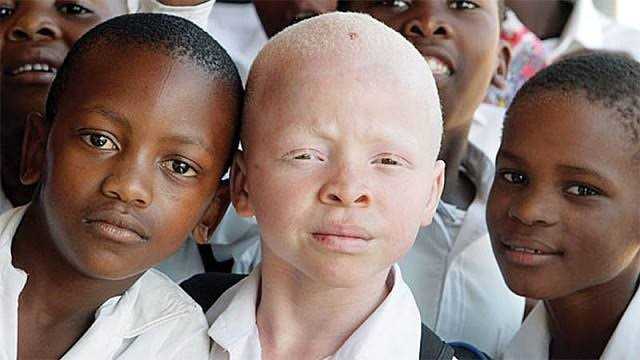
More than 9,700 Zimbabweans living with albinism continue to face barriers to healthcare, education, employment and social participation despite growing efforts to advance their rights and visibility across the country.
Despite growing recognition of the rights of persons with albinism and stronger legal frameworks aimed at promoting inclusion, access to critical services such as sunscreen, eye care, screening and treatment remains a challenge for many.
The United Nations in Zimbabwe said people with albinism continue to face discrimination, stigma and harmful myths that affect their access to education, healthcare, employment and broader participation in society.
"And yet, we know that for many persons with albinism, being proud of one's identity still requires courage. Prejudice, stigma, and harmful myths continue to shape daily realitie limiting access to education, healthcare, employment, and full participation in society. These are not only barriers to inclusion; they are violations of fundamental rights, said United Nations Resident Coordinator Edward Kallon.
According to the 2022 Population and Housing Census Zimbabwe has more than 9,700 people living with albinism.
Many continue to face preventable health challenges, particularly skin cancer and visual impairment, often linked to limited access to protective and medical services.
"Many face preventable health risks, particularly skin cancer and visual impairment, often due to limited access to essential services such as sunscreen, protective clothing, screening, treatment, and eye care. These are not luxuriesthey are basic needs, central to the right to health and to live with dignity, safety, and equal opportunity," said Kallon.
Related Stories
While challenges remain, Kallon acknowledged progress made through stronger legal protections and advocacy efforts by organisations representing people with albinism.
"At the same time, I am encouraged by the progress we are seeing. Stronger legal frameworks, including the recent Zimbabwe Persons with Disabilities Act, and the tireless advocacy of organisations of persons with albinism such as the Albinism Dare to Dream Initiative, the Zimbabwe Albino Association, and the Alive Albinism Initiative have helped advance visibility and recognition of rights across the country."
He said the progress demonstrates what can be achieved when different stakeholders work together.
"These gains show that meaningful progress is possible when governments, communities, civil society, and development partners work together. These efforts remind us that change is possible when we listen, when we act, and when we stand together."
However, Kallon warned that more action is needed to ensure people with albinism are fully included in national development.
"But we must go further."
He called for expanded access to health services, stronger public education to combat stigma, increased opportunities in education and employment, and greater protection and participation for persons with albinism.
"Advancing the rights of persons with albinism is central to our shared commitment to the Sustainable Development Goals and to leaving no one behind."







Leave Comments