







Zimbabwe has not recorded a case of circulating vaccine-derived poliovirus type 2 (cVDPV2) since June 2024, but health authorities are refusing to lower their guard as outbreaks in neighbouring countries continue to threaten the country's progress.
Rather than waiting for the virus to return, Zimbabwe has spent the past four months taking vaccines directly to children in communities considered most at risk, particularly along international borders and in densely populated urban areas.
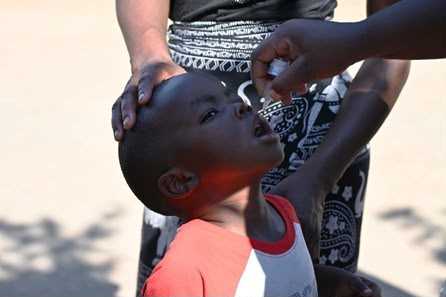
According to WHO Zimbabwe, the country has completed three synchronized vaccination campaigns using the novel oral polio vaccine type 2 (nOPV2) as part of a regional effort involving Mozambique, Malawi, Zambia, Namibia and Botswana to halt cross-border transmission of the virus.
The campaigns targeted children under the age of five in 27 high-risk districts across nine provinces identified through detailed risk assessments as being most vulnerable to virus importation.
WHO Zimbabwe said maintaining high vaccination coverage remains critical, despite the country interrupting transmission, because neighbouring countries continue to report outbreaks.
The response was led by the Ministry of Health and Child Care, with support from WHO, UNICEF, Rotary International, the United States Centers for Disease Control and Prevention (CDC), and other Global Polio Eradication Initiative (GPEI) partners.
More than 6,000 personnel, including healthcare workers, village health workers, community volunteers, national and sub-national health managers, and partner representatives, were deployed during the campaign.
WHO Zimbabwe said nine national surge consultants were also mobilised to strengthen surveillance, campaign implementation, community engagement, social mobilisation, logistics, cold chain and vaccine management, data analytics, and overall coordination.
Related Stories
Instead of relying solely on health facilities, vaccination teams went door to door to reach children who might otherwise have missed immunisation, helping sustain high population immunity in districts considered most vulnerable to virus importation.
The first, second and third vaccination rounds were conducted from 20 to 23 April, 2 to 5 June and 7 to 10 July 2026, respectively.
A total of 936,618 children were vaccinated during the first campaign, 997,941 during the second and 1,025,806 during the third, bringing the total to nearly three million doses administered.
Sr. Chipangura, Nurse in Charge at Tariro Clinic in Harare South District, said every health worker played a vital role in ensuring children were protected.
"The success of every vaccination campaign depends on teamwork. From activities carried out at health facilities to door-to-door outreach in communities, every health worker plays an important role in ensuring that children are protected against vaccine-preventable diseases. Seeing our teams work together to reach families and ensure that no child is missed gives me confidence that we can keep our communities safe from polio."
Independent monitoring and Lot Quality Assurance Surveys confirmed high vaccination coverage during all three rounds, while quality improvement plans were introduced to strengthen performance in hard-to-reach communities and improve social mobilisation.
WHO Representative to Zimbabwe Dr Tiruneh Desta said the campaign demonstrated the importance of regional cooperation in stopping the virus before it spreads.
"The fight against polio is a race to reach every child, everywhere, before the virus does. WHO remains committed to supporting the Government of Zimbabwe and partners through technical expertise, surveillance, operational coordination and community engagement to ensure that life-saving vaccines reach all eligible children. Zimbabwe's synchronized vaccination campaign reflects the power of regional solidarity and collective action in stopping poliovirus transmission. By strengthening population immunity and protecting children across communities and borders, Zimbabwe is making a significant contribution to the vision of a polio-free Southern Africa and bringing the world closer to achieving the goal of eradicating polio once and for all."
WHO Zimbabwe said the response has also strengthened acute flaccid paralysis and environmental surveillance, routine immunisation, cross-border collaboration, laboratory capacity and monitoring systems, reducing the risk of the virus being reintroduced into Zimbabwe.






Leave Comments