






Zimbabwe's transition to renewable energy has entered a critical phase, with government and development partners shifting their focus from policy discussions to mobilising the billions of dollars needed to finance new power projects.
That challenge took centre stage at the Fourth Development Partners Renewable Energy Group meeting, co-chaired by the Ministry of Energy and Power Development and the United Nations Development Programme Zimbabwe, where stakeholders discussed renewable energy financing, blended finance, investment mobilisation, risk mitigation and implementation of Zimbabwe's National Energy Compact.
In announcing the meeting, UNDP Zimbabwe said: "Development partners, government, the private sector and renewable energy stakeholders came together to strengthen coordination, align priorities, and accelerate investment in Zimbabwe's clean energy transition."
The organisation added: "Together, we are moving from dialogue to implementation to expand clean, affordable and reliable energy across Zimbabwe."
Those remarks capture the country's biggest energy challenge.
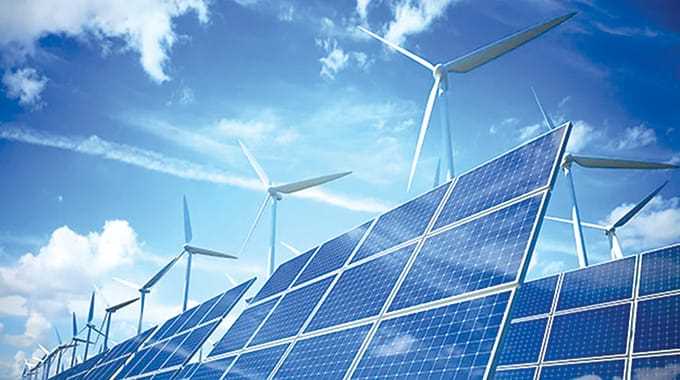
Zimbabwe has no shortage of renewable energy potential. It enjoys more than 3,000 hours of sunshine annually, possesses significant hydro, biomass and mini-hydro resources and has set ambitious targets under its National Energy Policy and National Energy Compact.
The bigger question is whether it can raise the investment needed to turn those ambitions into electricity generation.
According to Zimbabwe's National Energy Compact, the country requires more than US$8 billion to achieve universal electricity access by 2030, modernise ageing infrastructure and meet growing electricity demand from mining, agriculture, manufacturing and households. Of that amount, Government expects more than US$4.42 billion to come from private sector investment through Independent Power Producers, blended finance and improved investment conditions.
The investment requirement comes against the backdrop of a widening electricity deficit that continues to constrain economic growth.
According to the World Bank, unreliable electricity supply costs Zimbabwe approximately 6.1 percent of Gross Domestic Product annually, through lost industrial production, power outages, inefficient electricity supply and increased business costs.
The institution says improving electricity access is fundamental to achieving sustainable economic growth and industrialisation.
The financing challenge explains why discussions at DevPREG focused heavily on blended finance, an approach that combines grants, concessional loans, guarantees and private investment to reduce the risks associated with infrastructure projects.
UNDP has already begun piloting that approach.
Through its Energy Offer programme, the organisation announced that it is "investing a minimum of US$1.5 million catalytic support which will unlock further funding of renewable energy in the country."
UNDP added that the programme "will also support development of the Viability Gap Funding mechanism... to enhance bankability of projects," acknowledging that many renewable energy projects struggle to attract commercial financing despite strong technical potential.
Related Stories
The emphasis on project bankability reflects one of Zimbabwe's biggest obstacles.
Although dozens of Independent Power Producers have been licensed over the past decade, only a small number have reached commercial operation.
Industry participants cite difficulties securing long-term finance, concerns over exchange rate stability, the financial position of the national utility, lengthy procurement processes and uncertainty around Power Purchase Agreements as major reasons projects take years to reach financial close.
Economist Prosper Chitambara says reliable electricity is central to Zimbabwe's economic recovery because energy shortages continue to suppress production across multiple sectors.
"The impact on production is profound, as energy is a critical input in virtually every sector of the economy. Without consistent power supply, businesses are forced to cut back on production, which in turn reduces their competitiveness and erodes investor confidence," Chitambara said.
He warned that continued electricity shortages could have wider economic consequences.
"If the power supply issue is not resolved, we could see a significant de-industrialisation of the economy. This would not only lead to job losses but also undermine the country's capacity to generate revenue," he said.
The concerns are echoed by international development institutions.
The World Bank says Zimbabwe must strengthen the financial sustainability of its electricity sector, improve the creditworthiness of utilities, modernise transmission infrastructure and create a more predictable investment climate if it is to attract the private capital required to finance renewable energy projects.
Similarly, the African Development Bank has consistently argued that energy investment is fundamental to Africa's broader development agenda, noting that "Africa cannot industrialise, create jobs or compete globally without reliable electricity."
Zimbabwe has already begun attracting support from development partners.
The United Nations Joint SDG Fund recently launched a renewable energy financing initiative expected to mobilise more than US$100 million in blended finance by leveraging public resources to attract private investment into renewable energy infrastructure.
Yet analysts say financing alone will not guarantee success.
Investors also consider policy consistency, currency stability, contract enforcement, tariff structures, regulatory certainty and sovereign risk before committing long-term capital to infrastructure projects.
Without improvements in those areas, many licensed renewable energy projects could remain on paper despite strong demand for electricity.






Leave Comments