









ZimNow Diplomatic Desk
Netherlands Ambassador to Zimbabwe, Zambia and Malawi Matthijs van Eeuwen has marked his first months in Harare with an unusual diplomatic gesture: learning Shona.
In a recent embassy post, Ambassador van Eeuwen reflected on his first 100 days in Zimbabwe partly in Shona, following lessons with his teacher Charity Mavhiza.
Watch video here- https://rb.gy/g469zl
The language challenge signals a diplomat seeking to engage Zimbabwe beyond formal meetings, as relations between Harare and The Hague continue to be shaped by trade, agriculture, climate resilience and unresolved investment issues.
Van Eeuwen arrived in Zimbabwe with a strong trade and economic diplomacy background. The Netherlands Embassy described him as a trade policy expert with experience in international economic cooperation, particularly in Africa, and said his appointment comes as the embassy focuses on growing sustainable and inclusive trade ties with Zimbabwe.
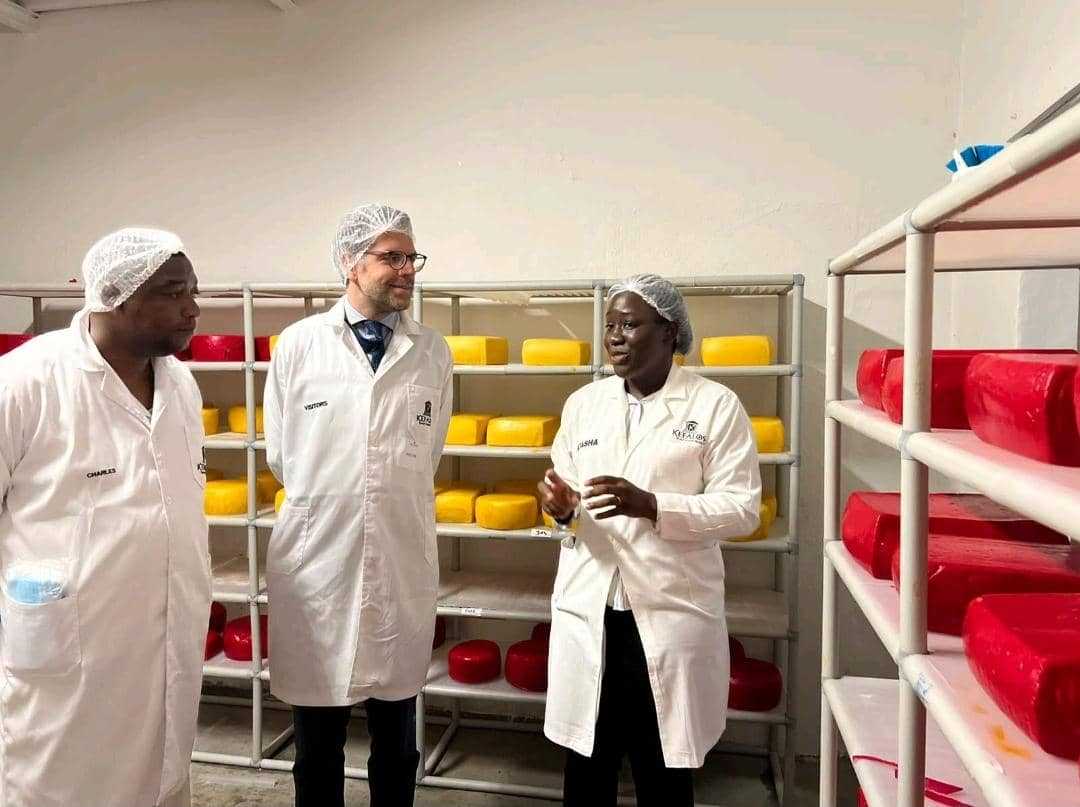
The Netherlands is one of the most important destinations for Zimbabwean fresh produce, especially peas, berries and flowers. The Embassy says Zimbabwe and the Netherlands have shared strong agricultural trade ties since the 1980s, with Zimbabwe currently enjoying a trade surplus with the European country. KLM Cargo flights from Harare have also helped link Zimbabwean produce to European markets.
This gives the new ambassador a practical platform. For Zimbabwe, the Netherlands is a strategic gateway into the European market, where standards, cold chain systems, logistics and reliable supply determine whether local producers can move from promising potential to sustained export earnings.
The Dutch side has also been promoting precision farming, private sector development and agricultural innovation. The Netherlands, despite its small size, is one of the world’s leading agricultural exporters, with expertise in water-efficient farming, greenhouse systems, seed technology and high-value horticulture.
Related Stories
For Zimbabwe, this aligns with the need to increase agricultural productivity while adapting to climate pressure. Water availability, drought resilience, chemical use, export quality and smallholder inclusion are now central to the country’s agricultural competitiveness.
The Embassy’s climate work in Zimbabwe includes support for civil society partners promoting climate-smart agriculture and improved natural resource management in rural communities. These programmes sit at the intersection of water, food security, livelihoods and climate adaptation.
The relationship also has a strong inclusion thread. Dutch-supported cooperation has highlighted women and youth in agriculture, entrepreneurship and community resilience. This is important in a sector where women contribute heavily to production but often remain underrepresented in ownership, finance, technology access and export market linkages.
However, the relationship still carries a difficult legacy. The Netherlands’ 2023-2026 country strategy notes that relations were affected by Zimbabwe’s political and economic crises, human rights concerns, land reform and the expropriation of Dutch-owned farms. Compensation under the Bilateral Investment Promotion and Protection Agreement remains a key issue for the Dutch side.
Recent engagement between Ambassador van Eeuwen and Finance Minister Professor Mthuli Ncube also touched on BIPPA farmer compensation, arrears clearance, macroeconomic stability, the IMF Staff-Monitored Programme, horticulture and water partnerships.
This makes the current phase of relations both promising and delicate. Trade is growing, especially in agriculture, but investor confidence still depends on how legacy concerns around property rights, compensation and rule of law are addressed.
For Zimbabwe, stronger Netherlands ties could help expand horticulture exports, improve climate-smart farming, build women and youth enterprise, and connect more local producers to demanding but valuable European markets.
For the Netherlands, Zimbabwe offers an agricultural partner with export potential, natural resources, a skilled farming base and a strategic location in southern Africa.
The bigger test will be whether that goodwill can help turn Zimbabwe-Netherlands cooperation into wider opportunities for farmers, exporters, women entrepreneurs, young people and climate-stressed communities looking for practical solutions.






Leave Comments