





Zimbabwe's economy expanded by 8.3 percent in 2025, one of its strongest performances in recent years, but the Government now faces a more difficult challenge of translating macroeconomic stability into household incomes, employment and business growth as economic expansion is projected to slow to 5 percent in 2026.
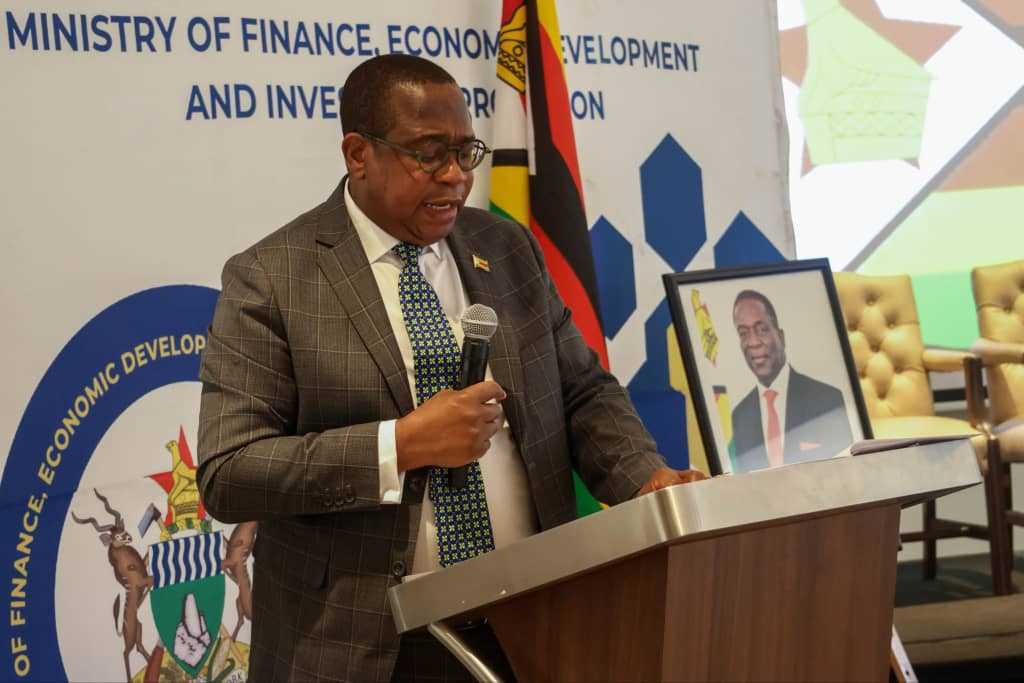
The figures were presented by Minister of Finance, Economic Development and Investment Promotion Professor Mthuli Ncube during a briefing to Parliament's Portfolio Committee on Budget, Finance and Investment Promotion as legislators reviewed implementation of the 2026 National Budget and began preparations for the 2027 Budget Strategy Paper.
The briefing comes at a critical time for Government as it seeks to maintain economic stability while financing development priorities without introducing new taxes or supplementary budgets.
Ncube told lawmakers that Zimbabwe had maintained fiscal discipline despite significant public spending.
"....key economic updates; 8.3% GDP growth in 2025, driven by agriculture and mining. For 2026, growth is projected at 5%. Budget expenditure to May 2026 was ZiG98.2 billion, showing fiscal discipline," he said.
He said inflation averaged 4.4 percent during the first half of 2026, describing it as a major milestone.
Ncube also reiterated Government's fiscal commitments ahead of the next budget cycle.
“Inflation averaged 4.4% in the first half of 2026, the first time in over three decades we have sustained single-digit inflation. The exchange rate also remained broadly stable,” he stated.
"I reaffirmed Government's commitment to fiscal discipline, no new taxes, no supplementary budgets in 2027, and improving Constituency Development Fund disbursements."
While the macroeconomic indicators suggest improving stability, they also reveal an economy entering a slower growth phase after the exceptional rebound recorded in 2025, largely driven by recovery in agriculture following improved rainfall and continued expansion in mining.
Related Stories
The projected decline from 8.3 percent to 5 percent means the economy will increasingly depend on productivity gains, manufacturing, investment and domestic demand rather than agricultural recovery alone.
The figures also raise questions on whether macroeconomic improvements are filtering through to ordinary Zimbabweans.
Financial analyst Malcolm Luther Hove argued that headline growth figures alone cannot measure economic wellbeing.
"Growth must be evidenced in the ordinary man's pocket! If not then your statistics have no meaning!"
His remarks reflect a a bigger debate among many over whether Zimbabwe's recent macroeconomic gains have translated into improved disposable incomes, formal employment and reduced poverty.
Government's emphasis on fiscal discipline also reflects its determination to avoid the budget overruns that have historically fuelled inflation and currency instability.
Budget expenditure reached ZiG98.2 billion by May 2026, while the Treasury insists expenditure remains within approved limits, supporting its pledge to avoid supplementary budgets next year.
That position will become increasingly challenging as Government faces growing demands for higher public sector wages, health and education funding, infrastructure investment and agricultural support programmes.
The commitment not to introduce new taxes may be welcomed by businesses already facing high operating costs, but it also limits Government's options for raising additional domestic revenue at a time when spending pressures continue to mount.
Zimbabwe's latest macroeconomic performance comes as international institutions project moderate growth over the medium term. The International Monetary Fund expects growth to ease after the agriculture-led rebound, while the World Bank has argued that sustaining higher growth will require deeper structural reforms, increased private investment, improved governance and continued macroeconomic stability.
The briefing also comes as Government pursues its ambition of attaining upper-middle-income economy status, with stable inflation, exchange rate stability and fiscal discipline representing important guidelines.





Leave Comments