







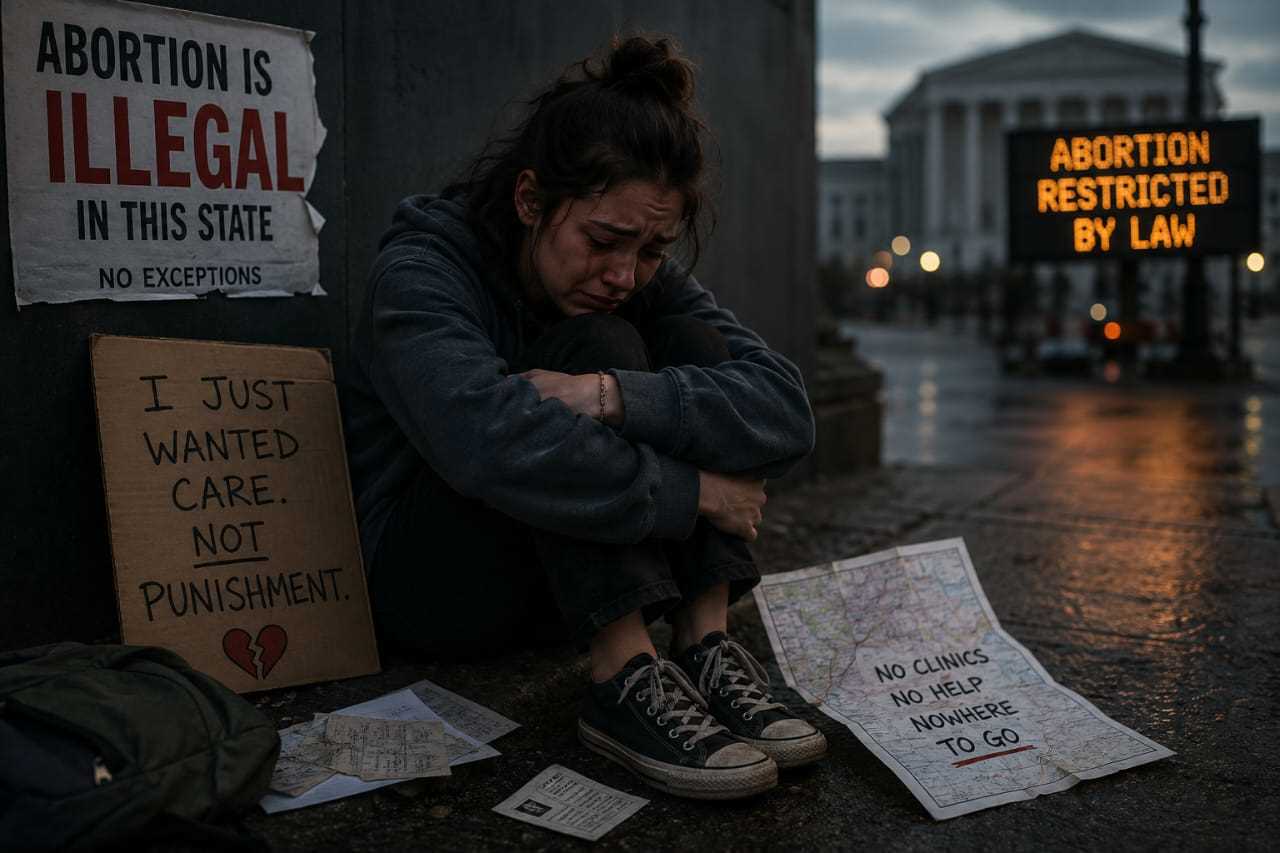
Fifteen-year-old Sekai (not her real name) still remembers the unbearable pain that gripped her body as she lay curled up on a hospital bed, wondering whether she would ever be able to have children.
Just weeks earlier, she had been an ordinary Form Two learner in Epworth, worried more about homework than motherhood. When she discovered she was pregnant, fear replaced everything else.
"I couldn't tell my parents. I thought they would chase me away. I was also afraid that everyone at school would laugh at me," she said.
The father of the pregnancy, an older boy from the neighbourhood, denied responsibility.
With no one to confide in, Sekai turned to friends, who referred her to a woman known in the community for helping girls with unwanted pregnancies.
"I was told she helps many girls and that nobody would ever know because she was good at keeping secrets," Sekai said.
According to Sekai, the woman gave her herbal concoctions and inserted objects into her womb in an attempt to end the pregnancy. Instead of relief came severe abdominal pain, heavy bleeding and fever.
Ashamed and frightened of being discovered, Sekai stayed at home for several days. Only when she could no longer stand did her family rush her to a health facility for post-abortion care.
Doctors told her the delay had caused serious complications.
According to the health workers who treated her, the unsafe abortion had severely damaged her uterus, increasing the risk that she may struggle to conceive in the future.
"I wish I had gone to the hospital earlier. The woman who had given me the concoction had advised me to visit the hospital because, when seeking post-abortion care, no questions are asked. But I was afraid people would judge me," Sekai said.
"I know it is dangerous."
A woman in Epworth who said she has, for years, helped girls and women seeking to end unwanted pregnancies said desperate clients continue to knock on her door.
"Most of them tell me they cannot face their parents or the community. They are afraid of being laughed at or disappointing their families. They say society will reject them."
She said she sees numerous clients, including teenagers and older women, and that some return months or years later after experiencing another unintended pregnancy.
"If I turn them away, they will simply go somewhere else," she said.
"When I see that someone is bleeding heavily or looks very sick, I tell them to go to the clinic or hospital immediately for post-abortion care. I know the nurses and doctors will treat them. They do not first ask questions before saving a life."
Although she acknowledged the risks involved, she said Zimbabwe's laws should be reviewed.
Related Stories
"I wish the government would liberalise the Termination of Pregnancy Act so women and girls do not have to seek help from people like us. What happens outside the formal health system is risky."
Her remarks expose the difficult reality facing many women caught between unintended pregnancy, fear of stigma and limited legal options.
The Termination of Pregnancy Act contributes to delays in seeking life-saving care. The Act allows pregnancy termination only when the pregnancy endangers the life of the pregnant woman, when the foetus is likely to be born with serious abnormalities, or when the pregnancy is the result of rape or incest.
The narrow legal framework leaves adolescents with little practical recourse. In 2024, the Zimbabwe High Court declared Section 2(1) of the Act unconstitutional for excluding pregnancies involving minors and survivors of marital rape from the definition of unlawful intercourse. To date, no amendment has been made, leaving a legislative gap.
Health experts say one of the greatest dangers is not only unsafe abortion itself but also delaying treatment when complications occur. Many girls fear arrest, judgement from healthcare workers or exposure to their families.
As a result, they arrive at health facilities only after developing severe bleeding, infections or injuries to their reproductive organs.
Medical professionals stress that post-abortion care is emergency healthcare. Anyone experiencing complications following a miscarriage or abortion should seek treatment immediately.
Dr Rumbidzai Makoni, an obstetrician, said unsafe abortions remain common in Zimbabwe, with three in every 10 unintended pregnancies ending in abortion.
"When an unsafe termination occurs, there is a risk of infection in the uterus, which can affect future fertility, leading to recurrent miscarriages or even permanent infertility.
"Post-abortion care is provided in an empathetic, non-discriminatory manner, and patient privacy and confidentiality are maintained according to the ethical principles of patient care," she said.
A study by Sully and Madziyire et al. (2018) estimated that between 65,000 and 80,000 abortions occur annually in Zimbabwe. Given the country's restrictive abortion laws, researchers believe the majority of these are unsafe.
Ekenia Chifamba, Director of Shamwari Yemwanasikana, said post-abortion care saves lives and reduces repeat crises. It also mitigates the harm caused by restrictive laws that push women into the shadows.
"Effective policies should be centred on protecting health rights, not imposing restrictions for their own sake. These include removing procedural and administrative barriers that disconnect legal entitlements from real access, especially in rural areas.
"They should also integrate post-abortion care with family planning services at the point of treatment, which has been proven to reduce repeat unintended pregnancies.
"Parliament recently deleted a clause from the Medical Services Amendment Bill that advocates argued would have removed administrative barriers to accessing legal abortion. These barriers disproportionately affect adolescent girls, rural women and those without the resources to navigate complex authorisation processes," she said.
Tariro Munetsi, a women's and girls' legal expert, said the Termination of Pregnancy Act should give women and girls greater autonomy to make decisions about their own bodies.
"Although the Act provides a structured legal framework to regulate pregnancy termination, it appears to focus more on legal compliance and procedural safeguards than on empowering women with comprehensive reproductive rights.
"It also seeks to balance this with protections for medical practitioners, but it may impose procedural hurdles that delay or restrict lawful access," she said.
Sekai's story is a reminder that while unintended teenage pregnancy remains a difficult reality, fear, silence and unsafe abortions continue to exact an even greater price on Zimbabwe's adolescent girls.









Leave Comments