







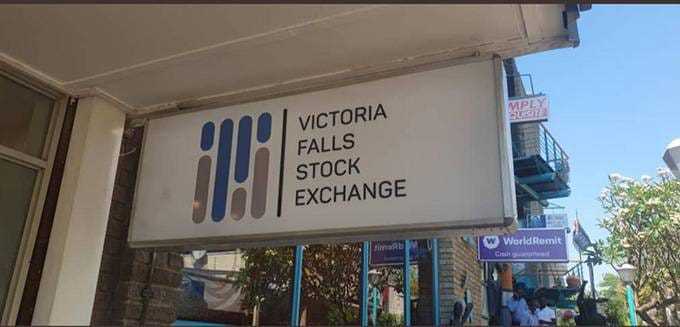
The Victoria Falls Stock Exchange is targeting a 25% increase in market value over the next 12 months, but its more consequential ambition is to transform the five-year-old US dollar bourse from a market dominated by established companies into a broader capital-raising platform for new businesses, including Zimbabwe’s junior mining sector.
VFEX Chief Executive Officer Justin Bgoni said the exchange is targeting US$5 billion in market capitalisation from the current level of about US$4 billion, while expanding beyond conventional equity listings into real estate investment trusts (REITs), exchange-traded funds and a proposed venture board.
“We are currently on the $4 billion mark and we will work hard to reach $5 billion” over the next 12 months.
The target would represent approximately 25% growth in market capitalisation. But the more important question for Zimbabwe’s capital markets is whether that growth will translate into greater liquidity and, more importantly, more companies actually raising fresh capital through the exchange.
That distinction has become increasingly relevant because VFEX’s market value has risen sharply following large listings and transfers of existing companies.
The Reserve Bank of Zimbabwe reported that VFEX market capitalisation increased by 85.04% during the first quarter of 2026, adding US$1.78 billion to reach US$3.88 billion, from US$2.10 billion at the end of 2025.
The central bank attributed much of the increase to the listing of Econet InfraCo, which entered the exchange with a valuation of about US$1 billion.
By comparison, VFEX’s total value traded in the third quarter of 2025 was US$16.79 million, although that represented a 106.27% increase from US$8.14 million during the same quarter in 2024.
The figures illustrate the difference between a growing market valuation and a deep market. A company can add substantially to an exchange’s market capitalisation when it lists, but that does not necessarily mean investors are actively trading its shares or that businesses are raising significant new capital.
It is this gap that VFEX’s proposed product expansion is intended to address.
“Our focus is on product diversification and ensuring that we get more listings, not just from equities,” Bgoni said, adding that the exchange is targeting real estate investment trusts and exchange-traded funds.
Related Stories
The exchange recorded its second REIT listing and first ETF this year, while Old Mutual became its 21st listing on August 7.
Bgoni said VFEX had secured four of its targeted six new listings for the year, suggesting that the exchange is increasingly moving towards a broader securities market rather than relying exclusively on traditional equities.
The proposed venture board could have an even more significant economic role.
Bgoni said it would provide a “dedicated capital-raising platform for junior and exploration-stage companies, with an initial focus on the mining and natural resources sectors.”
The proposal comes as Zimbabwe seeks to attract more investment into a mining industry dominated by gold, platinum, lithium and other minerals, but where early-stage exploration companies often face difficulty accessing conventional bank finance.
A dedicated equity market for smaller mining and exploration companies could provide an alternative source of risk capital, particularly because exploration projects may not have the cash flows or collateral required for traditional lending.
The model would also fit Zimbabwe’s resource endowment. The country is Africa’s largest lithium producer and has substantial platinum, gold and other mineral deposits, creating a potentially large pipeline of companies requiring exploration and development capital.
But the venture board’s success would depend on whether it can attract both sides of the market: companies willing to disclose information and accept listing requirements, and investors prepared to take the considerably higher risks associated with early-stage mining.
Bgoni said the exchange is also seeing interest in international ETFs, developmental REITs and infrastructure bonds.
“We are expecting some international ETFs. Locally, we have seen a lot of interest in REITs, especially developmental,” he said, adding that there was “a lot of interest in infrastructure bonds from financial institutions.”
The diversification strategy is significant because Zimbabwe’s capital markets have historically been heavily concentrated in equities, while the country’s infrastructure and property sectors require long-term financing instruments.










Leave Comments