








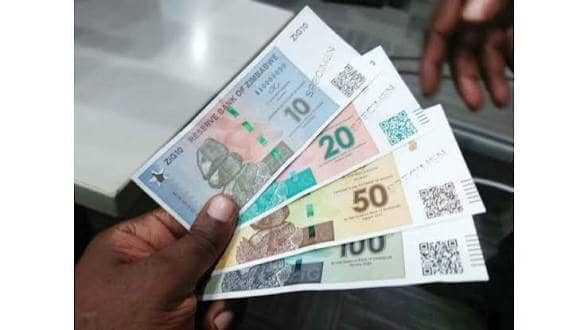
Zimbabwe Gold now accounts for about 43% of transactions on formal payment platforms, as the Reserve Bank of Zimbabwe seeks to ensure that wider use of the local currency translates into longer-term savings and increased financing for productive sectors.
RBZ Deputy Governor Innocent Matshe said the increased use of ZiG showed growing acceptance of the currency, but acknowledged that the expansion in transactions had not yet produced the level of long-term capital formation required to deepen lending in the economy.
“I am confident that when you wake up tomorrow, the value of your currency wouldn’t have changed. For this, we have done a country-wide campaign, and we have seen that the use of ZiG transactions on all platforms has risen to about 43 percent. This is positive, but it’s yet to translate to being long-term capital,” Matshe said.
The latest figure comes against a 2025 backdrop in which ZiG transactions averaged between 35% and 40% of RTGS transactions, according to the RBZ’s 2026 Monetary Policy Statement, although the central bank’s published data also recorded a peak of 43% in May 2025. The figures therefore show sustained use of ZiG within the formal payments system, rather than establishing a continuous upward movement from the 2025 average.
Matshe said the banking sector was undergoing a gradual shift from conventional savings mobilisation towards capital formation, although the transition was yet to produce stronger medium- and long-term lending.
“We accept that, but these things take time. This will not happen overnight,” he said.
The RBZ has observed a decline of between three and five percentage points in the loans-to-deposit ratio, while Matshe said non-convertible debentures were increasing because banks were not yet fully converting mobilised funds into medium- and long-term credit.
“We have seen non-convertible debentures on the rise because banks are not yet mobilising those and translating them into long-term or medium-term credit,” he said.
The central bank is using its ZiG Term Deposit Facility to encourage longer-term savings and create a pool of funds that can be channelled towards productive investment, particularly among small and medium-sized enterprises.
Related Stories
“So, the second is the ZiG Term Deposit Facility. The ZiG Term Deposit Facility is a facility to encourage savings. These savings will then be translated into capital for small and medium-scale enterprises,” Matshe said.
The facility is also intended to contribute to the development of a domestic yield curve, with rates of 8% for 30-day deposits, 9% for 60 days and about 11% for 90 days, according to Matshe.
The RBZ has also sought to increase productive-sector lending through its Targeted Finance Facility, whose funding rate was reduced to 15% in June. Banks accessing the facility are subject to an all-inclusive lending-rate cap of 25% for productive-sector borrowers, although Matshe said the maximum rate should not automatically become the rate charged to every borrower.
The measures reflect the central bank’s wider effort to strengthen the link between monetary transactions and financial intermediation, with greater use of ZiG expected to support the mobilisation of deposits that can subsequently be converted into credit for businesses and other productive activities.
Economic observer Patrick Makanza cautioned that the 43% figure should not be interpreted as representing ZiG’s share of all transactions in Zimbabwe because the measure relates specifically to formal payment platforms.
“That’s 43% of payments within the formal payment platform. Reality is payments in the informal sector are of a much larger scale,” Makanza said.
His observation highlights the limitations of formal payment data in measuring currency use across an economy where a significant volume of transactions takes place outside the formal banking and payment system.
Makanza also argued that wider transactional use needs to be accompanied by confidence in the monetary authorities and the policies supporting the currency.
“A key to instilling confidence in a currency is honesty. Dishonesty has been RBZ’s Achilles heel for a long time. Time to change,” he said.
The growth in ZiG transactions provides one measure of the currency’s integration into the formal economy, while the development of longer-term savings and productive credit represents a further stage in strengthening its role within the financial system.






Leave Comments