








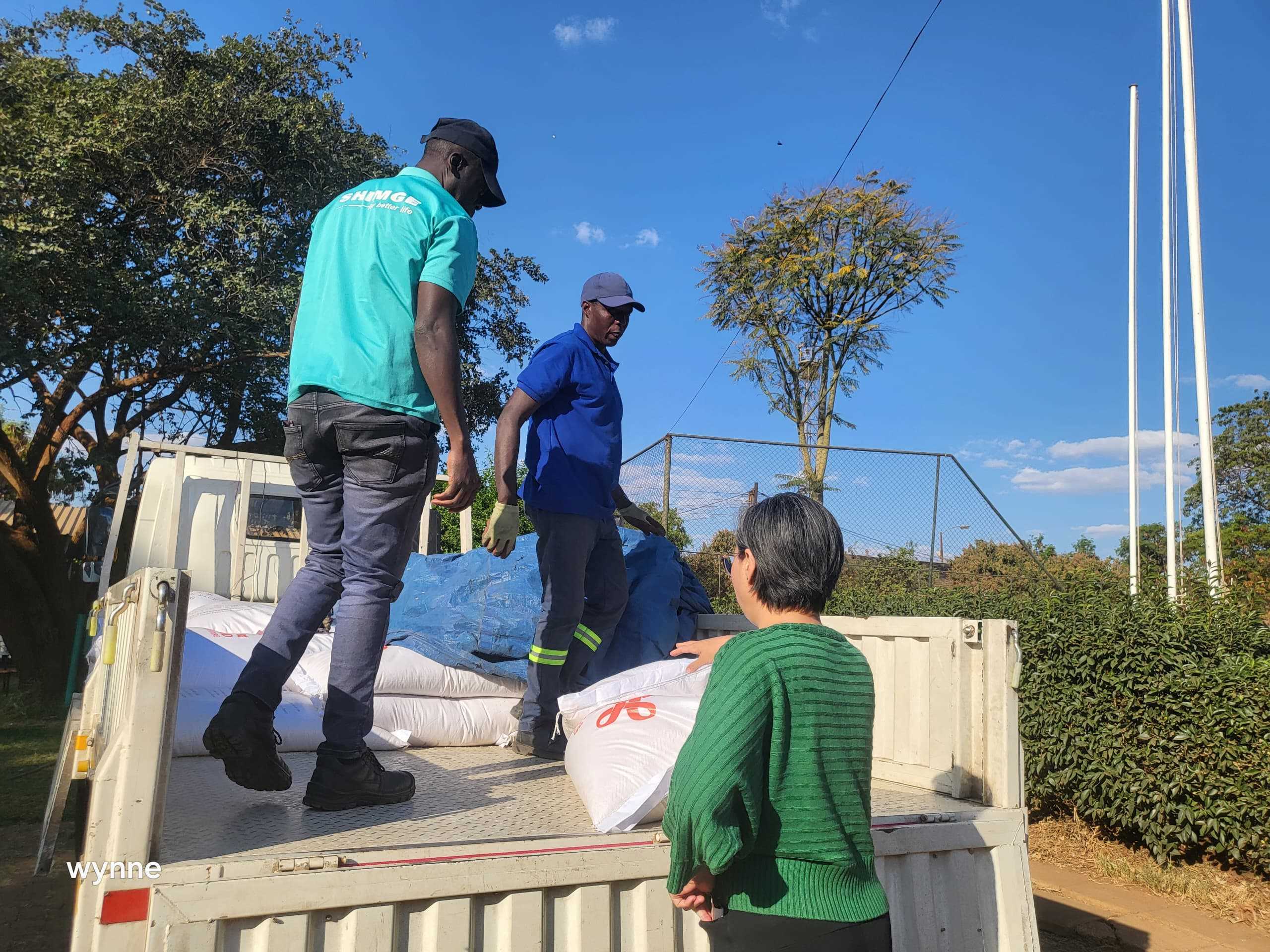
For children at Dzikwa Activity Centre in Dzivarasekwa meal time is usually sadza and beans eaten after grace is said with deep gratitude that there is a meal on the plate.
So when the Chinese Loving Mom team delivered one tonne of rice, Centre Manager and Coordinator Pricilla Takawira knew what the donation would mean.
“Our children rarely eat rice because we cannot afford it,” she said. “With rice, it is going to be Christmas Day every day, and the kids are going to be happy.”
Dzikwa was one of three Harare organisations supporting orphans and vulnerable children to receive rice from the Chinese community initiative.
The team donated 400 kilogrammes to Shalom Children’s Home in Marlborough, another 400 kilogrammes to Runyararo Children’s Home and one tonne to Dzikwa — a combined 1.8 tonnes.
At Shalom, Pastor Rephat Nyarenda said the donation continued a relationship built over several years.
“Currently, we have 36 children,” he said. “We have come a long way, witnessing the support that the mothers have been giving us over the years, so we are grateful.”
At Runyararo, Chinese Loving Mom member Penny Peng brought out photographs taken during her first visit to the institution in 2011.
As she shared the old pictures with the children, the occasion became more than a food handover. It was a reminder of a relationship stretching back 15 years and of needs that extend beyond the next meal.
The Chinese Loving Mom initiative brings together women from Zimbabwe’s Chinese community to support children affected by poverty and other forms of vulnerability. Over the years, its assistance has extended beyond food to helping construct classrooms, clothing, learning materials and help with school fees.
That investment in education matters. A bag of rice addresses today’s hunger, while keeping a vulnerable child in school can change the course of an entire life.
Related Stories
At Dzikwa, which supports children living with families in the surrounding community, growth has brought hope but also increasing pressure on resources.
“The organisation is growing big, and the bigger it is growing, the more challenges we face,” Takawira said.
The donation arrived after she appealed to the Chinese Embassy for food to help take the children through September.
“This donation came at the right time, when we expected any well-wisher to come and help,” she said.
The handover also forms part of a broader history of Chinese assistance during Zimbabwe’s recurring droughts.
In 2016, China committed 19,000 tonnes of rice to drought-affected Zimbabwe. Following the devastating 2023–24 El Niño drought, it provided another 1,760 tonnes of emergency rice for vulnerable households and institutions caring for children, older people and people living with disabilities.
But China–Zimbabwe cooperation on food security has not been confined to handing out food after harvests fail.
Agricultural programmes are also seeking to improve the country’s ability to withstand drought through irrigation, reliable water supplies, farming equipment and skills transfer.
At a China-supported agricultural demonstration village in Shamva, boreholes, solar-powered pumps, pipelines and an irrigation system capable of supplying about 55,000 litres of water a day are helping farmers produce food beyond the rainy season. Chinese experts have also trained villagers in soil improvement, crop and livestock production and the operation and maintenance of agricultural machinery.
These are separate interventions, but they represent two connected responses to hunger: providing food when vulnerable people need it urgently, while investing in water, farming knowledge and education to reduce their exposure to the next crisis.
For Takawira, the immediate impact will be visible at mealtimes — fuller plates and children enjoying a food they normally associate with celebration.
“We really appreciate the relationship we have with the Chinese Embassy,” she said. “Every year, especially during this time of the year, they have been coming to give us a hand.”







Leave Comments