





African exports to China rose 23.5 percent year-on-year within two months of Beijing extending zero-tariff treatment to 53 African countries, signalling potentially significant gains for countries seeking greater access to the Chinese market.
Chinese Ambassador to Zimbabwe Zhou Ding said the increase followed the introduction of the zero-tariff policy on May 1 this year. China-Africa trade also reached a record US$208 billion in the first half of 2026, with China remaining Africa’s largest trading partner for the 17th consecutive year.
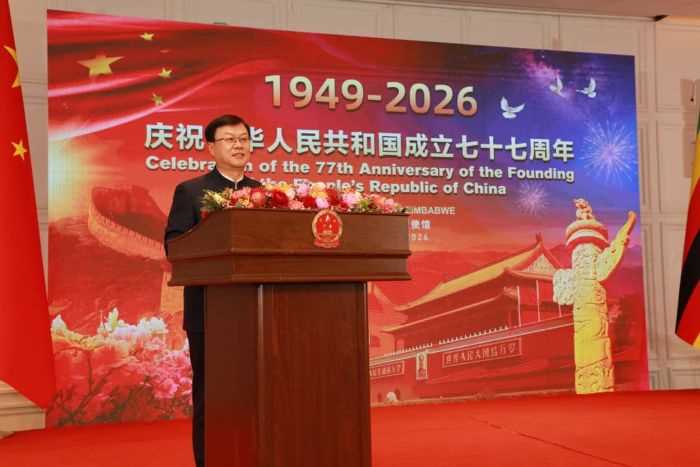
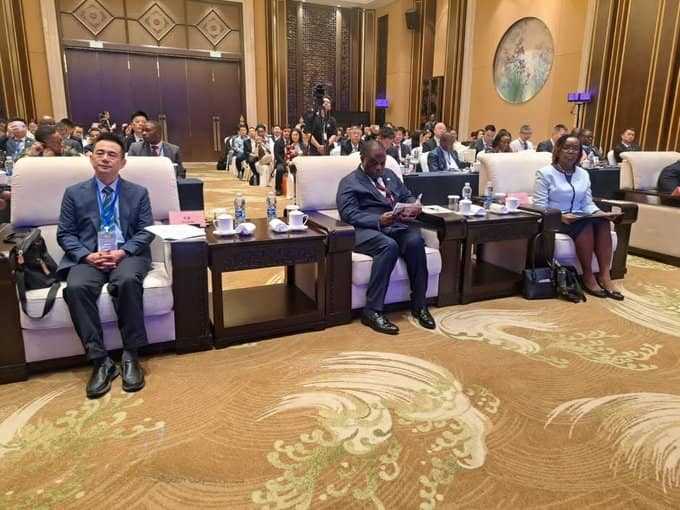
Amb Zhou was speaking in Harare this Wednesday at a reception marking the 77th anniversary of the founding of the People’s Republic of China. The figures come as Zimbabwe seeks to convert its long-standing political relationship with Beijing into increased exports, investment and local value addition.
Acting Foreign Affairs and International Trade Minister Frederick Shava said Zimbabwe welcomed China’s zero-tariff policy and Trade and Prosperity Action Plan, while negotiations were continuing under the Framework Agreement on Economic Partnership for Shared Development.
The trade push is unfolding alongside Vice President Constantino Chiwenga’s high-level investment mission to China, which has focused heavily on mineral beneficiation, manufacturing, technology and industrialisation.
Chiwenga has been courting Chinese companies to process more of Zimbabwe’s minerals locally rather than exporting raw materials, including pushing battery manufacturers to establish production in Zimbabwe.
His mission has included engagements with Huayou Cobalt, battery manufacturer Chilwee, Geely, Alibaba and other major Chinese firms, as well as the Zimbabwe-China Business Forum. Chinese companies have made commitments to explore further investment in beneficiation and value addition.
The parallel developments give Zimbabwe’s zero-tariff opportunity a broader economic dimension.While preferential market access could allow Zimbabwe to sell more goods into China, the government is also pushing for more of those exports to leave the country as processed or manufactured products rather than raw commodities.
Related Stories
Chiwenga has told investors that Zimbabwe will no longer approve isolated single-mineral mining operations without capacity for greater processing and beneficiation at source. China is already a major investor in Zimbabwe’s mining, manufacturing, energy and infrastructure sectors.
Zhou said Dinson Iron and Steel Company had helped position Zimbabwe as a major African steel exporter, while Huayou’s Prospect Lithium operation had produced what he described as Africa’s first batch of lithium sulphate products.
Chinese-funded cement plants had reduced import dependence, while planned solar and waste-to-energy projects were expected to add more than 1,000 megawatts of installed power capacity. Chinese companies have also channelled more than US$100 million into corporate social responsibility programmes supporting schools, clinics, rural roads and boreholes.
Shava said Zimbabwe’s economic diplomacy was aimed at attracting investment, increasing local production and strengthening industrial resilience. He singled out the Dinson steel plant at Manhize as an example of Chinese investment supporting Zimbabwe’s value-addition and industrialisation drive.
Beyond trade and investment, Wednesday’s National Day reception also highlighted the expanding people-to-people relationship between the two countries. Zimbabwean government officials, members of the diplomatic corps and alumni of training and exchange programmes in China attended, with the ambassadors of India, Russia and Belarus among foreign envoys present.
Zimbabwean models staged a fashion show featuring traditional Chinese costumes, adding a cultural dimension to the diplomatic gathering.
Zhou described the past year of China-Zimbabwe relations in three words: “heritage, harvest and heart.” More than 500 Zimbabwean officials and professionals have participated in over 80 capacity-building programmes in China so far this year, while nearly 10,000 Zimbabweans travelled to China in the first eight months of 2026, a 55 percent year-on-year increase.
But the 23.5 percent rise in African exports to China may prove one of the more consequential numbers emerging from the relationship this year. Several attendees who included top ranking government officials said the opportunity for Zimbabwe is now two-fold: to take fuller advantage of tariff-free access to the Chinese market, while ensuring that an increasing share of what it sells arrives there carrying more Zimbabwean value.






Leave Comments