





Zimbabwe will no longer approve new single-mineral mining operations, with new projects required to identify, separate and process multiple minerals contained in ore deposits at source, Vice President Constantino Chiwenga has announced.
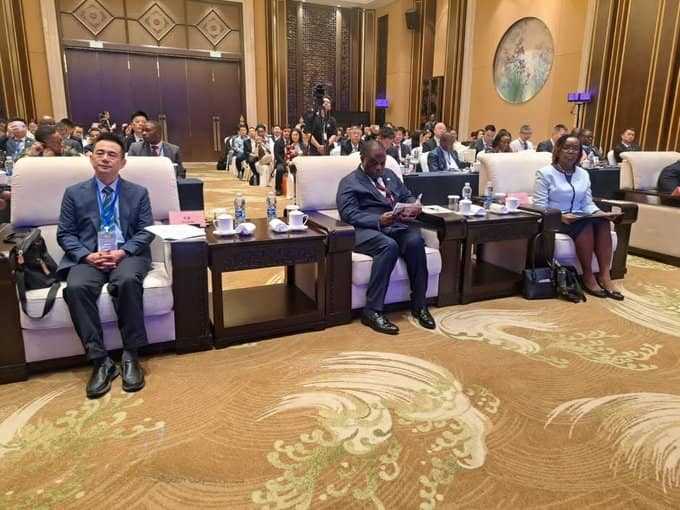
Speaking at the Zimbabwe-China Business Forum in Hangzhou, Chiwenga said investors would be required to bring in machinery capable of processing different mineral components contained in their deposits.
“We are no longer permitting isolated, single-mineral operations,” Chiwenga said.
“We, therefore, encourage investors to bring in machinery capable of identifying and separating all embedded minerals.”
Zimbabwe's strategic mineral base includes lithium, nickel, graphite, manganese, cobalt, copper, chrome, platinum-group metals and rare earths.
The policy will be supported through Special Economic Zones and industrial parks focused on mineral processing, manufacturing, and upstream and downstream value chains.
“This pursuit of the industrialisation agenda, beneficiation and value addition of natural resources at source is a departure from the mere export of raw materials,” Chiwenga said.
Related Stories
The requirement brings associated minerals into the assessment of new mining projects. Ore bodies can contain several minerals, although their recovery depends on factors including grade, mineralogy, metallurgy, processing technology and available markets.
Lithium provides an existing example of Zimbabwe's beneficiation policy. The country exported 816,774 tonnes of lithium concentrate worth US$1.247 billion between January and August 2026. Lithium sulphate exports generated about US$99.5 million between April and July following the commissioning of the US$400 million Arcadia processing plant.
The Government has also maintained January 2027 as the deadline for ending lithium concentrate exports, although processing capacity remains uneven across producers.
Chiwenga's announcement extends the beneficiation approach beyond lithium to the wider mineral sector. Processing requirements also increase demand for electricity, water, transport and specialised industrial infrastructure. The World Bank estimates that unreliable electricity costs Zimbabwe about 6.1% of GDP annually.
Chiwenga also extended the value-addition policy to agriculture, citing tobacco.
“Zimbabwe is Africa’s largest tobacco producer, yet exports 90 percent as raw leaf,” he said.
“We, therefore, invite investments in tobacco value addition at source, moving through the value chain from cutting, blending, manufacturing and packaging.”
The new mining requirement adds multi-mineral recovery and processing to Zimbabwe's existing beneficiation measures, with implementation now dependent on the licensing, investment and processing frameworks applied to new projects.






Leave Comments