








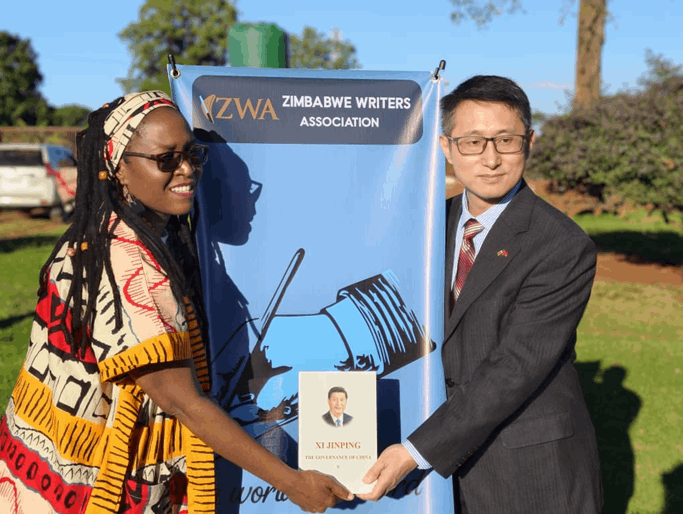
A symbolic afternoon of shared readings and donated books opened into something more ambitious on Saturday, as Zimbabwean writers and the Chinese community explored exchanges, digital publishing and new ways of helping writers earn in a changing literary economy.
Hosted by the Zimbabwe Writers Association under the theme Bridge of Ink, the inaugural Zimbabwe-China Reading Circle blended poetry, cultural reflection and practical conversations on the future of writing.
In framing remarks, ZWA chairperson Monica Cheru positioned writers as thinkers and problem-solvers whose role becomes even more important as Zimbabwe moves toward NDS2 while China prepares its 15th Five-Year Plan.
“How do we illuminate solutions, not only catalogue problems?” she asked, arguing that in addition to chronicling stories, writers must help societies imagine possibilities and think beyond conventional limits.
Mr Steve Zhao, known affectionately to many as “Zivanai,” director of the Zimbabwe China Exchange Centre, drew strong audience interest as he outlined possibilities for exchanges and study visits, support around printing, and digital platforms that can create viable earning avenues for writers.
In a lighter moment that drew laughter, Zhao declared himself of the Soko clan because his Chinese zodiac sign is the monkey, a cross-cultural flourish that became one of the day’s memorable icebreakers.
His intervention struck a chord as it moved discussion beyond cultural goodwill toward infrastructure and the practical question of how writers can sustain themselves.
Related Stories
Cheru said literary institutions themselves must adapt to shifting patterns of cultural consumption.
“We must evolve with changing literature consumption patterns. If people are no longer coming to book fairs and other literary events, then we must follow people where they congregate,” she said, suggesting Zimbabwean writers should secure a platform at the Harare Agricultural Show later this year after missing a presence at the ongoing Zimbabwe International Trade Fair.
That thinking echoed themes raised by Chinese Embassy Political and Press Section director Mr Xiongwen Pan, who described how digital platforms, audiobooks, short-form summaries and social reading communities were reshaping reading culture in China, while reaffirming the embassy’s support for reading initiatives as part of deeper cultural exchange.
Attendants enjoyed readings from various Zimbabwean greats including Chenjerai Hove, Yvonne Vera and Charles Mungoshi. Among those who read were writers Memory Chirere, Ray Mawerera, Tsitsi Nomsa Ngwenya, Shumirai Nhanhanga, Rumbi Kahari and many others. Foreign based Primrose Dzenga’s recording of her two poems incited much discussion on the subject of love. Pan read a poem, The Dog, written by his 15-year-old daughter, a gentle moment that reinforced the event’s people-to-people character.
The embassy also donated books and used the occasion to frame reading as a form of cultural diplomacy and a practical bridge for deeper mutual understanding, while participants explored how artificial intelligence and translation technologies could help African and Chinese literature travel further.
If trade and diplomacy have long shaped China-Zimbabwe ties, Saturday’s gathering suggested literature, too, is emerging as a serious avenue of cooperation.




Leave Comments