







Baba Tanaka used to say it about everything. The boy who stole mangoes. The tenant who was late with rent. The MP who crossed the floor. “Ngaarohwe.” Let him be beaten. It was not really advice. It was a reflex, the way some people say “eish” or reach for their phone when they do not know what else to do with their hands.
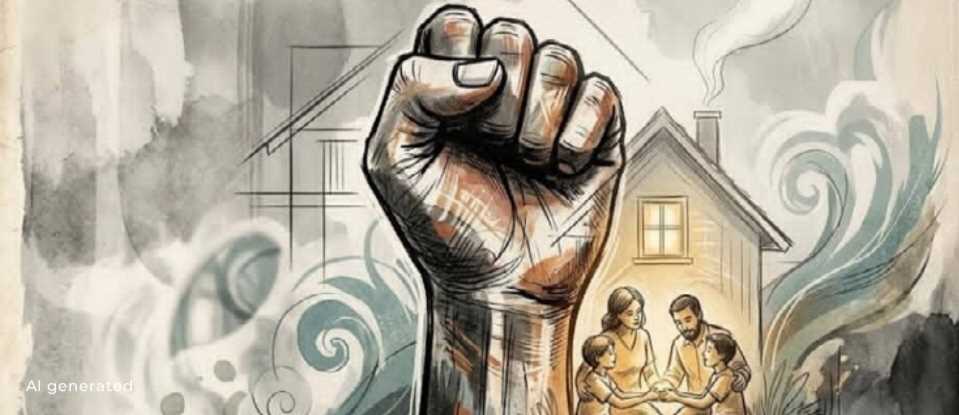
This week, a household in Harare ended in one night. A domestic argument, an axe, then poison. Two adults were dead by morning, neither of them able to take back whatever was said or done in that room. The details are still being established, and they are not the point. The point is that this is not an aberration in how we live. It is the logic we live by, taken to its end.
We do not talk about violence here as a last resort. We talk about it as a first language. “Ngaarohwe” is not restricted to naughty children. We apply it to spouses, thieves, political rivals, and anyone whose offence has exceeded our patience. And when things go wrong in a home, a school or a party, the folk diagnosis is rarely, “We handled this badly.”
It is, “Kusarohwa uku” — this is what happens when someone was not beaten enough, early enough, or hard enough. The cure for violence, in this telling, is more violence, administered sooner.
This shows up at every scale. In the home, discipline and abuse blur into each other because the same justification covers both. In our politics, it is not incidental that party primaries, succession fights and election seasons have their own vocabulary of “dealing with” people, a phrase that rarely means a phone call. August 2018, January 2019: five months apart, the same script, and nobody was ever held to account for either.
Related Stories
It shows up at leisure, too. A disputed penalty, a rival team’s win, a referee’s call — and a stadium empties itself of people running from a fight that started over nothing. The same reflex that ends a marriage ends a football match.
That is the part worth sitting with. We describe this as national character, as though it were weather, something we were simply born into and cannot help. It is not weather. It is incentive. Violence persists here because it has kept working for the people who use it, without consequence. A husband who raises a hand rarely loses anything. A party faction that “deals with” a rival rarely answers to anyone. A parent who beats a child is admired for being firm, not investigated for going too far. When a tool keeps producing results and costs nothing to use, people keep reaching for it. That is not identity. That is arithmetic.
Baba Tanaka is not a bad man. He is an ordinary one, repeating what was modelled for him by people who were, in turn, repeating what colonial law and post-independence politics modelled for them. Rhodesian administration was built on codified force. The liberation war that ended it was necessarily violent. The government that followed kept the apparatus rather than retiring it. Three generations later, “ngaarohwe” sounds like wisdom because it has never once been contradicted by consequence.
A household is gone this week because an argument reached for the only tool it had been taught to reach for. We will call it a tragedy, which it is, and move on to the next headline, which we always do. The vocabulary will still be there when we get back. It always is.
Simbarashe Namusi is a media expert writing in his personal capacity.









Leave Comments