







Zimbabwe is outside the growing group of African countries that have signed new bilateral health agreements with the United States after Harare withdrew from negotiations over a proposed US$367 million five-year package.
The United States is ending its health programmes in Zimbabwe at the end of September following the collapse of negotiations, with the US Embassy saying the two countries are now working on a handover of programmes.
The development comes as Washington shifts from its previous USAID-centred aid model towards bilateral agreements under President Donald Trump’s “America First” global health strategy.
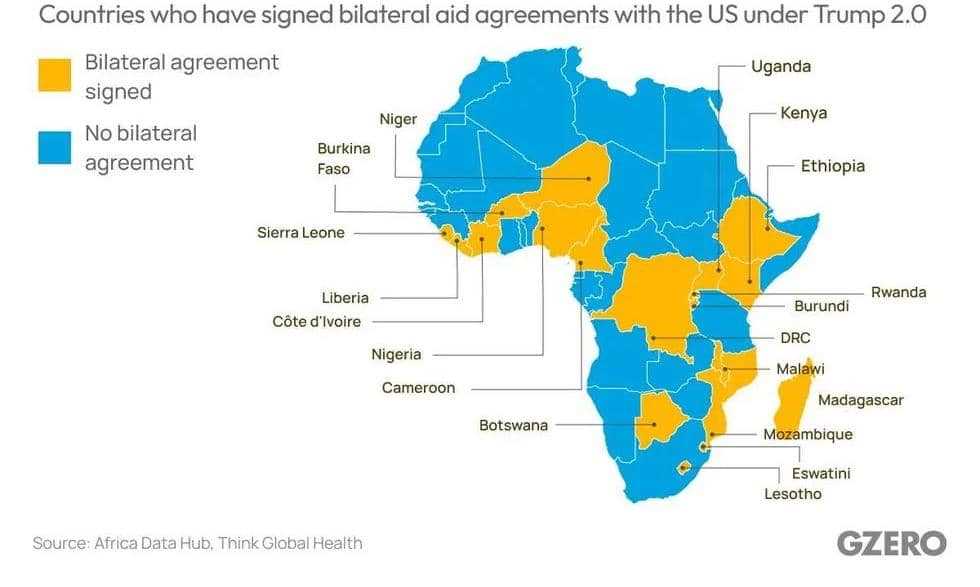
More than 30 countries globally had signed bilateral health agreements worth about US$20.3 billion by July, with African countries making up the majority.
The BMJ reported that Ghana, Zimbabwe, South Africa, Zambia and Kenya had publicly resisted aspects of the new agreements, particularly requirements involving health data, pathogen samples and, in some cases, access to critical minerals.
Analyst Lethukuthula Kozah said the changes did not mean the US had abandoned foreign aid, but was changing how it was delivered.
“The administration has not abandoned foreign aid — it has reshaped it,” Kozah said.
He said Washington was moving towards bilateral arrangements requiring greater domestic financing from recipient governments while linking assistance more directly to US interests.
Zimbabwe’s proposed agreement would have provided US$367 million over five years for HIV treatment and prevention, tuberculosis and malaria programmes, maternal and child health and disease-outbreak preparedness.
The funding was significant for Zimbabwe’s health system, particularly its HIV response, which has relied heavily on US-supported programmes.
Harare’s withdrawal was largely driven by concerns over conditions attached to the proposed funding.
Government spokesperson Nick Mangwana described the arrangement as “asymmetrical”, saying Zimbabwe was being asked to share biological resources and health data without a corresponding guarantee that it would benefit from medical innovations developed from that information.
Related Stories
Zimbabwe’s position contrasts with countries that have signed bilateral agreements with Washington.
The new arrangements have been concluded with a number of African governments, including Ethiopia, Kenya, Mozambique, Nigeria, Rwanda, Liberia and Uganda. Human Rights Watch reviewed seven such agreements and raised concerns over provisions covering health-data access and the sharing of biological specimens and pathogen information.
The rights group said the agreements can give the US broad access to health information and, in several cases, require countries to provide pathogen samples and related data as a condition of continued health funding. It also said the agreements reviewed did not guarantee equitable access to medical products developed from shared biological resources.
The US administration has presented the new model as a way of increasing domestic investment in health and reducing dependence on foreign assistance, while critics have raised questions over data governance, sovereignty and the conditions attached to funding.
For Zimbabwe, the financial consequences of remaining outside the framework are becoming immediate.
US Ambassador Pamela Tremont said Washington would shift its relationship with Zimbabwe away from one “largely focused on health and humanitarian assistance” towards broader economic, trade and investment opportunities.
“With Zimbabwe’s decision to decline a bilateral health MOU, US-supported health programmes will conclude at the end of September,” Tremont said, adding that the US health team was working with the Ministry of Health and Child Care and other partners on a “thorough and responsible handover”.
The end of the programmes raises questions over how Zimbabwe will sustain services previously supported by US funding, particularly HIV treatment and prevention.
Opposition politician Jameson Timba has questioned how the Government intends to replace the assistance.
“If Government rejects the money, what is the funded alternative for the 1.2m Zimbabweans whose HIV treatment has benefited from US support?” Timba said.
He argued that if Treasury has secured alternative financing, the Government should disclose it.
For Zimbabwe, the issue now moves beyond the US$367 million package to how the country will finance and maintain health programmes as the long-standing US support comes to an end.




Leave Comments