









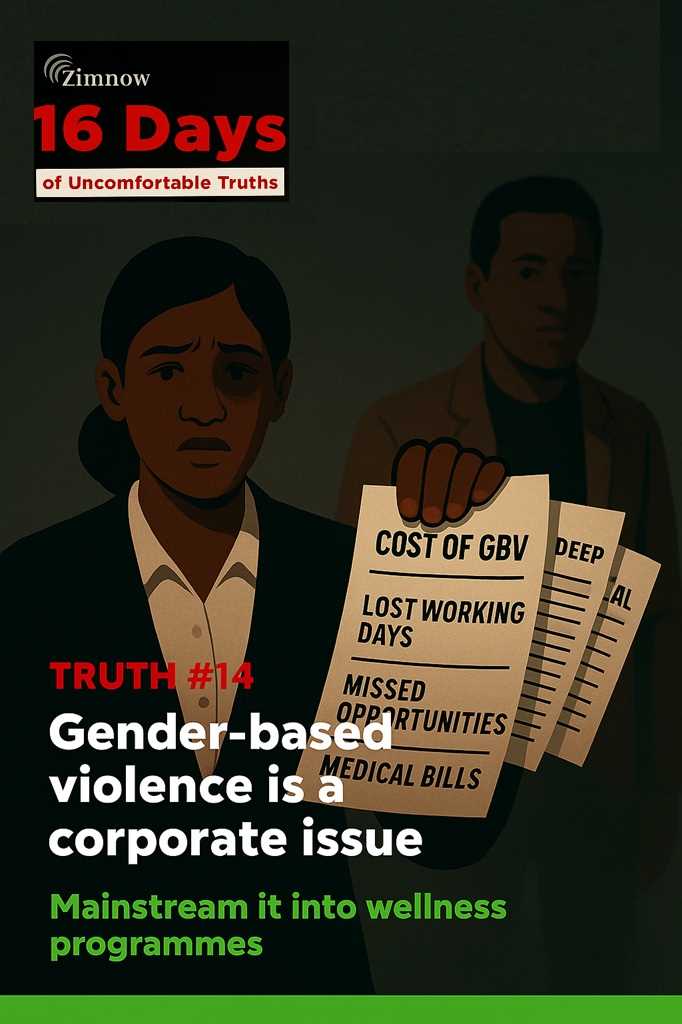
Every time a woman or man wakes up from a night of violence, a company loses revenue in real measurable terms.
Domestic abuse shows up ion production lines as late arrivals, unexplained absenteeism, burnout, panic attacks, low productivity, staff turnover and medical claims.
It enters office corridors through WhatsApp chats, police reports, HR complaints, emergency leave, and colleagues covering work. Violence that happens at home does not stay at home. The body arrives at work, but the mind does not.
And when violence escalates, the workplace becomes a stage. There are employees whose spouses storm offices. There are fist fights in car parks. There are security teams escorting partners out of reception. There are restraining orders delivered during working hours. There are court dates, counselling sessions, long sick leaves and entire departments working with one member psychologically unavailable.
Domestic violence is not a private matter. It is an operational risk. Executives must calculate GBV cost. Reduced staff output has a price. Turnover has a price. Recruitment and retraining have a price. Late submissions break contracts. Burnout weakens teams. Legal battles drain focus and money.
A violent employee is a liability. A traumatised employee is a productivity loss. A company that ignores violence pays for it anyway. The difference is you can pay through prevention, or you can pay through damage. Only one yields profit.
Related Stories
Why business must act
Because a safe, supported employee works better. Because a traumatised employee bleeds value silently. Because the workforce is your productivity engine — and engines require maintenance, not indifference.
Integrating DV and GBV into workplace wellness is not charity. It is risk management. talent retention and strategic investment into stability, morale and output.
GBV-aware organisations get more work done. They lose fewer employees. They build stronger internal culture. And they become brands people want to work for, not escape from.
What action looks like
• Mandatory GBV awareness in induction
• Anonymous reporting channels
• Wellness policies that protect victims and discipline perpetrators
• HR trained to respond, not silence
• Support leave for survivors to attend court, counselling and recovery
• Zero-tolerance clauses built into contracts
GBV prevention is a profitability strategy. If executives can understand tax relief, CSI leverage and ESG reporting, they can understand this too: A safe workforce makes more money. A traumatised workforce costs it.










Leave Comments