








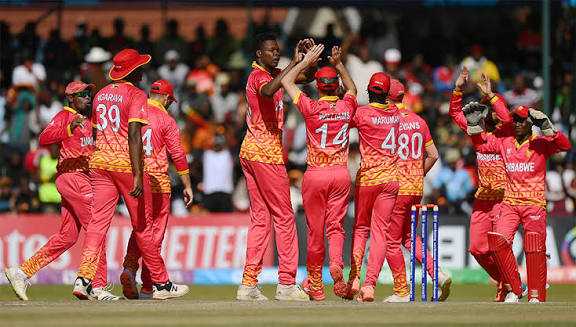

Earlier criticism by former Education Minister David Coltart over the perceived decline of Zimbabwean cricket has resurfaced following the Chevrons’ qualification for the Super 8 stage of the ICC Cricket World Cup.
Coltart had previously raised concerns about what he described as declining standards and governance within Zimbabwe Cricket. His remarks, framed around administration, resource allocation and performance benchmarks, were interpreted by some as a broader indictment of the current leadership’s stewardship of the game.
Critics of his position argued that the commentary, though couched in governance language, risked entrenching perceptions that Zimbabwean cricket had regressed under a transformed administration.
However, the national team’s progression to the Super 8 stage has complicated that narrative.
The Chevrons’ campaign — marked by disciplined performances and decisive contributions from a diverse and predominantly black core of players — offered tangible evidence of competitiveness on the global stage. For supporters of the current administration, the results amounted to a direct rebuttal of assertions of systemic decline.
Social media reaction reflected this tonal shift. One supporter described the qualification as proof of “resilience, growth and depth” within the squad, challenging suggestions that Zimbabwean cricket was in irreversible regression. While anecdotal, such reactions illustrate how on-field success can recalibrate public discourse around governance.
Yet the broader debate extends beyond a single tournament cycle.
Related Stories
Coltart’s original intervention focused on structural questions: governance priorities, infrastructure maintenance, strategic spending and selection transparency — not merely match outcomes. In a subsequent interview, he acknowledged operational improvements during the recent campaign, saying the squad appeared well organised and logistical arrangements were effectively handled.
“One must give credit where credit is due,” he said.
Even so, he maintains that deeper concerns remain. Coltart has questioned the allocation of resources, citing the condition of established facilities such as Queens Sports Club and cricketing schools that, in his view, require urgent refurbishment. He has also queried significant investment in infrastructure projects in Victoria Falls while longstanding grounds show signs of neglect, asking whether such expenditure reflects appropriate priorities.
Selection policy remains another focal point. While acknowledging the team’s competitiveness in the T20 format, Coltart argues that narrow performance margins suggest room for improvement and has implied that alternative player combinations may have yielded stronger results. He was particularly critical of the Under-19 side’s recent performances, describing it as among the weakest in recent years and questioning whether it represented the strongest available pool of talent.
Zimbabwe Cricket has consistently defended its processes, emphasising that selection is merit-based and aligned with international anti-discrimination standards. The board also highlights grassroots development programmes and strengthened compliance frameworks as evidence of institutional reform and long-term planning.
The Chevrons’ Super 8 qualification therefore represents more than a sporting milestone; it has become a flashpoint in an ongoing contest over governance, transformation and accountability within Zimbabwean cricket.
Tournament success strengthens the administration’s claim to progress. It does not, however, automatically neutralise concerns about infrastructure decay, youth development systems or strategic capital deployment.
Sustained credibility will ultimately rest not on episodic achievement, but on structural consistency — competitive results across formats and age groups, transparent systems of selection and visible reinvestment in facilities.
Coltart’s critique may have been softened by recent success. The governance questions he raises, however, remain part of a broader conversation about the direction and long-term health of Zimbabwean cricket.








Leave Comments