








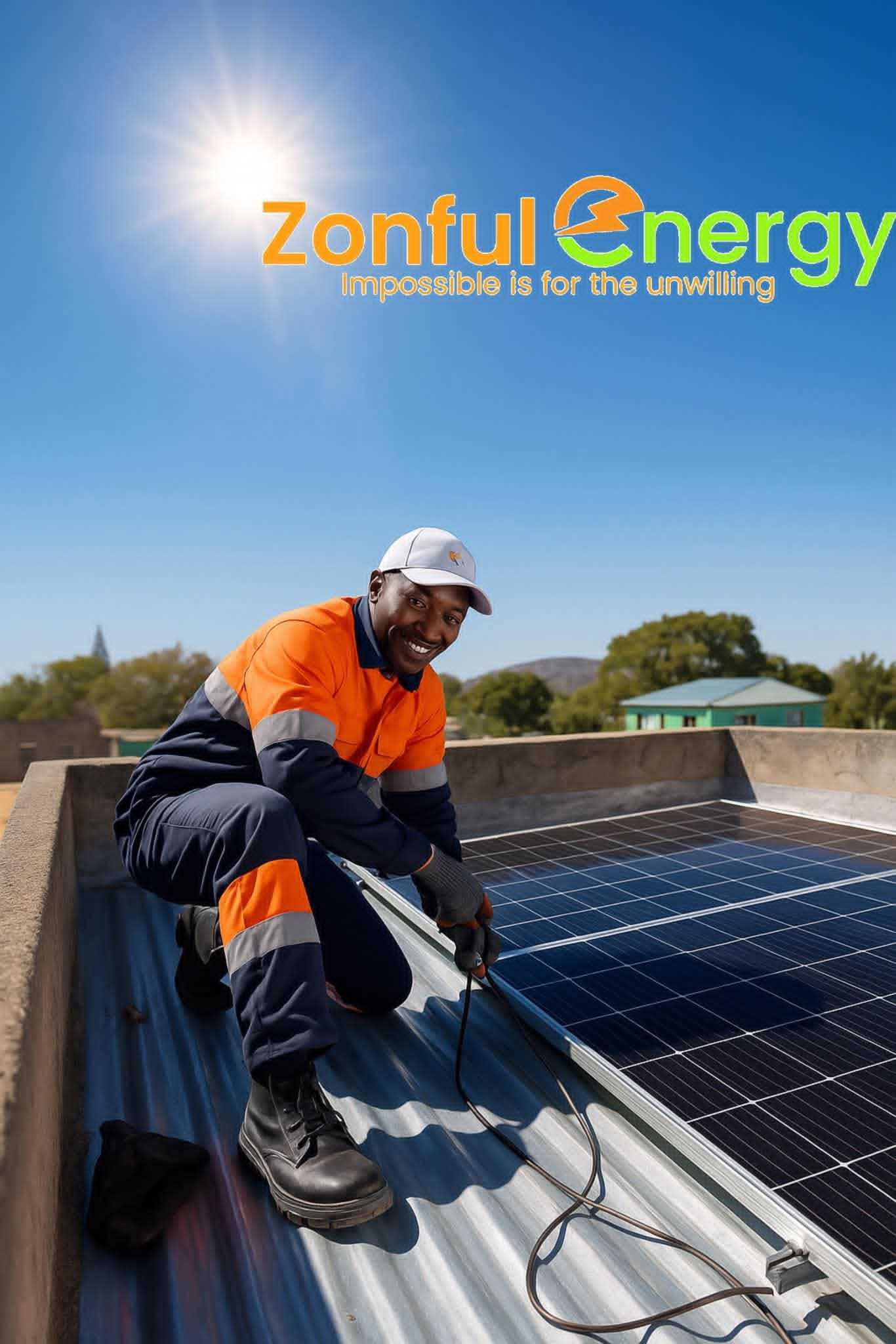
More than 450,000 households have registered for the Zonful Rooftop Solar Scheme since its launch in January 2026, signalling strong early demand for a programme designed to expand access to renewable energy across Zimbabwe.
According to William Ponela, founder and chief executive officer of Zonful Energy, registrations have come from households nationwide within roughly three months of the scheme’s introduction.
The rooftop solar programme aims to install solar systems in one million households by 2030 as part of broader efforts to expand access to clean and reliable electricity.
“To popularise this scheme at the grassroots, Zonful Energy, in collaboration with the Ministry of Energy and Power Development and local district councils, is carrying out incentivised promotions,” Ponela said in a statement.
Related Stories
The initiative forms part of a wider national strategy supported by the Ministry of Energy and Power Development, which has engaged Zonful Energy to assist in identifying unelectrified and underserved communities for solar electrification projects.
In a letter dated 10 November 2025, the ministry formally introduced Zonful Energy to the Rural Electrification Fund and requested assistance in mapping areas across all provinces that either lack electricity or urgently require electrification.
The ministry indicated that submissions should include the names of communities, as well as the relevant districts and provinces, to facilitate the implementation of electrification projects.
The solar rooftop scheme was officially launched on 13 January 2026 and is being implemented in partnership with the Ministry of Energy and Power Development. The project has been described as one of the region’s largest domestic rooftop solar initiatives.
Under the rollout plan, installations are projected to exceed 250,000 households by December 2026, increase to 500,000 by December 2027, rise to 750,000 by December 2028, and reach the one-million-household target by December 2030.
Participating households are expected to benefit from subsidies of up to 40 percent, a measure aimed at improving affordability and accelerating the adoption of renewable energy technologies.
Officials say the programme could also reduce government electricity costs over time while expanding access to sustainable energy solutions, particularly for low- and middle-income communities.








Leave Comments