






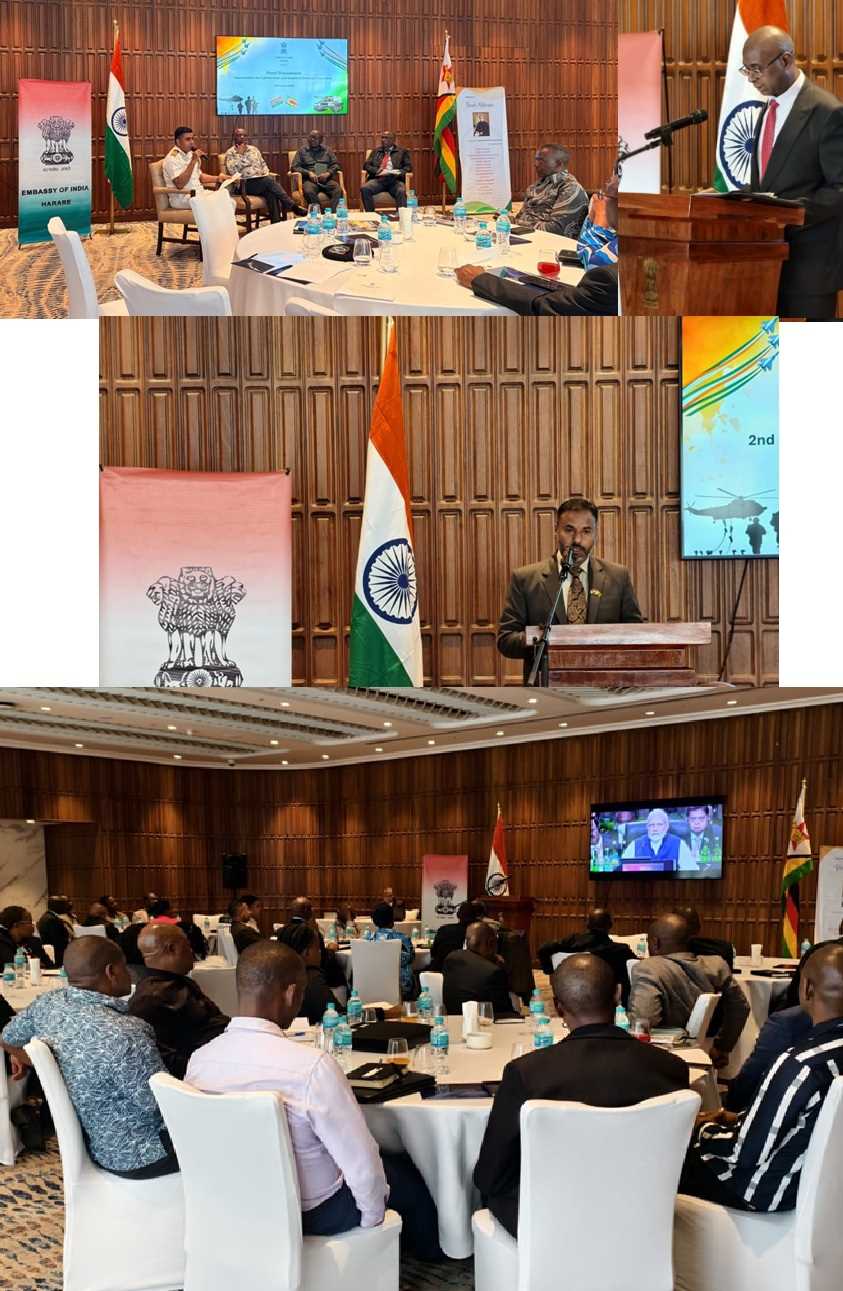
Zimbabwe's defense establishment gathered at the Hyatt Regency Meikles in Harare on Wednesday for the second India-Zimbabwe Defense Industry Interaction—a low-profile event that may carry outsized implications for the country's industrial future.
Senior officers from the Zimbabwe Defence Force (ZDF), Zimbabwe Defence Industries (ZDI), and the Department of Economic Development sat alongside Indian industry representatives and diplomats to map out a practical roadmap for collaboration. The conversation was anchored in a Memorandum of Understanding on defense cooperation signed in February 2025—making this the first full year of structured engagement under that agreement.
The most immediately tangible offer is training. India's government extended more than 40 slots under its Indian Technical and Economic Cooperation (ITEC) program for ZDF members to train in Indian military institutions during 2025–26, a number that has been climbing year on year. One ZDF officer completed the prestigious Defense Services Staff College course in Wellington, India, last year.
Beyond training, both sides identified concrete manufacturing and technology domains: maintenance support for Mi-35 and Alouette helicopters already in the ZDF inventory, ammunition manufacturing, defense vehicles, lithium battery production, and emerging technology areas including drones, robotics, artificial intelligence, and quantum technology. Indian Ambassador H.E. Bramha Kumar framed India's credentials plainly: the country has shifted from being the world's largest defense importer to achieving 60–65 percent self-reliance in two decades and now exports advanced weapons systems globally.
Related Stories
Wednesday's interaction was explicitly designed to feed into the India-Zimbabwe Joint Defense Committee meeting scheduled for New Delhi in June 2026. Chief Director Mvere, representing Zimbabwe's Ministry of Defense, underscored the need for collaboration on both defense cooperation and industrial development, signaling government appetite beyond the ceremonial.
For a country where ZDI has historically operated at limited capacity and where the ZDF relies on aging Soviet-era and Western equipment, the prospect of a partner willing to co-develop, co-manufacture, and transfer technology, rather than simply sell, represents a structurally different kind of defense relationship.
Whether the ambition translates into signed contracts and operational joint ventures will depend on the follow-through in New Delhi in June. But the groundwork being laid, one industry interaction at a time, suggests both governments are treating the MoU as a live document, not a shelf ornament.








Leave Comments