






It is a scene many Zimbabweans recognise instantly.
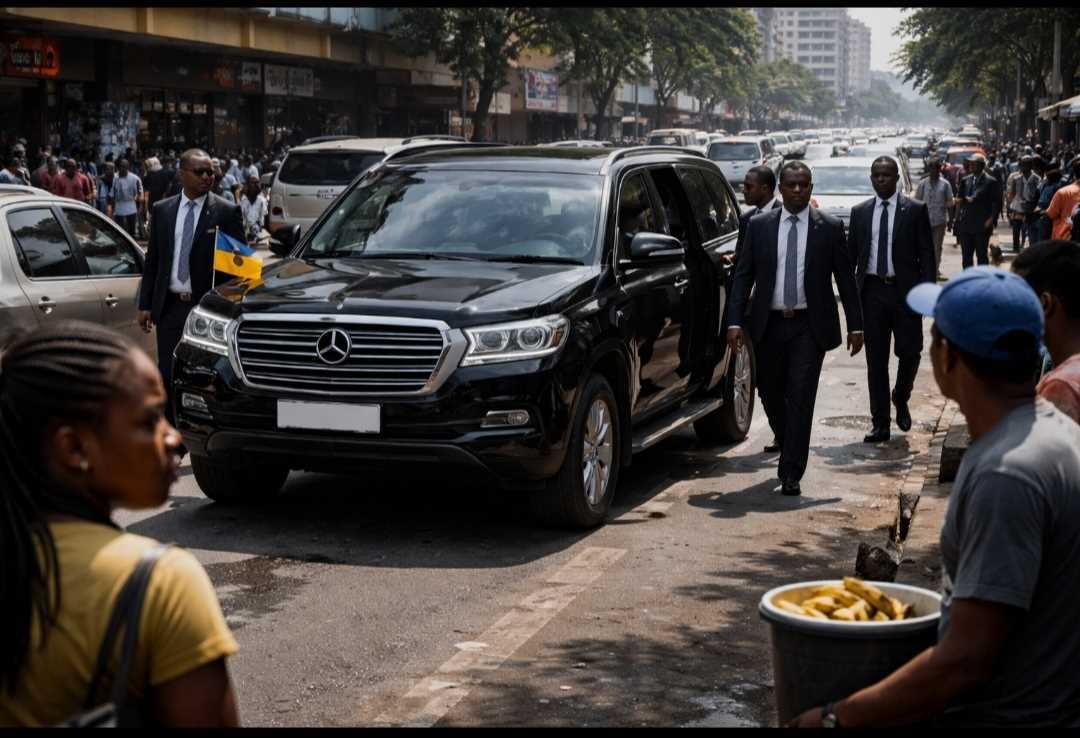
A high-end vehicle glides into a public space — sometimes a restaurant, sometimes a busy urban road. No number plates. A small national flag flutters from its bonnet. Doors open, and men in dark suits step out, commanding immediate attention.
Conversations quieten. People instinctively move aside. No one asks questions.
In Zimbabwe, power is often not just exercised — it is performed.
Across the country’s cities and towns, a quiet theatre of authority unfolds in everyday spaces. Vehicles without registration plates speed through traffic with reckless confidence. Men of imposing presence assert control over areas moments earlier filled with ordinary citizens.
Individuals invoke “orders from above,” leaving bystanders unsure whether they are dealing with legitimate officials or people projecting borrowed power.
The performance works because everyone understands the script.
Zimbabweans have long been conditioned to recognise the symbols of authority. A motorcade without plates suggests high office. A national flag implies state business. Stern-looking men hint at security structures operating quietly behind the scenes. These signals trigger a powerful social instinct: do not interfere.
Yet often, what is witnessed is not formal authority at all. It is a performance — the careful use of symbols, posture and intimidation to create the impression of untouchable power.
Related Stories
The national flag, meant to symbolise collective identity and the authority of the state, increasingly appears in personal displays of power. Mounted on a vehicle or convoy, it transforms a car into something beyond questioning — less a national symbol, more a badge of immunity.
Numberless vehicles perform a similar function. Registration plates exist to identify ownership and enforce accountability. When vehicles move without them, the message is clear: some operate beyond the reach of ordinary rules.
Drive aggressively through traffic in such a vehicle, and the lesson is unmistakable — some people do not answer to the same expectations as everyone else.
Equally significant is the rise of individuals casually presenting themselves as representatives of unnamed state institutions. In bars, restaurants and social settings, stories circulate of men claiming affiliation with “security” or vaguely referencing powerful figures. The ambiguity is deliberate.
Authority in Zimbabwe carries mystique, and proximity to power — real or implied — commands obedience. Few risk confrontation when uncertainty is part of the performance.
Over time, these performances shape public psychology. Citizens internalise the idea that certain people exist outside ordinary accountability. Roads, public spaces and even recreational venues become arenas where informal hierarchies are reinforced through displays of confidence and intimidation.
The danger lies not only in the acts themselves but in the message they send. Visible impunity — vehicles without plates, individuals acting as if rules do not apply — communicates that accountability is negotiable. When accountability seems negotiable, trust in institutions weakens.
Zimbabwe is not unique in experiencing displays of informal power. Globally, privilege and status produce visible signals. But in societies already strained by economic hardship and political tension, these displays carry deeper implications. They reveal a widening gap between formal governance ideals and the lived experiences of citizens.
Public symbols, especially something as significant as the national flag, derive legitimacy from representing the collective dignity of a nation. When appropriated for personal authority or used to shield questionable behaviour, these symbols risk losing the power that gives them meaning.
Ultimately, this is not just about numberless vehicles or men in suits asserting control. It is about a culture of impunity that these scenes normalise. If authority can be convincingly performed without challenge, power becomes something that can be staged rather than earned.
When authority becomes a performance, the line between legitimate power and private influence blurs. And in that blur, society begins to believe that rules are optional — a lesson that few nations can afford to teach.
Simbarashe Namusi is a peace, leadership and governance scholar as well as a media expert writing in his personal capacity.






Leave Comments