







At Mana Pools National Park, the Zambezi does not care who paid to stand on its banks. Elephants still come down at dusk and still look at you like you are the visitor in their ancient corridor. It is one of the last places on earth where wilderness feels complete.
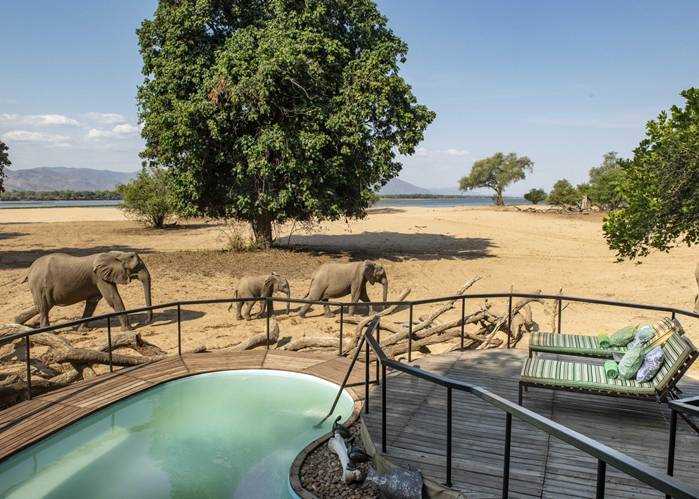
But it is a place most Zimbabweans will never see because it was never designed for the local population, a business model that has survived colonialism and firmly strengthened in
That is the harsh truth that Josh Elliott, MD, Matobo Hills Lodge, decided to own. “I charge in dollars. I’m part of the machine,” he recently wrote on LinkedIn in a post. He opened by describing taking his wife to Mana Pools and realizing that the experience cost more than what most Zimbabweans earn in months.
Elliott’s reflection opens a structural discrimination that must be unpacked as resource nationalism grips Africa in general and Zimbabwe specifically.
A Conservation Model Built for Export
Roughly 28 percent of Zimbabwe’s land is reserved for national parks and wildlife areas, a figure that dwarfs conservation land use in countries like the United States or the United Kingdom at around 10 and 12 percent. On paper, this positions Zimbabwe as a global conservation leader, but in reality, this has created one of the most exclusionary access models in the region.
Elliot’s post describes how, through the Zimbabwe Parks and Wildlife Management Authority, prime land is leased to operators, many of them local whites, foreign-owned, or deeply tied to international capital, who build lodges priced for global markets. Properties such as Singita Pamushana Lodge are the polished face of a system designed to extract value from wilderness at a price point locals cannot match.
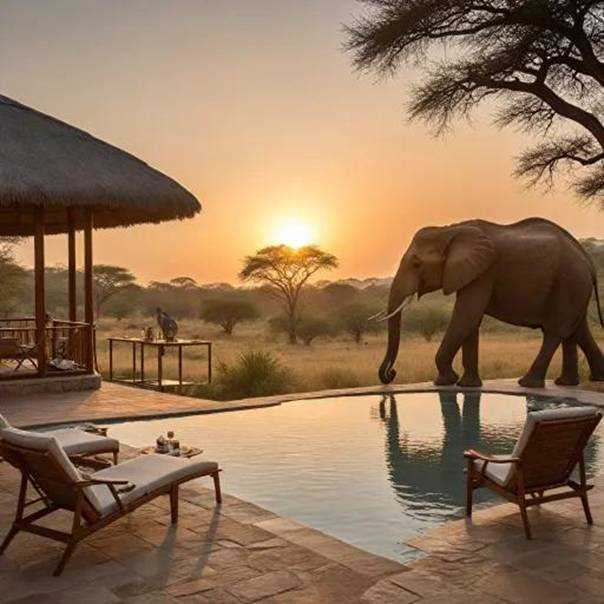
The result is a country where access to its most iconic landscapes is structured to keep out the locals, except as menial servers. Park entry fees, conservation levies, vehicle charges, and VAT stack up before a single animal is seen. A domestic family can spend the equivalent of an international holiday simply trying to visit its own heritage.
The Children Who Stay Behind
Government policy recognizes the importance of exposure. The Ministry of Primary and Secondary Education has pushed schools to organize educational trips to national heritage sites. The economics undermine it. A two-day school trip to Lake Kariba can cost over US$60 per child. For many households, that is simply not possible.
The Western Lens and the African Reality
Global conservation narratives are rarely neutral. When figures like the UK's Prince William patronizingly speak about Africa’s growing population and development encroaching into wildlife habitats, the framing is clear: people are the pressure point.
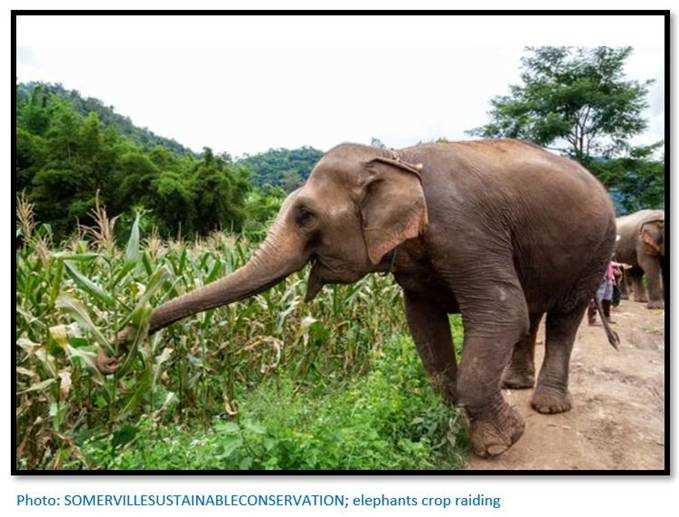
That narrative does not even go down well in London, and it definitely jars in Zimbabwe. Communities living alongside parks are not debating abstract population graphs but dealing with elephants destroying crops, predators taking livestock, and in some cases, fatal encounters. They carry the cost of conservation daily, while the financial upside is often captured through tourism circuits that are globally structured.
Related Stories
Cecil, and the Myth of Shared Ownership
On July 1, 2015, American dentist and trophy hunter Walter Palmer allegedly paid around $50,000 for a lion hunt in Hwange and killed a lion. Shows were held in western cities as people cried over the “symbol of Zimbabwe." Donations surged, and headlines exploded.
Inside Zimbabwe, many people had never heard of Cecil the lion before his death. That gap reveals how conservation symbols can be manufactured externally, amplified globally, create a gravy train for an elite group, and only be loosely connected to local consciousness. Cecil mattered deeply to the world and only a few elites in Zimbabwe.
CITES, Ivory and the Politics of Moral Authority
The contradictions sharpen further when the conversation turns to ivory. Under the Convention on International Trade in Endangered Species of Wild Fauna and Flora, countries like Zimbabwe are restricted from selling ivory stockpiles into global markets, particularly in Asia, where demand historically existed. The stated objective is to curb poaching by limiting supply.
The effect is more complicated. Zimbabwe sits on stockpiles of ivory worth millions of dollars, accumulated from natural deaths and management culls. In some cases, the stockpiles are publicly destroyed, such as when Kenya burned 15 tonnes publicly as a statement against illegal trade.
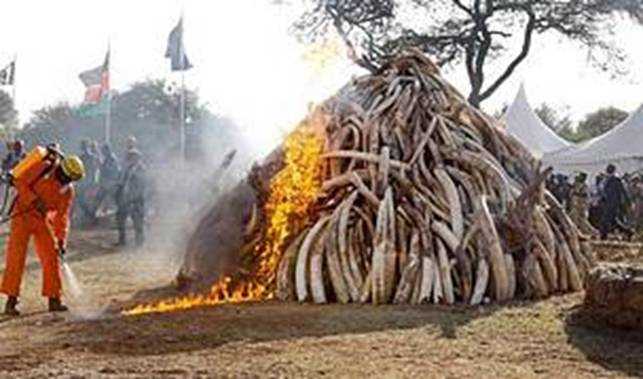
From a Western policy perspective, this is moral clarity. From an African perspective, it raises a blunt question: Why must a resource be destroyed rather than monetized for the benefit of the countries that hold it?
The same global system that permits regulated trophy hunting tourism, often by wealthy Western visitors, simultaneously restricts African countries from selling ivory into other markets. It is difficult to ignore the asymmetry.
Energy, Conservation and the Funding Gap
Layered on top of this is an even broader imbalance. Conservation funding, often backed by Western donors, flows with relative consistency into protected areas. Zimbabwe is expected to maintain large ecological zones that serve global environmental interests. Oil prospecting in Mana Pools and coal mining in Gonarezhou are blocked by foreign-backed activists.
At the same time, financing for large-scale renewable energy, whether solar or hydropower, remains slow, conditional, or insufficient. So the country continues to face power shortages, unable to utilize its own resources for development.
The Kariba REDD+ project, one of Africa’s largest carbon credit schemes, generated an estimated US$100 million to US$200 million from the sale of credits into global markets over several years, with companies linked to international developers and intermediaries taking the lion’s share of the proceeds through structuring, brokerage, and resale margins.
Josh Elliott’s reflection paints a stark picture. Zimbabweans are priced out of their own landscapes. Communities bear the cost of living with wildlife while resources are controlled under frameworks that limit local agency. Zimbabwe protects ecosystems for a tiny number of beneficiaries, some of them foreigners, while struggling to power its own economy.







Leave Comments