







A paperwork dispute has blown up into a battle that could cost over US$25 million, test Zimbabwe’s economic rights, and shake trust in the world’s carbon markets. Here’s what it means in simple terms.
What are carbon credits, and why should you care?
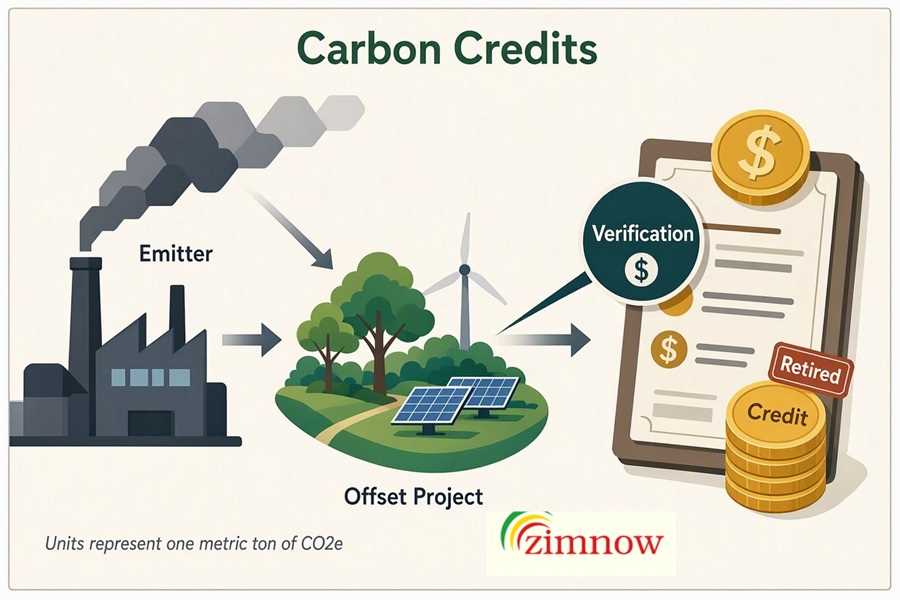
Think of a carbon credit as a certificate that says: “One tonne of carbon dioxide was prevented from entering the atmosphere.” Projects like forest protection or clean cookstoves earn these certificates. Polluters like airlines buy them to offset their emissions.
But not all certificates are equal. Some carry a special label called CORSIA, which is the UN’s aviation offsetting scheme. Credits with that CORSIA label sell at a much higher price, sometimes US$10 more per credit.
Zimbabwe has been working to issue exactly those premium-labelled credits.
The fight: Zimbabwe vs. Gold Standard
Here’s the situation in a nutshell:
Gold Standard is a Swiss-based organisation that approves carbon projects and runs a registry where credits are recorded. It’s a trusted gatekeeper.
Zimbabwe’s Ministry of Environment followed all the rules, got projects verified, and had more than 1.5 million credits officially issued in Gold Standard’s own system. Another 1 million could follow.
The ministry says these credits are new, proper, and stamped with “corresponding adjustments” — meaning Zimbabwe has accounted for them in its national climate targets, which is required for CORSIA eligibility.
Now Gold Standard is dragging its feet or blocking the CORSIA label, despite everything apparently being in order.
Zimbabwe accuses Gold Standard of unilaterally undermining a system that African countries fought hard to shape inside UN climate talks.
Why the money is so big
If a credit is stuck without the CORSIA label, it loses the premium. The price difference can be over US$10. With more than 2.5 million credits in play, the total lost value could easily top US$25 million — and that’s just today’s picture. If prices climb, the exposure gets worse.
That $25 million isn’t just a number on a spreadsheet. It’s money that would have flowed to:
· Project developers who borrowed and built based on the promise of premium prices
· Communities and conservation programmes on the ground
Related Stories
· Zimbabwe’s own climate finance efforts
When the premium vanishes, real people lose out.
“This is about sovereignty”
Zimbabwe’s environment ministry has dropped the usual diplomatic soft talk. Its statement says Gold Standard’s actions threaten African nations’ rights and warns against “private foreign organisations” overriding multilateral processes.
In plain terms: Zimbabwe says no unelected foreign body should be allowed to destroy the value of credits that were properly created and nationally approved. It’s framing this as economic sovereignty — the right of a country to benefit from its own resources without interference.
Legal and reputational danger for Gold Standard
This could end up in court because credits were already issued by Gold Standard’s system and developers, traders, and financiers made decisions counting on CORSIA eligibility.
If Gold Standard retroactively blocks that label, it may have caused foreseeable financial harm.
Possible claims could come from multiple sides the government, project owners, traders, banks. Court cases would expose Gold Standard’s internal decisions, registry records, and commercial logic. That could be messy, expensive, and damaging to the entire carbon market’s reputation.
If trust goes, the whole system wobbles. And carbon markets run on trust.
The bigger picture for Africa
Zimbabwe’s message is being heard well beyond Harare. Many governments across the Global South feel that carbon market rule-makers — often based in Europe — hold too much power over assets worth hundreds of millions of dollars.
The core question this dispute raises: Do developing countries truly own and control the carbon credits they generate, or can a foreign body take away their value overnight?
Zimbabwe is signalling that it will not quietly accept the second option.
Bottom line
Zimbabwe followed the rules, got credits issued, and now a global certifier may block their premium label. About 2.5 million credits and over US$25 million in potential value hang in the balance.
The ministry has accused Gold Standard of overreach and undermining African interests. If talks fail, the matter could land in court, shaking the entire voluntary carbon market.
For a country that sees carbon trading as a path to development and conservation finance, this is a fight over who truly holds the keys to Africa’s green wealth.









Leave Comments