




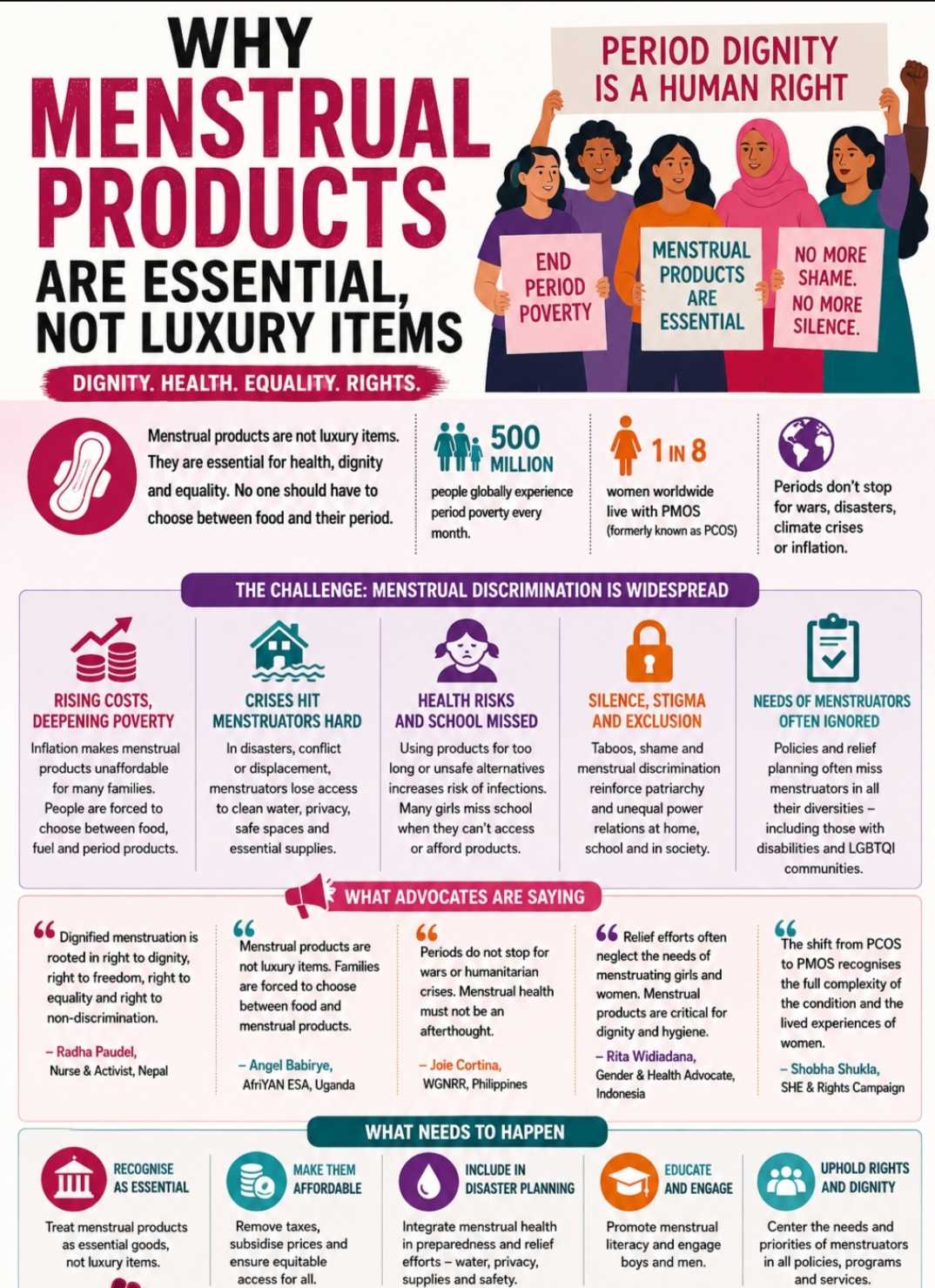
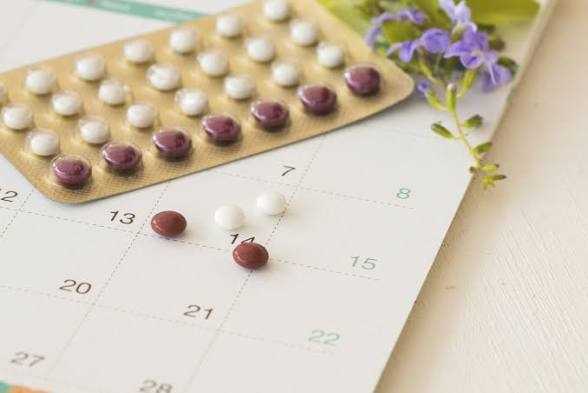
Gender justice advocates are calling for a fundamental shift in how menstruation is understood and addressed, arguing that dignified menstruation is not merely about access to menstrual products but a matter of human rights, equality and social justice.
Speaking during a SHE & Rights session marking the International Day of Action for Women's Health and Menstrual Hygiene, activists and health advocates from across the globe highlighted how period poverty, climate disasters, economic crises and entrenched gender discrimination continue to undermine the dignity and wellbeing of millions of menstruators.
Founder of the Global South Coalition for Dignified Menstruation, Nepalese nurse and activist Radha Paudel said dignified menstruation must be viewed through a broader human rights lens.
“Dignified menstruation is rooted in the right to dignity, right to freedom, right to equality and right to non-discrimination,” Paudel said.
“It means no matter whether menstruating persons are in an evacuation camp or refugee camp, or camps for war-affected populations, or any climate or manmade disaster relief camps, we need to prioritise the needs and priorities of menstruators.”
Paudel challenged traditional understandings of menstrual discrimination, arguing that the issue extends beyond access to products.
“Menstrual discrimination plays a vital role in the construction of unequal power relations, patriarchy and exclusion. It is the departure point when we talk about climate justice, menstrual products or any kind of rights for menstruators,” she said.
“Beyond the distribution of menstrual pads or accessibility issues, we need to think of menstruators as human beings.”
She also called for a change in language surrounding menstruation, rejecting the commonly used term "sanitary pads."
“I am not saying ‘sanitary’ pad because our blood is clean — it is pure blood. That is why I call upon everyone to call it a menstrual pad or menstrual product instead of a sanitary pad,” Paudel said.
The discussion comes at a time when many countries are grappling with rising living costs, climate-related disasters and widening inequalities that disproportionately affect women and girls.
Shobha Shukla, coordinator and host of the SHE & Rights campaign, said the world is facing overlapping crises that are making it increasingly difficult for people to manage menstruation safely and with dignity.
“We are living through a poly-crisis — a period defined by the simultaneous, overlapping pressures of runaway inflation, climate-induced disasters, supply chain disruptions and systemic poverty,” said Shukla.
“For the 500 million people globally who experience period poverty every month, the poly-crisis has shifted menstrual hygiene from a basic healthcare right to an impossible financial trade-off. Families are increasingly forced to prioritise food and fuel over menstrual products.”
Women's Global Network for Reproductive Rights programme officer and menstrual health advocate Joie Cortina said disasters often expose overlooked realities facing menstruators.
“When a fire broke out in an informal settlement in the Philippines, one item displaced communities immediately requested was underwear,” she said.
“If you are a person who is menstruating and you lose everything you had in a fire, of course you have to uphold your dignity. These things affect menstruators in a very visceral way.”
Cortina said economic hardships and climate emergencies often leave menstruators with diminished ability to advocate for their own needs.
“When menstruators from resource-poor backgrounds are already struggling to afford food or medicines, climate crises affect their bodies and wellbeing too, as well as their ability to make decisions about their bodies and demand essential commodities, including period products,” she said.
Related Stories
Similar challenges are being experienced in Indonesia, according to gender and health justice advocate Rita Widiadana.
“In Indonesia, period poverty is driven mostly by financial constraints and inadequate infrastructure. Climate change crises and inflation affect women and girls especially during menstruation,” Widiadana said.
“In crisis situations, women and girls lose their safe spaces. They lose access to clean water and human dignity while facing increasing health risks.”
She criticised disaster relief efforts that fail to recognise menstrual needs.
“Relief efforts often neglect the needs of menstruating girls and women because food, water and medicines are viewed as the only priorities. Reality is far from this because menstrual products are critical for menstrual hygiene and dignity,” she said.
African Youth and Adolescent Network East and Southern Africa president Angel Babirye warned that rising inflation is making menstrual products increasingly inaccessible for many households across Africa.
“Menstrual products are not luxury items,” Babirye said.
“A lot of those who are menstruating are unable to afford these essential products. Families are confronted with the dilemma of whether to buy food for the household or menstrual products.”
She noted that many girls are forced to use products beyond recommended periods or resort to unsafe alternatives.
“This injustice has increased the susceptibility of young girls to reproductive tract infections. Girls are also forced to miss school when they fail to access menstrual products on time,” Babirye said.
She urged governments and humanitarian organisations to integrate menstrual health into emergency preparedness planning.
“Periods do not stop for wars or humanitarian crises,” she said.
“Menstrual health must not come as an afterthought when disasters strike. It is not just about the pads. It is also about access to clean water, privacy and ensuring girls and women feel safe and dignified.”
Advocates also welcomed a significant development in women's health terminology following the official renaming of Polycystic Ovary Syndrome (PCOS) to Polyendocrine Metabolic Ovarian Syndrome (PMOS) by the International PCOS Network in collaboration with The Lancet.
Shukla described the change as an important step towards recognising the full complexity of the condition.
“The old name misdiagnosed the condition as simply ‘ovarian cysts’. PMOS is a complex, systemic hormonal and metabolic disorder affecting one in eight women worldwide, directly driving insulin resistance, mental health struggles and irregular bleeding,” she said.
Cortina said the renaming reflects a broader effort to centre women's lived experiences within healthcare systems.
“Historically, the lived experiences of women have always been relegated to the sidelines,” she said.
“This welcome shift from PCOS to PMOS reflects listening to menstruators and recognising that this is not just a gynaecological issue but a broader health concern requiring a more holistic approach.”
For advocates, the message is clear: achieving menstrual dignity requires moving beyond product distribution to tackling the social, economic and structural inequalities that continue to marginalise menstruators worldwide.
As Paudel summed it up, “Since all of humanity is formed from blood and the womb, menstruation is life-affirming rather than a source of shame or impurity.”





Leave Comments